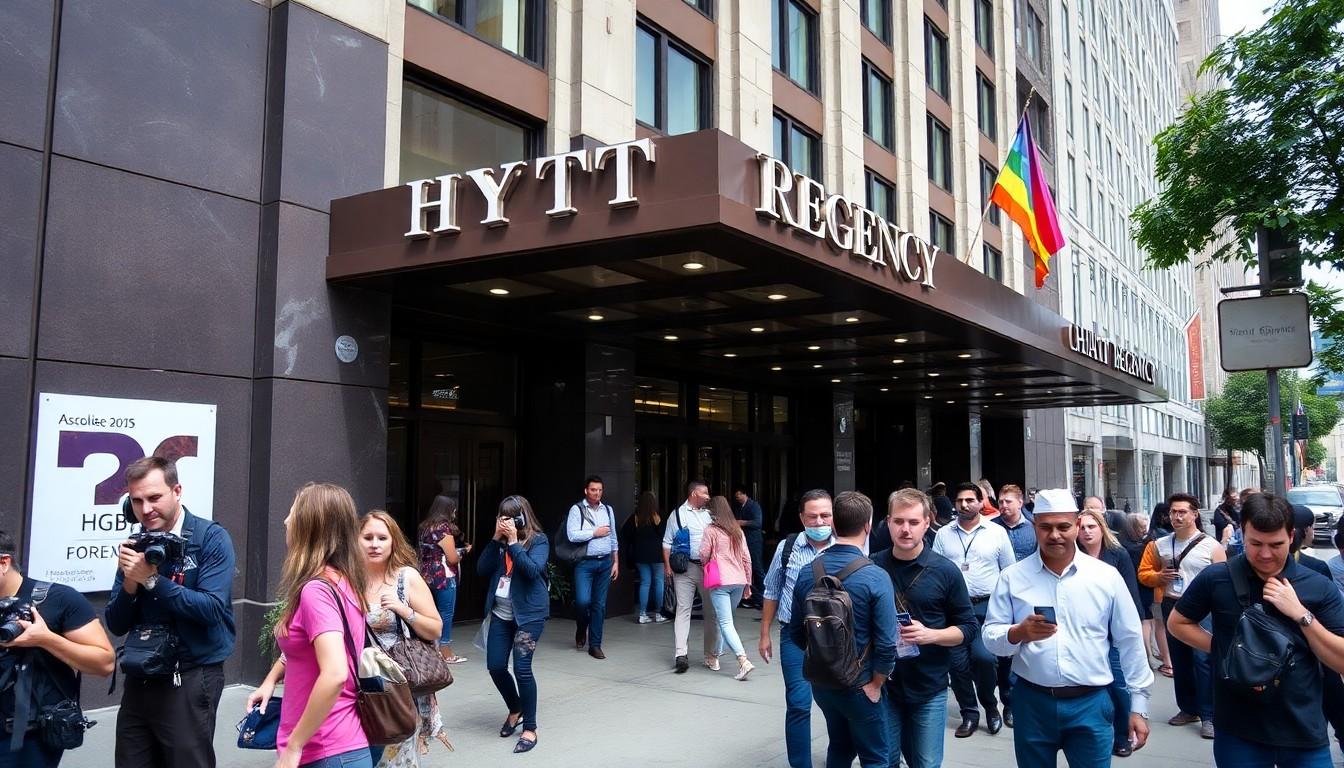
Journalists are returning to San Francisco for the NLGJA’s 35th annual convention, a gathering that links the organisation’s Bay Area beginnings with today’s urgent debates about LGBTQ+ reporting, press freedom and newsroom inclusion. More than 700 media professionals are expected at the waterfront event, where history and future-facing journalism will meet.
Essential Takeaways
- A local beginning: NLGJA grew from a Bay Area gathering convened by journalist Roy Aarons in 1990.
- A historic return: San Francisco hosted the organisation’s first national convention in 1992.
- The 2026 event: The convention runs from 10 to 13 September at the Hyatt Regency San Francisco.
- A community honour: The San Francisco Bay Times will receive NLGJA’s 2026 Legacy Award.
- A continuing mission: Training, mentorship and fair LGBTQ+ coverage remain central to the organisation’s work.
San Francisco is where the story began
Some professional organisations start with a formal launch, a press release and a neat paper trail. NLGJA’s story feels more personal. In 1990, former Oakland Tribune executive editor Leroy “Roy” F. Aarons brought a small group of journalists together in his Bay Area living room, during the devastating HIV/AIDS crisis and a period of deep institutional hostility towards LGBTQ+ people.
The aim was straightforward but ambitious: improve the accuracy and fairness of LGBTQ+ reporting while creating a professional home for journalists who were often isolated in their own newsrooms. According to NLGJA’s history, that early meeting helped establish a national network built around journalism, visibility and mutual support.
San Francisco offered more than a convenient setting. The city’s long connection with queer activism gave the organisation a natural base from which to challenge the assumptions of mainstream media. It was a place where journalists could speak openly, compare experiences and imagine newsrooms that looked more honestly at the communities they covered.
The first convention carried real weight
When NLGJA held its first national convention in San Francisco in 1992, around 300 journalists attended. For many, simply being publicly identified as LGBTQ+ in a professional setting was still a brave step, particularly while the AIDS epidemic continued to expose the failures of government, medicine and the media.
The gathering also gave senior media figures an opportunity to make practical commitments. Equal workplace benefits became part of the conversation, showing that representation wasn't only about headlines or bylines. It was also about whether journalists could build secure careers without hiding who they were.
NLGJA’s convention history records further milestone meetings in San Francisco in 2000 and 2010. Those returns reflected a changing media landscape, but they also kept the organisation connected to the place where its national ambitions first took shape.
What to expect from the 2026 NLGJA convention
The 2026 NLGJA National Convention will take place from 10 to 13 September at the Hyatt Regency San Francisco on the Embarcadero. Organisers expect more than 700 reporters, presenters, editors and media executives to attend, making it a substantial meeting point for LGBTQ+ journalists and their allies.
The programme is set to combine practical newsroom learning with wider discussions about the pressures facing journalism. Workshops, panels and mentorship opportunities will give attendees room to sharpen their skills, discuss emerging press freedom concerns and support students entering the industry.
That mix matters. Journalism conferences can sometimes become a blur of badges, coffee and crowded hotel corridors, but the most useful ones send people home with clearer judgement and stronger professional networks. NLGJA’s emphasis on student storytellers suggests the 2026 gathering is looking beyond celebration and towards succession.
A Legacy Award for the San Francisco Bay Times
The San Francisco Bay Times is due to receive NLGJA’s 2026 Legacy Award, recognising decades of community publishing and service. The award is being presented to the paper’s wider team rather than a single individual, so contributors from its earliest years through to today are expected to attend the ceremony on 12 September.
That collective recognition feels fitting for a publication whose work has depended on many hands. Local LGBTQ+ media has often filled gaps left by larger outlets, recording community life, loss, campaigns and cultural change with an intimacy that national reporting can't easily reproduce.
The Bay Times also has a direct connection to NLGJA’s early history. Founding news editor Randy Alfred was a founding member and board director of the organisation, helped create its first stylebook and later joined the Journalists Hall of Fame. His career illustrates how local publishing and professional advocacy can strengthen one another.
Why the organisation’s work still matters
The legal and social landscape has changed dramatically since 1990, but progress hasn't removed the need for careful LGBTQ+ journalism. NLGJA points to continuing concerns around transgender rights, health inequality, workplace discrimination and rhetoric that can affect safety and mental wellbeing.
For journalists, the challenge is not simply to include LGBTQ+ people in coverage. It is to report on them with accuracy, context and humanity, especially when political arguments reduce real lives to talking points. Language choices, sourcing and the decision about whose voice leads a story can all change how a subject is understood.
The 2026 convention therefore arrives at a significant moment. San Francisco provides the emotional backdrop, but the questions reach far beyond the waterfront: who gets heard, how power is scrutinised and whether journalism can remain truthful when public debate grows increasingly hostile. Those are serious questions, but a room full of people committed to asking them is a hopeful sight.
It's a homecoming with a purpose: better journalism, stronger communities and more truthful stories.
Source Reference Map
Story idea inspired by: [1]
Sources by paragraph:
- Paragraph 1: [2], [3]
- Paragraph 2: [2], [4]
- Paragraph 3: [2], [5]
- Paragraph 4: [3], [6]
- Paragraph 5: [3], [7]
- Paragraph 6: [2], [3]
- Paragraph 7: [2], [4]
- Paragraph 8: [3], [5]
- Paragraph 9: [3], [6]
- Paragraph 10: [2], [7]
- Paragraph 11: [2], [4]
- Paragraph 12: [2], [5]
- Paragraph 13: [2], [7]
- Paragraph 14: [3], [6]
- Paragraph 15: [2], [7]