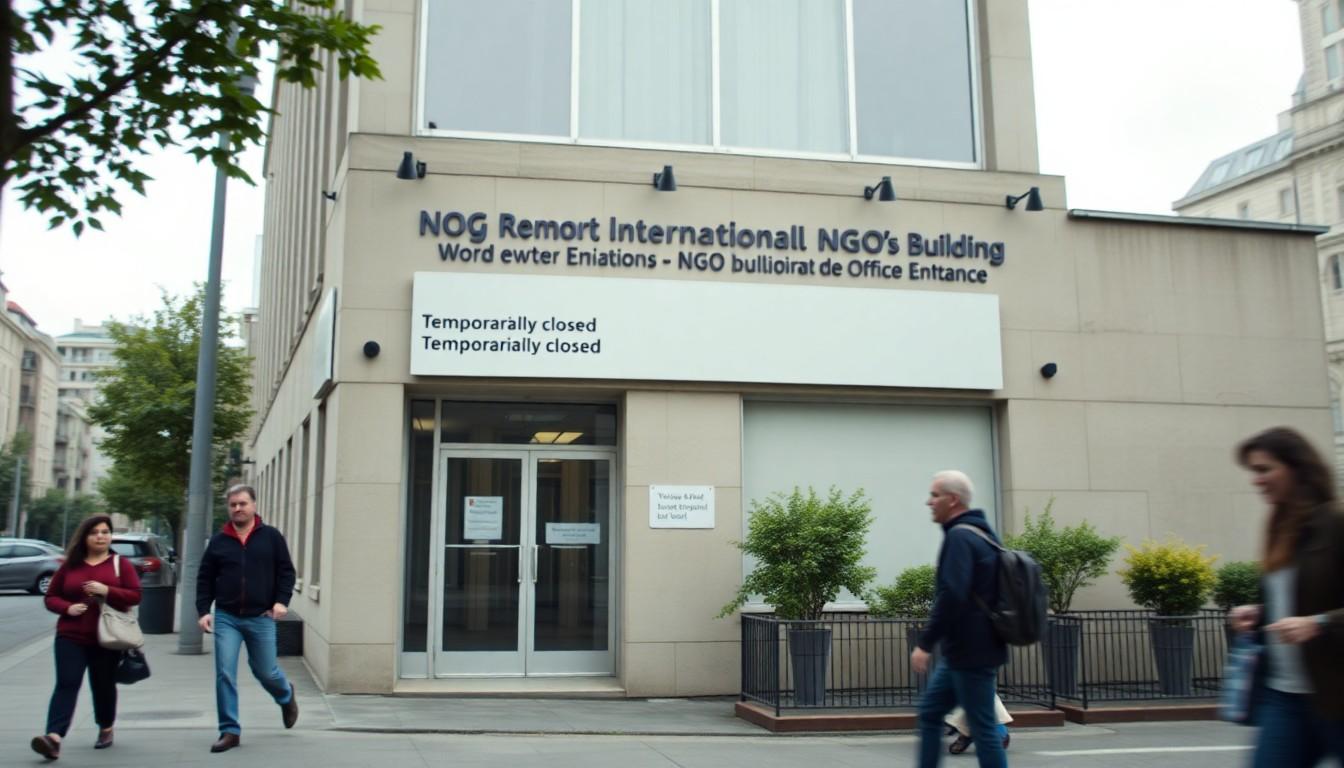
Organisations supporting LGBTQ people across dozens of countries say US funding cuts have left vital services exposed, from HIV support and safe housing to legal help and advocacy. A new report argues that private donors must step in, while critics say overseas programmes had strayed into ideological campaigning.
Essential Takeaways
- Funding has fallen sharply: Outright International says 90 per cent of surveyed groups lost US taxpayer support after January 2025.
- Closures are a real risk: Four in ten organisations describe themselves as facing severe or immediate danger of shutting.
- Services are under strain: Groups report threats to safe houses, legal assistance, mental health care and HIV-related support.
- The debate is political: Supporters call the work human-rights protection, while critics object to exporting contested social policies.
- Private giving is now crucial: Outright International is urging foundations and donors to help fill the gap.
A funding freeze with consequences on the ground
The most striking detail is the speed of the financial shock. According to Outright International's survey, 90 per cent of 229 LGBTQ organisations across 94 countries lost US funding after January 2025, while nearly half of those groups lost more than half their total budgets.
That doesn't simply mean fewer conferences or smaller campaigns. Organisations surveyed say the cuts have reached practical services, including safe accommodation, legal support, mental health provision and HIV treatment assistance. Outright International's wider campaign materials describe the international movement as an alliance that donors can no longer afford to ignore.
For small groups operating on tight margins, a missing grant can mean an empty office, unpaid staff and a phone line that stops being answered. The financial language may sound dry, but the impact is anything but.
What the money supported
The report points to a broad mix of activity. Some grants helped identify LGBTQ candidates for political office, while others supported activists responding to anti-gender rhetoric, legal services and emergency assistance for vulnerable communities.
Outright International has consistently presented this work as part of a global human-rights network. Its public statements and international advocacy focus on protecting LGBTQ people, strengthening civil society and ensuring that marginalised voices are heard in multilateral forums.
Critics, however, argue that some programmes went beyond basic protection and into political organising or the promotion of controversial gender policies. That distinction matters because it sits at the heart of the argument over whether foreign aid should fund emergency support, advocacy, cultural projects or all three.
Why the cuts have become a global culture-war issue
The US funding reversal began shortly after Donald Trump's second inauguration, when an executive order imposed a broad pause on foreign assistance. Secretary of State Marco Rubio later allowed lifesaving humanitarian aid to continue, while excluding transgender surgeries from that category.
The administration has framed the change as a correction to what it sees as the international export of progressive social policy. Vice-President JD Vance has said American aid should focus on families, human flourishing and life rather than what he calls radical gender ideology.
Outright International sees the same shift very differently. Its campaign messaging says the funding collapse threatens a worldwide movement and is seeking 10 million dollars from private supporters. Meanwhile, its work with feminist and LGBTQ coalitions shows how closely the issue is tied to wider arguments about gender equality, representation and international institutions.
The size question: what should donors check?
For readers trying to make sense of the dispute, the first useful distinction is between direct services and advocacy. A safe house, legal clinic or HIV programme has an immediate, tangible purpose. Political training, cultural projects and public campaigns may also serve a human-rights aim, but they're more likely to prompt questions about value for money and local consent.
Donors should also look for transparent accounts, clear safeguarding policies and evidence that programmes are led by people in the communities they serve. Local partnerships matter too. A project designed in Washington may not translate neatly to a conservative town in Central Asia, the Caribbean or the Middle East.
Outright International's public appeals put private philanthropy at the centre of the next phase. That could bring more flexibility, but it also makes scrutiny more important. Private donors need to know whether their money is keeping a clinic open, supporting legal representation or funding broader political advocacy.
What happens next for global LGBTQ organisations?
The immediate outlook is unsettled. Outright International's campaign argues that the movement needs sustained backing, while its recent coalition statements call for unity and continued engagement in international spaces.
There is also a geopolitical dimension. When American support disappears, other governments and donors may fill the vacuum, sometimes offering funding tied to very different political priorities. That could leave local organisations balancing urgent needs against pressure from both foreign backers and domestic authorities.
The human cost is easiest to see in the small details: a closed office, a cancelled emergency programme or a patient struggling to maintain treatment. Whatever readers think of the politics, those are difficult consequences to wave away.
Explore funding appeals carefully, and separate essential services from broader advocacy when deciding what deserves support.
Source Reference Map
Story idea inspired by: [1]
Sources by paragraph:
- Paragraph 1: [2], [4]
- Paragraph 2: [2], [4]
- Paragraph 3: [3], [6]
- Paragraph 4: [4], [7]
- Paragraph 5: [2], [5]
- Paragraph 6: [3], [6]
- Paragraph 7: [4], [7]
- Paragraph 8: [2], [5]
- Paragraph 9: [3], [4]
- Paragraph 10: [2], [4]
- Paragraph 11: [5], [6]
- Paragraph 12: [3], [7]
- Paragraph 13: [2], [4]
- Paragraph 14: [5], [6]