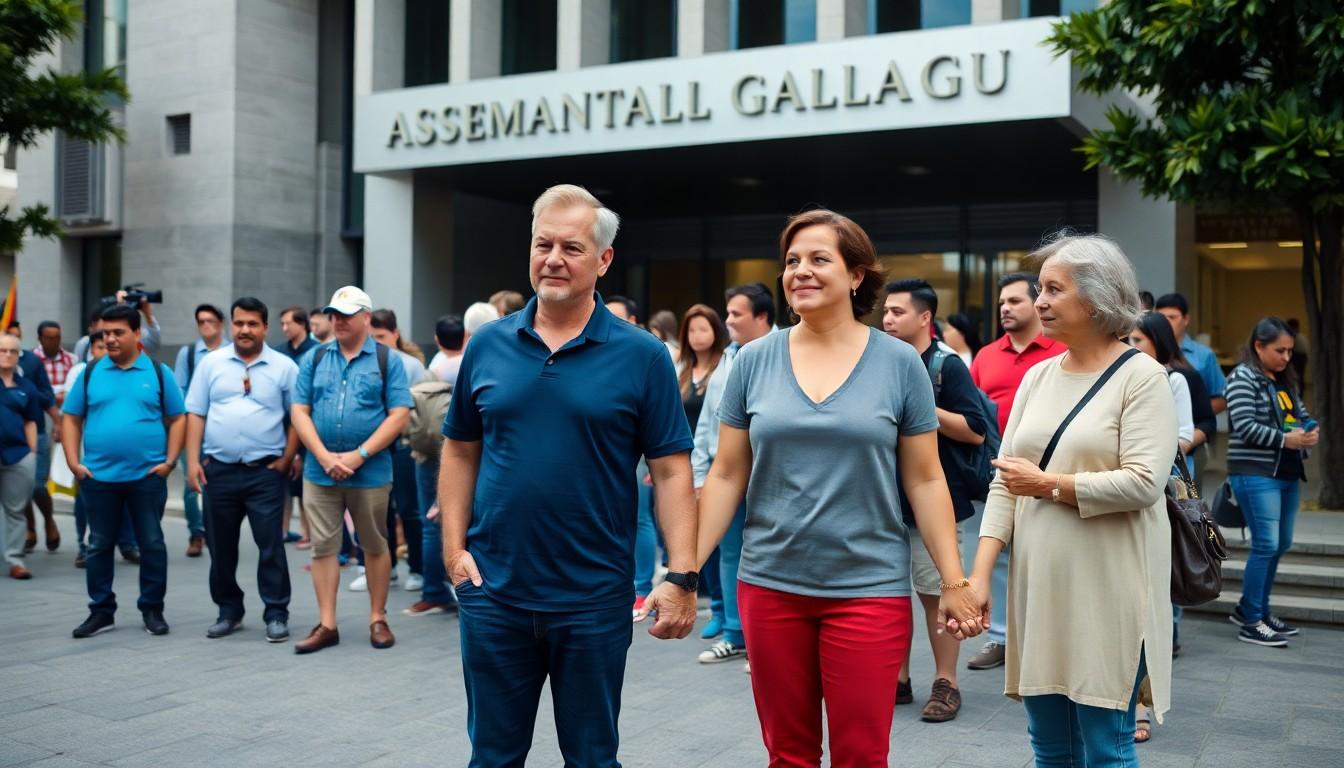
Ecuador has introduced a new adoption law that explicitly excludes LGBTQ+ people, despite recognising same-sex marriage since 2019. The measure was presented as a way to speed up placements, but rights groups warn it could reinforce prejudice, discourage support for trans children and leave vulnerable young people waiting in institutional care for longer.
Essential Takeaways
- New restrictions: Single adopters must be heterosexual, while different-sex couples remain the only couples eligible under Ecuador’s rules.
- A sharp legal contrast: Ecuador’s highest court approved same-sex marriage in 2019, creating a striking divide between marriage and adoption rights.
- Children’s welfare at stake: Human Rights Watch says adoption reform shouldn’t be used to legitimise discriminatory assumptions about families.
- Trans healthcare concerns: The law may treat support for gender-affirming care as grounds for ending parental rights.
- The practical risk: Families could become more hesitant to seek medical advice or openly support trans children.
Ecuador’s adoption rules now go further
Ecuador’s National Assembly has approved legislation that prevents LGBTQ+ people from adopting, including those applying as single parents. The Reform Law of Various Legal Bodies for the Streamlining of Adoption passed by 118 votes to none, with 25 abstentions, and came into force in mid-August, according to Human Rights Watch.
The law was framed as an administrative fix. Its stated aim is to shorten adoption procedures and reduce the time children spend in institutional care, a goal most people would find difficult to argue with. The problem lies in who the legislation excludes while pursuing it.
Rather than judging prospective parents on their ability to provide a safe, stable and loving home, the new rules use sexual orientation as a barrier. It turns a system meant to serve children into one that places adult prejudice at the centre.
Same-sex marriage, but not equal family rights
The change is especially striking because Ecuador became one of the Latin American countries to recognise same-sex marriage in 2019. Ecuador’s highest court backed marriage equality in a landmark decision, bringing the country into line with a wider regional shift, as reported by CBS News and the Philstar.
That legal progress never fully extended to adoption. Ecuador’s constitution already limited adoption to different-sex couples, while the new law adds an explicit requirement that single adopters must be heterosexual. In other words, a person can marry a same-sex partner but still be considered unsuitable to adopt because of their sexual orientation.
It’s an uncomfortable reminder that legal equality rarely arrives in one neat package. Marriage rights may change quickly, while family law, healthcare and protections for children continue to lag behind.
Why the “faster adoptions” argument is under scrutiny
Human Rights Watch has acknowledged that improving adoption procedures is a legitimate policy objective. Children shouldn’t spend years waiting for permanent homes because paperwork moves at a glacial pace. But the organisation argues that efficiency cannot justify rules based on stereotypes or misinformation.
Cristian González Cabrera, Human Rights Watch’s senior LGBTQ+ rights researcher, said lawmakers were endangering children by legislating around bias rather than evidence. The concern is straightforward: excluding potentially suitable parents reduces the pool of homes available to children who need them.
Research and international practice have repeatedly challenged the idea that children need parents of a particular sexual orientation. What matters in everyday life is far less dramatic but much more important: safety, consistency, care and the ability to meet a child’s needs.
A new flashpoint over trans children’s healthcare
The law also contains a provision affecting parents of trans children. Support for gender-affirming medical care may be treated as a reason to terminate parental rights, although Human Rights Watch warns that the wording could cover a broad range of healthcare and family support.
That uncertainty could have a chilling effect. Parents may worry that asking doctors for advice, discussing treatment options or affirming their child’s identity could bring state scrutiny. For families already navigating complex medical and emotional decisions, that’s a heavy burden.
It also risks turning ordinary parental care into evidence against a family. A law designed to protect children should make it easier for parents to seek qualified medical help, not leave them wondering whether doing so could put their household at risk.
What happens next for LGBTQ+ families?
The immediate impact will fall on LGBTQ+ people hoping to adopt, but the wider message reaches far beyond adoption offices. It tells children in care that some loving families are officially valued less than others, even when those families could offer stability and support.
The contrast with Ecuador’s 2019 marriage ruling will keep the issue in the spotlight. International rights organisations are likely to continue challenging the law, while advocates will argue that adoption decisions should focus on individual suitability rather than identity.
For now, the legislation leaves Ecuador with a deeply uneven record: progress on same-sex marriage alongside a fresh legal barrier to LGBTQ+ parenthood. That contradiction is not just political. For children waiting for homes, it could shape how long they wait.
A quicker adoption system only matters if it finds safe, suitable homes without discrimination.
Source Reference Map
Story idea inspired by: [1]
Sources by paragraph:
- Paragraph 1: [2], [3]
- Paragraph 2: [2], [4]
- Paragraph 3: [2], [5]
- Paragraph 4: [2], [6]
- Paragraph 5: [2], [7]
- Paragraph 6: [2], [3]
- Paragraph 7: [2], [4]
- Paragraph 8: [2], [5]
- Paragraph 9: [2], [6]
- Paragraph 10: [2], [7]
- Paragraph 11: [2], [3]
- Paragraph 12: [2], [4]
- Paragraph 13: [2], [5]
- Paragraph 14: [2], [6]
- Paragraph 15: [2], [7]