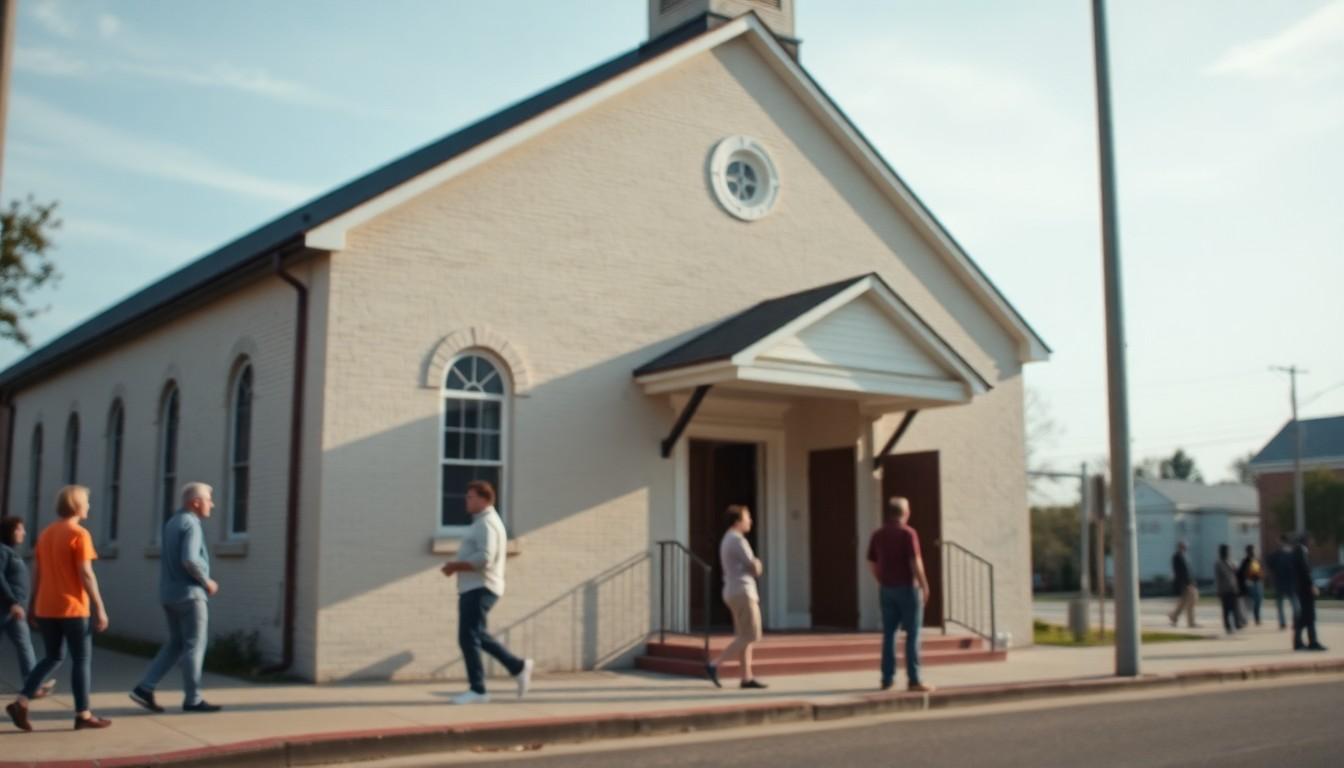
A new ethnographic study of an evangelical church in Oxford, Mississippi, explores how polite conversation and deliberate silence can quietly shape LGBTQ+ inclusion, leaving congregations appearing welcoming while avoiding the difficult questions beneath the slogan.
Essential Takeaways
- Silence can enforce boundaries: Avoiding discussion may prevent open conflict, but it can also make LGBTQ+ people feel unseen.
- “All are welcome” is complicated: A warm slogan doesn't always explain who is genuinely included in church life.
- Oxford offers a striking contrast: Public Pride events and inclusive businesses grew alongside private reluctance inside some evangelical spaces.
- Pastors face practical dilemmas: Communion, membership and everyday welcome become harder to navigate when policy remains unstated.
- The book looks beyond loud politics: Small talk, omissions and social pressure can influence communities as powerfully as public campaigns.
The quiet power of saying nothing
The most striking feature of Amy D. McDowell's research isn't a fiery sermon or a dramatic confrontation. It's the awkward pause, the changed subject and the decision not to ask a question.
In Whispers in the Pews, McDowell examines an evangelical church in Oxford, Mississippi, where the language of welcome sits alongside an unspoken discomfort about LGBTQ+ people. According to the University of Mississippi, the book explores how everyday interactions can preserve religious uniformity without requiring members to announce a shared political position.
That makes the story feel especially contemporary. In many communities, disagreement doesn't always arrive as an argument. Sometimes it appears as a social rule: don't mention the person, don't clarify the policy and don't force anyone to explain what “welcome” actually means.
Oxford's public welcome tells another story
Outside the church, Oxford was becoming more visibly open. The town's Pride events brought rainbow flags, signs and large crowds into the centre, while local shops and restaurants displayed messages declaring that all customers were welcome.
The wider picture was part of a growing network of LGBTQ+-affirming activity across Mississippi, including Pride events in other cities and formal welcoming policies at some congregations. The Local Voice has also highlighted Oxford's cultural institutions and community organisations in connection with McDowell's work and public discussions of the book.
That contrast gives the research its emotional charge. A town can look increasingly inclusive from the pavement while certain conversations remain carefully sealed inside its churches. The rainbow sign in a shop window is clear; a church's position may be much harder to read.
When welcome becomes a question, not an answer
McDowell's account shows how an ostensibly open church could be unsettled by gay couples attending services. The issue wasn't simply whether people were allowed through the door. It was what followed: communion, pastoral care, belonging and the possibility that a visitor might be recognised rather than quietly tolerated.
The book's publisher describes Whispers in the Pews as an ethnographic study of evangelical life, focusing on the ways communities manage division and maintain a sense of unity. That approach shifts attention away from official statements and towards ordinary behaviour, where inclusion is often decided in small moments.
For visitors, this distinction matters. A church may say “everyone is welcome”, but newcomers may reasonably want to know whether that means attending a service, taking communion, joining a small group, volunteering or being treated as a full member of the community. Those are not identical promises.
Why avoiding the conversation feels safer
For some congregants, not knowing seems easier than deciding what to do with a friend's sexuality or a colleague's coming out. Silence postpones the need to reconcile personal relationships with doctrine, and it avoids the risk of upsetting family, friends or church leaders.
But postponement has consequences. McDowell's research connects private uncertainty with the wider experience of LGBTQ+ people who may be excluded, disciplined or pushed out without anyone openly naming the reason. As Oxford Academic's coverage of related sociological research suggests, religious belonging is shaped not only by formal belief but also by social interaction and institutional expectations.
That's why the book's focus on “small talk” is so revealing. Casual conversation can create comfort, but it can also become a protective screen. Everyone remains pleasant, nobody has to take responsibility and the person at the edge of the group is left to interpret the silence alone.
The real test of an inclusive church
Clear policies won't solve every disagreement, but they can make expectations visible. Churches that want to welcome LGBTQ+ people should explain their position on participation, leadership, marriage, pastoral support and communion rather than relying on a broad phrase that can mean different things to different people.
Visitors can look for practical signs: an explicit inclusion statement, transparent leadership guidance, public information about weddings or membership and evidence that LGBTQ+ people are represented in the congregation. None of these details guarantees a perfect experience, but together they offer more useful information than a friendly poster.
McDowell's work also leaves readers with a broader challenge. A community doesn't become inclusive simply because nobody objects out loud. Sometimes the hardest step is making space for the conversation everyone has been avoiding, then listening without turning another person's life into a theological exercise.
A church's welcome is most convincing when it can survive being spoken about plainly.
Source Reference Map
Story idea inspired by: [1]
Sources by paragraph: