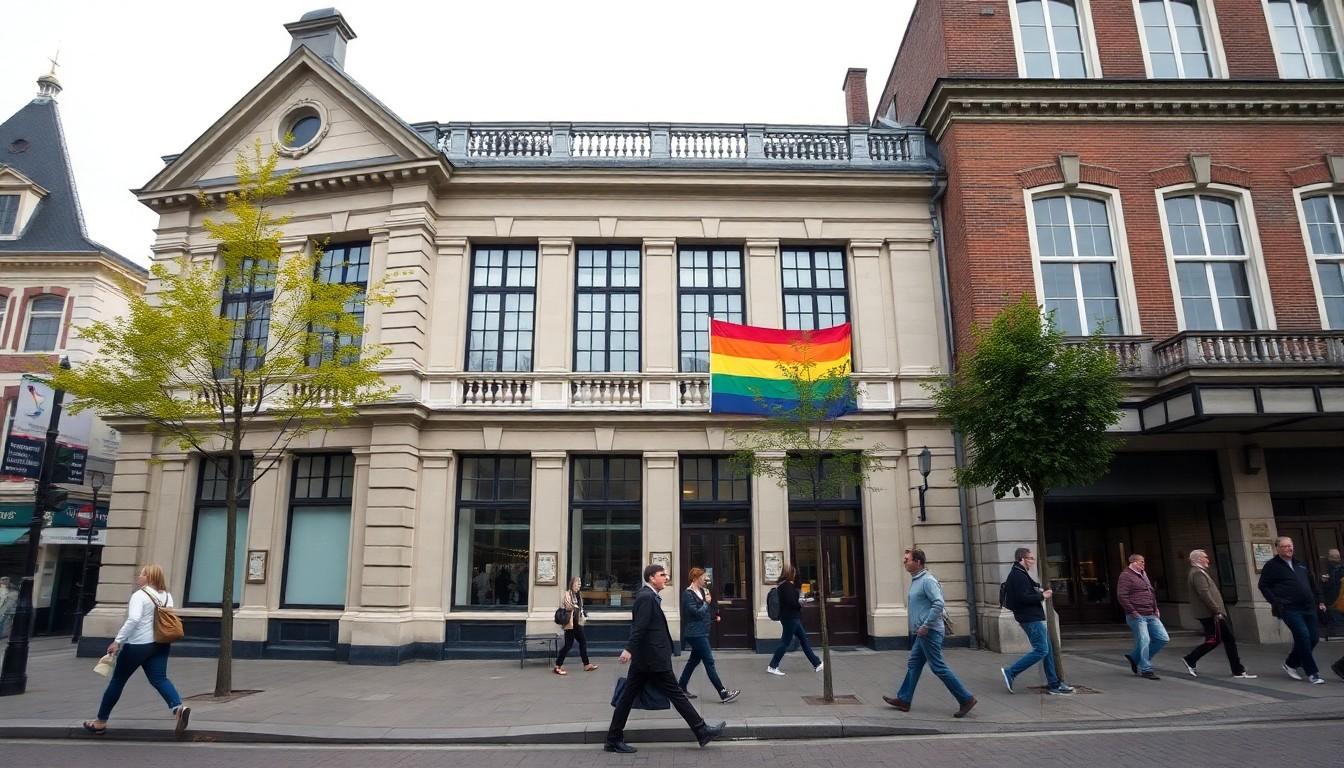
As Amsterdam prepares for WorldPride in 2026, the rainbow flag is becoming more than a colourful symbol. It represents a public stand for safety, dignity and equal rights at a time when many people support inclusion but feel that hostile voices dominate the conversation.
The rainbow flag is a visible act of solidarity
A rainbow flag outside a home, classroom or workplace can look like a small gesture, but its message is direct: LGBTQIA+ people should be able to live openly and safely. Amsterdam’s Pride events have long used that visibility to celebrate identity while drawing attention to discrimination and exclusion.
The city’s Rainbow Pride programme presents the flag as part of a broader public culture of acceptance, rather than simply a piece of seasonal decoration. That matters because symbols are often most powerful when they appear in ordinary places, where people live, work and shop. 【2】
For supporters, the flag also offers a simple way to say, “You’re welcome here,” without asking LGBTQIA+ people to do all the explaining or campaigning themselves.
WorldPride brings the conversation into focus
WorldPride is designed to connect local celebrations with a global movement for LGBTQIA+ rights. Amsterdam’s 2026 programme gives that international platform a particularly visible setting, linking the city’s Pride history with current debates about safety and equality. 【3】
Amsterdam’s organisers and tourism authorities describe the event as part of the city’s long-running Pride tradition, which has developed over three decades. That history gives the 2026 celebrations extra weight: this isn’t a new cause arriving in town, but an established campaign still asking difficult questions. 【4】
The timing is significant. A large public event can celebrate progress, but it can also expose how uneven that progress remains. A parade may be joyful, yet the need for one is a reminder that equal treatment still can’t be taken for granted everywhere.
Why the quiet majority needs to speak up
Many people support equal rights in principle, but support that stays private can be hard to see. Meanwhile, abusive comments and provocative posts are often louder, faster and more visible, especially online. That imbalance can make hostility appear more widespread than it really is.
This is where allies have a practical role. Wearing a badge, displaying a flag, challenging a slur or supporting an LGBTQIA+ colleague can help shift the atmosphere from passive acceptance to active solidarity. None of these actions solves discrimination alone, but together they make intolerance less comfortable.
InterPride’s global network places WorldPride within a wider effort to support LGBTQIA+ communities and advance equality across borders. The movement’s international character is a useful reminder that local gestures can connect to a much bigger picture. 【5】
A flag can open the door to safer conversations
For families, schools and employers, the most useful Pride gestures are often the ones followed by action. A rainbow flag is a good starting point, but it works best alongside clear anti-bullying rules, inclusive language and trusted routes for reporting harassment.
Amsterdam has also promoted free WorldPride flags, making it easier for residents to take part visibly rather than leaving official buildings and event venues to carry the message alone. That simple approach lowers the barrier to participation. 【6】
If you’re choosing how to show support, think about consistency. Displaying a flag in June is welcome, but speaking up when someone is mocked or excluded may matter even more. The quiet moment in a corridor, workplace or family group is often where belonging is either strengthened or lost.
Visibility still matters for people seeking safety
Pride is celebratory, but it also has a protective purpose. LGBTQIA+ people can face threats, family rejection, violence or serious pressure because of their identity, including those seeking asylum. Guidance for LGBTQIA+ asylum seekers highlights the importance of safety, support and access to appropriate services. 【7】
That makes public solidarity more than a matter of branding. It can reassure someone who is new to a neighbourhood, unsure whether a service is welcoming or nervous about being open with others. A flag won’t remove every risk, but it can help make the first step feel less lonely.
As WorldPride approaches, the strongest message may be the simplest one: equality shouldn’t be left to the people most affected by inequality. When supporters make their views visible, the public space becomes a little harder for hatred to occupy.
Put up the flag, start the conversation and make inclusion visible beyond Pride season.
Source Reference Map
Story idea inspired by: [1]
Sources by paragraph: