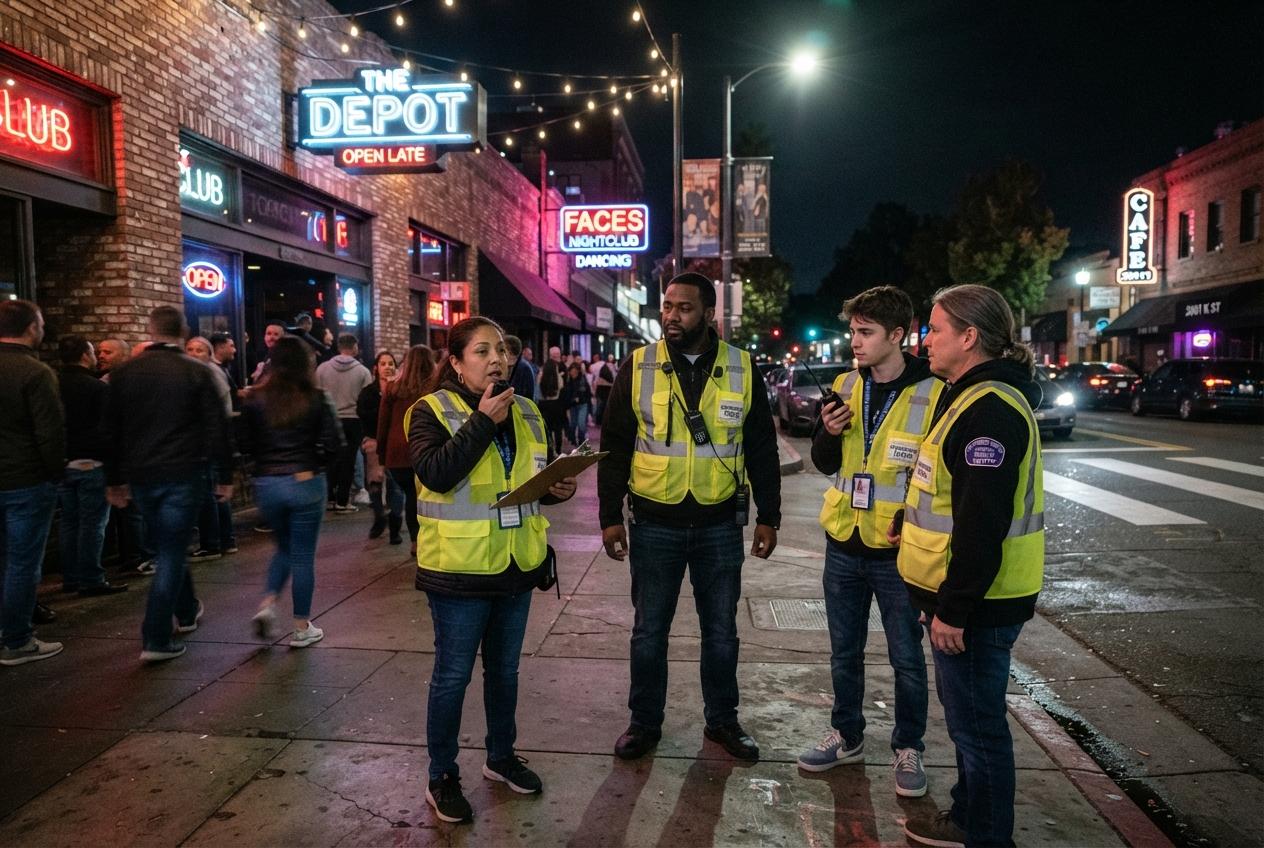
Residents and businesses in Sacramento’s Lavender Heights are strengthening safety measures after two women were assaulted near Badlands nightclub. With another reported attack in the area days earlier, volunteer patrols, added security and brighter streets are being planned to help protect the LGBTQ+ community.
Essential Takeaways
- Two women injured: Police said the women suffered minor injuries after an early-morning assault near Badlands.
- Volunteer patrols planned: At least 25 people have reportedly volunteered to walk the neighbourhood in pairs.
- No weapons involved: Patrol members are expected to carry torches, observe, report concerns and use verbal de-escalation where suitable.
- Businesses are responding: Badlands is increasing security and offering escorts to customers’ vehicles.
- Bias motivation remains unconfirmed: Police haven’t established whether the latest incident was hate-motivated.
Lavender Heights residents are demanding safer nights
The latest assault happened at about 2.45am on Monday, near Badlands nightclub in Sacramento’s Lavender Heights district. The two women sustained minor injuries, and staff from the neighbouring venue reportedly stepped in after hearing the disturbance, according to KCRA.
The incident followed another reported attack in the same area within less than two weeks. That earlier case involved claims that a group of four men shouted anti-LGBTQ+ slurs while attacking two people, according to reporting from Gay Sonoma and LGBTQ Nation.
For locals, the timing feels especially painful. One of the women said she and her wife had been leaving a queer event she hosted at Roscoe’s Bar & Burgers during Rainbow Festival. A neighbourhood known as a place for self-expression can feel very different when people start scanning the pavement on the way home.
Police haven’t announced any arrests in the latest case, and they haven’t confirmed a bias motive. They’ve also said the two incidents currently appear unrelated, a distinction that matters legally but doesn’t necessarily ease residents’ concerns.
Why volunteer patrols are appearing now
Community organisers are putting together a volunteer safety patrol for busy Friday and Saturday evenings, as well as major LGBTQ+ events. The proposed patrol will involve pairs of volunteers wearing lavender vests, carrying torches and staying focused on observation, reporting and de-escalation.
Zachary Basler of the Stonewall Democrats said at least 25 people had volunteered, with training being arranged before patrols begin. The approach is deliberately non-confrontational: volunteers won’t carry weapons or act as police, but they can contact emergency services and help people move away from trouble.
That model reflects a wider tension in community safety. People want a visible presence, but they also want it to feel welcoming rather than intimidating. A calm pair of trained volunteers at a street corner may not solve violent crime, but it can give bystanders someone to turn to in a worrying moment.
It’s also a practical reminder that community patrols need clear boundaries. Volunteers should never chase suspects, physically intervene or put themselves in danger. Their strongest tools are visibility, communication and a working phone.
Businesses are adding their own layer of protection
Badlands has provided surveillance footage to investigators and is increasing its security presence, according to KCRA. The nightclub is also offering to escort guests to their vehicles on request, a small but useful measure for anyone leaving alone after closing time.
Meanwhile, the Midtown Association plans to improve lighting along K Street and provide safe-space training for local businesses. These changes may sound modest, but bright, well-used streets and staff who know how to respond can make a noticeable difference.
Rainbow Festival has also returned to Lavender Heights amid tighter security arrangements, according to We News. That combination of celebration and caution captures the mood: residents aren’t giving up a cherished part of the city, but they’re understandably asking for stronger support around it.
What visitors can do on a night out
Anyone heading to Lavender Heights can take a few straightforward precautions without allowing safety worries to dictate the whole evening. Travel with friends where possible, agree a meeting point and keep a charged phone accessible rather than buried at the bottom of a bag.
When leaving a venue, consider asking staff about an escort or waiting inside for a taxi or lift. Stick to brighter, busier routes, and if a situation feels threatening, create distance early rather than trying to work out whether it might escalate.
If you witness an assault or immediate danger, contact emergency services. For less urgent concerns, report them to venue staff or local authorities. Volunteers can observe and help, but they shouldn’t be treated as substitutes for trained responders.
The most important advice is simple: trust your instincts. Feeling uneasy isn’t overreacting, and asking a friend or staff member to walk with you is an entirely sensible choice.
A community trying to protect its sense of belonging
Local officials and organisers have expressed support for victims who believe they were targeted, even as police continue to investigate the evidence. The earlier reported beating has intensified calls for more patrols and stronger action against anti-LGBTQ+ violence, according to The Pink Times and related community reporting.
The challenge now is turning concern into sustained, properly supported safety work. Volunteer patrols can help, businesses can improve procedures and better lighting can reduce isolated spaces, but long-term reassurance will depend on coordination with police and city services.
Lavender Heights is more than a nightlife strip. For many people, it’s a place to celebrate openly and feel at home. Protecting that feeling will take practical safeguards, careful investigation and a community willing to look out for one another.
A safer night begins with visible support, sensible planning and nobody being left to walk home alone.
Source Reference Map
Story idea inspired by: [1]
Sources by paragraph: