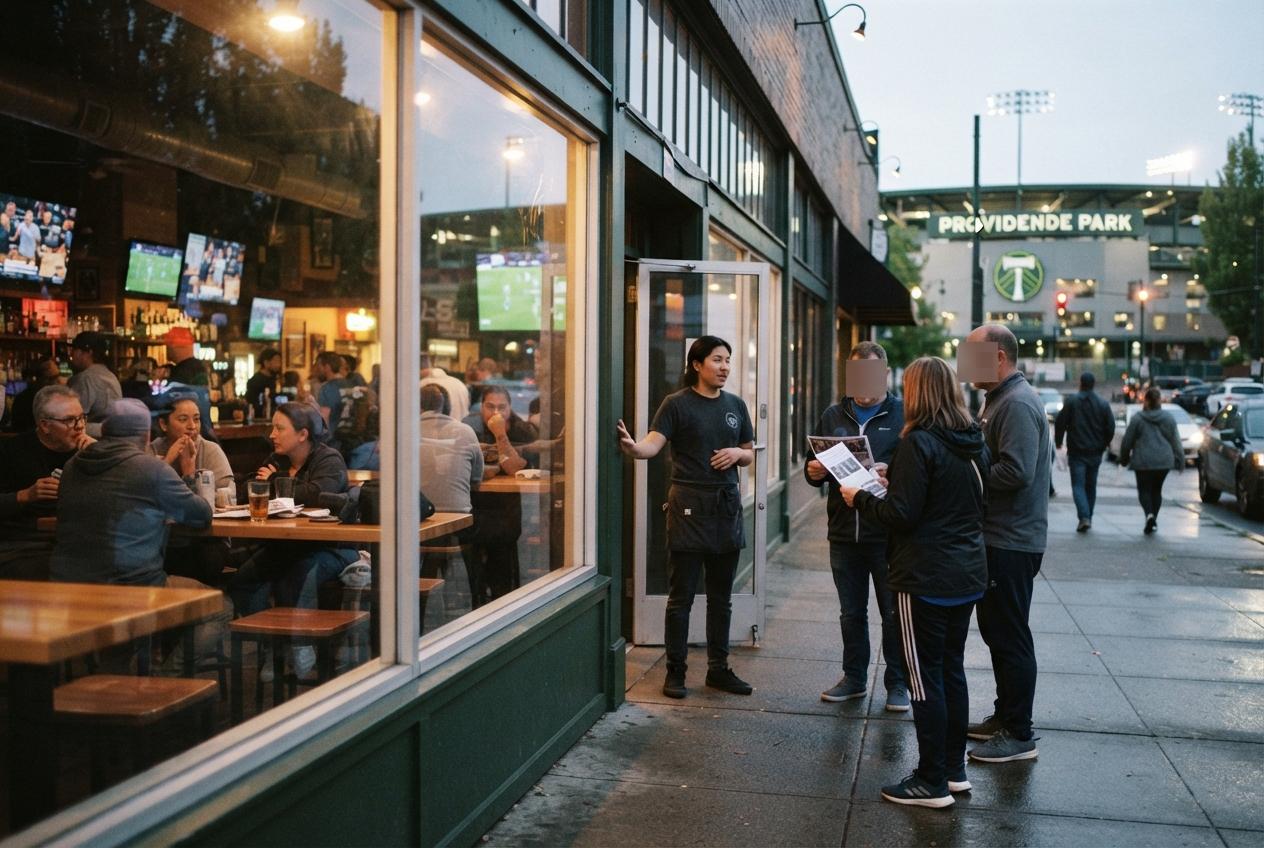
Fans wearing XX-XY Athletics shirts were removed from a Portland Thorns match and asked to leave The Sports Bra, reigniting debate over free expression, venue rules and inclusion in women’s sport.
Essential Takeaways
- At the stadium: Club officials said the group was removed for distributing unapproved materials under Providence Park’s fan guidelines.
- At The Sports Bra: Staff reportedly offered patrons the choice of covering the messaging or leaving.
- The wider dispute: XX-XY Athletics promotes a “Protect Women’s Sports” position that critics describe as exclusionary towards trans women.
- The bigger question: Challenging a slogan in public may reveal more than simply ejecting the people wearing it.
The shirts became the story
A handful of fans arrived at a Portland Thorns match wearing XX-XY Athletics tops, turning a routine NWSL fixture into a flashpoint over trans inclusion. According to Outsports, the group was removed from Providence Park after club officials said it had been distributing unapproved material, while organisers argued that the shirts themselves were the issue.
That distinction matters. Stadiums routinely set rules around banners, leaflets and promotional activity, but clothing sits in a greyer area. A shirt can be passive personal expression, or it can become a deliberate provocation, depending on the setting and how the wearer behaves. The atmosphere changes quickly when supporters feel the message targets people sitting nearby.
Why The Sports Bra drew its own line
The group later visited The Sports Bra, a Portland bar devoted to women’s sport. Staff reportedly told them to cover the anti-trans message or leave, and the patrons chose to go.
In a statement reported by Outsports and them, The Sports Bra said its mission includes creating a welcoming space for LGBTQ+ customers. It also pointed out that the “T” in its commitment to inclusion stands for trans. That may sound like a small clarification, but it goes to the heart of the venue’s identity: this isn't simply a pub showing matches, it's a business built around who feels comfortable watching them there.
For customers, the practical lesson is straightforward. Private venues can establish conduct and dress expectations, particularly when staff believe a slogan conflicts with the space's purpose. The question is whether those rules are applied consistently and explained clearly, rather than unveiled only once a confrontation starts.
“Protect women’s sports” is a crowded slogan
The phrase used by XX-XY Athletics sounds broad enough to attract support from people concerned about fairness, safety and opportunities for female athletes. Critics argue, however, that the campaign focuses overwhelmingly on excluding trans women rather than funding grassroots sport, improving facilities or expanding participation for girls.
That criticism was central to the Outsports commentary. The argument is that anyone claiming to defend women’s sport should be pressed on the less glamorous work too: equipment for youth teams, access to pitches, coaching, investment and equal respect. Those issues rarely produce the same online heat, but they shape athletes’ lives far more directly.
It’s also why the wording matters. A campaign can centre on a particular policy position, but it shouldn't necessarily present itself as the complete answer to every challenge facing women’s sport. Consumers, supporters and athletes are entitled to ask what sits beyond the slogan.
Could questions work better than ejections?
There’s an understandable appeal in removing provocative messages before they unsettle a crowd. No one should have to tolerate harassment, threats or targeted abuse at a match or in a bar. Yet when people are simply sitting quietly in branded clothing, ejection can hand them a ready-made grievance narrative.
The alternative is not to force unwilling customers into a debate. It’s to ask calm, precise questions when a genuine conversation is possible. What does the organisation fund? How does it support young athletes? What does it mean by protecting women’s sport, and how does that position address the wider financial and structural problems in the game?
That approach won't persuade everyone, and it shouldn't be used to excuse hostile behaviour. But scrutiny can puncture a slogan more effectively than a dramatic exit. As the Outsports writer put it, the aim is dialogue rather than chaos.
Portland’s clash reflects a national divide
The incidents at Providence Park and The Sports Bra sit within a broader fight over who gets to define women’s sport. Supporters of exclusionary policies say they’re defending competitive fairness, while LGBTQ+ advocates see campaigns such as this as part of a wider effort to push trans people out of public life.
The hospitality industry is feeling that tension particularly sharply. Sports bars want lively debate and full rooms, but they also need customers to feel safe, respected and able to enjoy the match without being turned into a target. That balancing act is difficult, especially when a venue's brand is explicitly rooted in inclusion.
For now, the Portland episodes have made one thing clear: a slogan on a shirt can become a test of a venue's values, its rules and its willingness to explain them. And sometimes the most revealing question is the one printed just beneath the headline.
It's a small shirt, but a very large argument.
Source Reference Map
Story idea inspired by: [1]
Sources by paragraph: