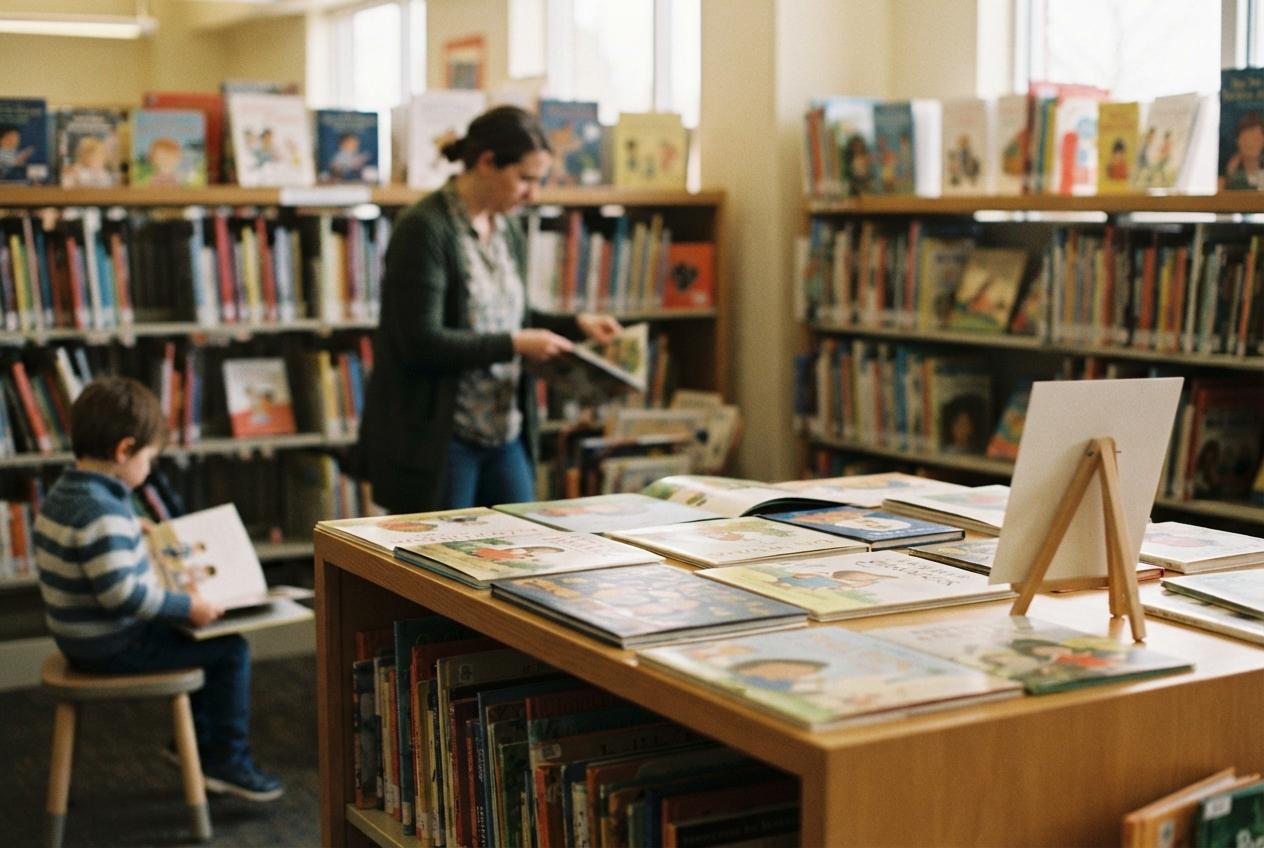
Readers, educators and families are discovering two important LGBTQ-inclusive children’s book archives in Canada and the United States. Together, they trace decades of representation, protect stories at risk from censorship and offer a vivid reminder that queer families have long been part of children’s literature.
Essential Takeaways
- Two major collections: One Canadian archive and one San Francisco library collection document LGBTQ-inclusive children’s books across generations.
- A broad historical record: The collections include early titles, contemporary picture books and works exploring family, identity and public debate.
- Useful for families and researchers: Online catalogues and searchable resources make the material easier to find and study.
- Representation matters: These books reflect the real lives of children and families, not just publishing trends.
- Archives offer protection: Preserving the titles creates a lasting record amid growing challenges to LGBTQ-inclusive books.
Two archives put queer family stories in the frame
The most striking thing about these collections is their sheer sense of time. LGBTQ-inclusive children’s books aren’t a recent publishing experiment; they form a literary thread stretching across decades, from pioneering titles to today’s colourful picture books. The result is less like a dusty shelf and more like a living family album. (According to the International Board on Books for Young People, the Canadian project brings together 350 picture-book titles from several countries.)
That historical breadth matters because book debates can make representation feel temporary, as though every generation is starting from scratch. These archives show otherwise. They give parents, teachers and librarians something solid to point to when challenged: the stories have been here, the families have been here and the need for them hasn’t disappeared. (The Mechanics’ Institute describes its collection as a resource for research, browsing and understanding LGBTQ family literature.)
Canada’s Reading With Pride collection looks beyond one country
Reading With Pride: Stories for Everyone was introduced through IBBY Canada and focuses on LGBTQ-inclusive picture books from Canada, Australia, the Netherlands, Sweden, the United Kingdom and the United States. Its international scope is especially valuable, bringing together different publishing traditions and cultural perspectives rather than treating representation as a single national story. (IBBY Congress 2026 presented the project as one of the world’s largest 2SLGBTQI picture-book collections.)
The collection is also arriving at a tense moment for schools and libraries. When titles are removed or questioned, access can become patchy and memories can fade quickly. A well-organised catalogue offers a quieter form of resistance, preserving knowledge even when the books themselves are difficult to keep on ordinary shelves. (The IBBY project notes that the archive is intended to support visibility, education and continued access to these books.)
For now, Reading With Pride is still developing its long-term home and future public programme. A permanent location and possible travelling exhibition would take the project beyond a reference list, allowing children and adults to encounter the books as physical objects with a shared history. That sounds like the sort of exhibition where visitors might arrive for ten minutes and stay for an hour.
San Francisco’s collection traces the family bookshelf
At the Mechanics’ Institute in San Francisco, the Tarpey-Schwed LGBT Families Children’s Book Special Collection offers another kind of historical snapshot. It contains more than 200 titles published between 1969 and 2023, spanning picture books through young adult works, and grew from one family’s experience of reading together. (KQED reported that the collection began with Randall Tarpey-Schwed and was later given a home at the library.)
Its organisation makes the archive particularly approachable. Visitors and researchers can explore themes including families in picture books, publishing networks, public controversy and the changing ways LGBTQ lives have been presented. The library also identifies earlier feminist books and related works as useful precursors or neighbouring examples, which adds texture to the story rather than drawing an overly neat line around identity. (The Mechanics’ Institute’s collection guide outlines these themes and explains how the materials can be explored.)
That makes the archive useful beyond academia. A parent looking for a thoughtful bedtime story, a teacher planning a lesson or a writer researching earlier representation can all begin in the same place. The books may be catalogued, but they still invite the wonderfully unscientific activity of choosing one because its cover feels welcoming.
Why physical archives matter when books are challenged
Digital databases are fast and practical, but physical collections provide a different kind of reassurance. Seeing row after row of titles makes the history tangible, especially for visitors who may have been told that LGBTQ-inclusive books are somehow new, unusual or unsuitable for children. The shelf itself becomes evidence.
The timing is significant. Library special collections preserve not only the books, but also the debates around them, the small presses that helped publish them and the networks of families and educators who kept them in circulation. The Mechanics’ Institute presents its wider special collections as research resources, placing the LGBT Families collection within a broader tradition of preserving community history. (The library’s special collections pages describe the role of these materials in supporting research and public understanding.)
There’s an emotional point here, too. A book archive can’t solve a school-board dispute or guarantee that every child will find the right story tomorrow. But it can stop a publishing history from being quietly erased, and it can remind families that they’re part of something much older and larger than the latest news cycle.
How families and educators can use these resources
For parents, the simplest starting point is to search by age, family structure or theme, then read a few pages before sharing a book. Look for stories that feel warm and well made, rather than choosing solely because a title contains a particular identity label. Young children often respond first to the basics: a funny character, a cosy illustration or a recognisable family moment.
Teachers and librarians can use the archives to build a fuller collection instead of relying on a handful of familiar modern titles. Pairing newer picture books with historical examples can open useful conversations about how language, artwork and family representation have changed. It also helps children understand that inclusion isn’t a fashionable add-on; it has a history.
Researchers will find particular value in comparing the collections. No archive can include every title, and different curators will make different decisions about scope, quality and relevance. That variety is a strength: together, the projects create a wider map of LGBTQ children’s publishing than any single list could offer. (The Mechanics’ Institute provides online collection information and research access details for readers wanting to explore further.)
These archives won’t be the final word, and they shouldn’t be. They’re starting points for more stories, more discoveries and, ideally, more books that children can recognise as belonging on their shelves.
It's a small act of preservation with a remarkably hopeful message: these stories have always mattered.
Source Reference Map
Story idea inspired by: [1]
Sources by paragraph:
- Paragraph 1: [2], [3]
- Paragraph 2: [3], [6]
- Paragraph 3: [2], [5]
- Paragraph 4: [2], [4]
- Paragraph 5: [2], [3]
- Paragraph 6: [5], [3]
- Paragraph 7: [3], [6]
- Paragraph 8: [3], [6]
- Paragraph 9: [6], [7]
- Paragraph 10: [3], [5]
- Paragraph 11: [3], [6]
- Paragraph 12: [3], [6]
- Paragraph 13: [3], [5]
- Paragraph 14: [2], [3]