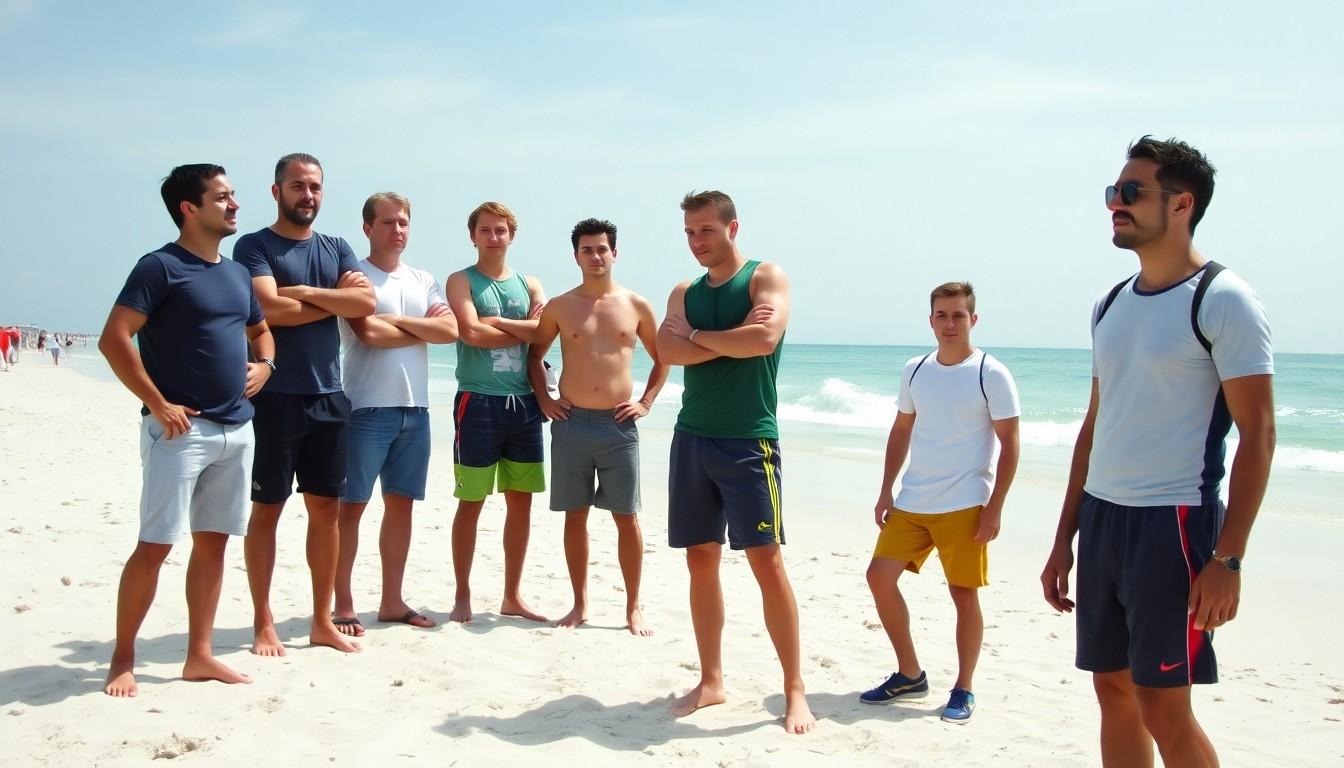
A viral Miami beach encounter has turned into an awkward lesson for Clavicular, the controversial looksmaxxing influencer. After approaching gay beachgoers with talk of “hypergamy” and masculinity, he and fellow creator Hexumlite were told they were on the wrong beach, highlighting just how poorly the online dating playbook translates to real life.
Essential Takeaways
- The clip went viral: The beach exchange attracted millions of views across social media.
- The setting mattered: The influencers approached a group of gay men who were simply relaxing at a gay beach in Miami.
- The terminology fell flat: References to “hypergamy” and “JBG-maxxing” were met with confusion rather than interest.
- The bigger issue is cultural: Looksmaxxing often treats attraction as a rigid competition, while real-world desire is far more varied.
- The advice is simple: Confidence helps, but reading the room matters more than flexing online jargon.
A confidence strategy meets the wrong audience
The clip’s funniest moment arrives quickly. Clavicular, whose real name is Braden Peters, and Hexumlite approach a group of shirtless men before launching into a conversation about attractiveness, dating and supposedly beating “hypergamy”.
The beachgoers don’t seem interested. Eventually, one of them delivers the obvious correction: they’re on the wrong beach. It’s a small sentence, but it punctures the influencers’ elaborate theory of attraction with almost perfect timing.
According to Out, the video became a viral talking point because the men weren’t debating the influencers’ terminology. They simply had no reason to engage with it. That distinction is important. Online, looksmaxxing can make attraction sound like a technical puzzle; offline, people can usually tell within seconds whether a conversation feels welcome.
What is looksmaxxing, exactly?
Looksmaxxing is a broad online trend centred on improving appearance through grooming, fitness, styling and, in more extreme corners, risky or unregulated methods. Fox News has described the movement as a Gen Z phenomenon that can range from ordinary self-care to far more aggressive regimes.
Peters has become one of its most recognisable figures, although he has rejected being reduced to an “incel” label in media coverage. Fox News reported that he has pushed back on that description while discussing the movement’s relationship with both men and women.
The softer version of looksmaxxing is hardly revolutionary. Better skincare, a flattering haircut and clothes that fit can make anyone feel more comfortable. The trouble starts when appearance becomes a scoreboard, other people become targets and complicated social behaviour is reduced to a few internet catchphrases.
Why the beach conversation fell apart
The influencers appeared to assume that the men would share their interest in status, masculinity and sexual hierarchy. Instead, the exchange revealed how narrow those assumptions were. The men weren’t looking for a seminar on male desirability, nor did they appear impressed by the performance.
That mismatch is especially striking because gay male culture already contains plenty of conversations about appearance, bodies and desirability. Miami outlets have covered the wider attention around Peters and his public antics, while the viral beach clip brought those issues into a setting where the influencers’ assumptions were immediately challenged.
Hexumlite’s repeated concern about whether he looked like a “top” also exposed a tired stereotype about gay men. Sexual roles don’t map neatly onto body size, muscle or personality, and the idea that one role is automatically more masculine is as simplistic as the looksmaxxing worldview itself.
The real lesson is about reading the room
There’s nothing wrong with wanting to look healthier or feel more confident. The practical route is familiar: sleep properly, exercise safely, care for your skin, choose clothes you actually like and avoid unregulated substances or procedures marketed as shortcuts.
But no glow-up can replace basic social awareness. If someone is relaxing with friends, a hard sell about dating theory is unlikely to land, especially when it begins with assumptions about their sexuality or interests. A good approach is less about dominating the interaction and more about noticing whether the other person wants one.
This is where the viral moment feels more revealing than shocking. Looksmaxxing promises control in an area that is inherently unpredictable. Yet attraction isn't a maths problem, and people aren't audiences waiting to validate a stranger's self-improvement routine.
From internet performance to real-world consequences
Peters has faced wider scrutiny beyond the beach clip. CBS News Miami reported on legal action involving the streamer, while ABC News covered a separate case in which he was charged after an alleged alligator shooting. Those reports add context to why his online persona continues to attract attention well beyond the original looksmaxxing community.
That constant escalation is part of the modern influencer economy. A provocative persona brings views, but it can also encourage increasingly theatrical behaviour, where every awkward interaction becomes content and every criticism becomes another opportunity for engagement.
For viewers, the sensible response is to separate harmless grooming advice from dangerous claims and hostile social theories. For anyone tempted to copy the performance, the beachgoers offered a useful reminder: being attractive isn't the same as being interesting, and confidence without awareness can become cringe remarkably quickly.
It's a small beach correction with a much bigger message: attraction starts with respect, not internet jargon.
Source Reference Map
Story idea inspired by: [1]
Sources by paragraph: