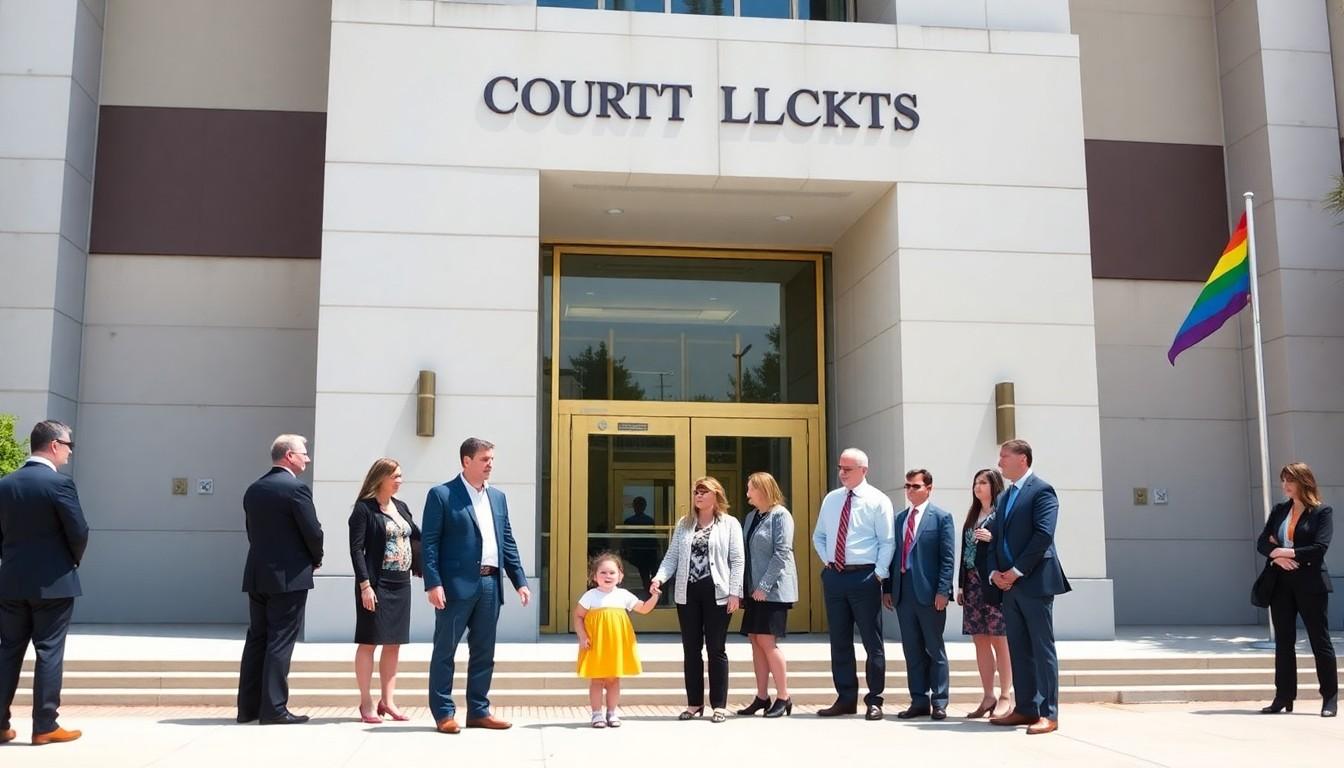
Parents challenging California's transgender student policy are gaining backing from state officials, lawmakers and religious liberty groups as the case returns to the 9th Circuit. The dispute centres on whether schools may keep a pupil's gender identity and requested social transition from parents, a question now tied to constitutional rights, faith and family decision-making.
Essential Takeaways
- The policy remains blocked: A lower-court injunction prevents California from enforcing the law while the appeal continues.
- The Supreme Court intervened: Justices paused enforcement in March, finding the parents were likely to show constitutional harm.
- Support is widening: Seventeen state attorneys general, five senators and more than 70 organisations have filed briefs backing the challengers.
- The central issue is disclosure: California schools aren't required to tell parents when a child identifies as transgender or seeks a different social identity at school.
- The case isn't over: The Supreme Court hasn't issued a final ruling on the law's constitutionality.
A California school policy puts parental rights centre stage
The legal battle began with a deceptively simple question: should parents be told when a child asks a school to use a different name, pronouns or gender presentation?
California's law prevents school districts from adopting rules that require staff to notify parents in those circumstances. It doesn't ban individual teachers from sharing information voluntarily, but it stops districts from making disclosure a standard obligation. That distinction has become the hinge of a much larger constitutional dispute. According to Clark Hill, the Supreme Court's intervention left the policy unenforceable while the underlying case proceeds. [4]
For parents bringing the challenge, the concern is less about school administration than who gets to make significant decisions about a minor's upbringing. Their lawyers argue that keeping families out of the conversation interferes with parental authority and, for some families, religious freedom. The question is emotionally charged because it involves children, identity and trust all at once. [5]
The Supreme Court has paused enforcement, not settled the argument
In March, the US Supreme Court voted 6-3 to halt enforcement of the law. The justices did not deliver a final verdict on whether California's policy is constitutional, but they indicated that the challengers were likely to succeed on claims involving parents' rights to guide their children's upbringing and practise their faith. [6]
That interim decision matters because it keeps the law on the sidelines while the appeal is heard. The permanent injunction issued by a lower court remains in place, and the dispute is now before the US Court of Appeals for the 9th Circuit. In practical terms, California schools are operating under a legal freeze rather than a definitive nationwide rule. [7]
Legal disputes at this stage can feel oddly suspended, with the loudest arguments happening in briefs rather than classrooms. Still, the outcome could influence how schools balance pupil privacy, family involvement and staff responsibilities well beyond California. [4]
Seventeen states and dozens of groups join the parents
The parents, represented by the Catholic legal organisation The Thomas More Society, have attracted an unusually broad set of supporters. Attorneys general from 17 states filed a brief defending what they describe as a fundamental parental role, while five Republican senators submitted a separate argument focused on the country's legal tradition of parental decision-making. [2]
More than 70 non-governmental organisations also backed the case, including Christian legal, medical and family advocacy groups. Their brief argues that parents should be able to monitor the ideas and influences shaping their children's lives, particularly when school staff become involved in sensitive questions about identity and wellbeing. [3]
The coalition isn't legally decisive, of course. Courts don't decide cases by counting signatures, and the groups involved have clear political and religious viewpoints. But the volume of support signals that the dispute has become a test case in a broader national argument over parental rights and school autonomy. [2]
Why the 9th Circuit's next decision could matter
The challengers say California's policy should face strict scrutiny, the toughest constitutional test. Their position is that when a law affects fundamental rights, the state must show a compelling purpose and prove that its approach is narrowly designed to achieve it. [5]
Backers also point to longstanding legal principles concerning medical and educational decisions. A brief from legal scholars Robert P. George, Melissa Moschella and Eric A. DeGroff argues that parents have traditionally been treated as the primary decision-makers for their children's care, while acknowledging that parental authority has never been unlimited. [3]
That balance will be crucial. Parents generally have wide authority, but schools also have duties to protect pupils and provide an environment where young people can seek help. The 9th Circuit will have to weigh those competing responsibilities without turning a complex family question into a slogan.
What families and schools should watch now
For families, the immediate takeaway is that the California policy remains blocked, but the legal landscape isn't settled. Parents should check their district's current guidance, ask how staff handle requests involving names or pronouns, and seek professional legal advice if a dispute becomes formal. General online commentary won't substitute for advice based on a family's specific circumstances.
Schools, meanwhile, must follow the injunction and any district-level instructions while the appeal continues. They also need to tread carefully around confidentiality, safeguarding and communication with parents, because a policy that sounds clear in theory can become tangled in practice when a pupil's safety or home circumstances are disputed. [6]
The next stage will likely sharpen the debate rather than end it. Whatever the judges decide, families and educators will still have to navigate the human reality behind the paperwork: a child looking for support, and adults trying to decide who should be in the room.
It's a case about disclosure on paper, but trust is the real battleground.
Source Reference Map
Story idea inspired by: [1]
Sources by paragraph: