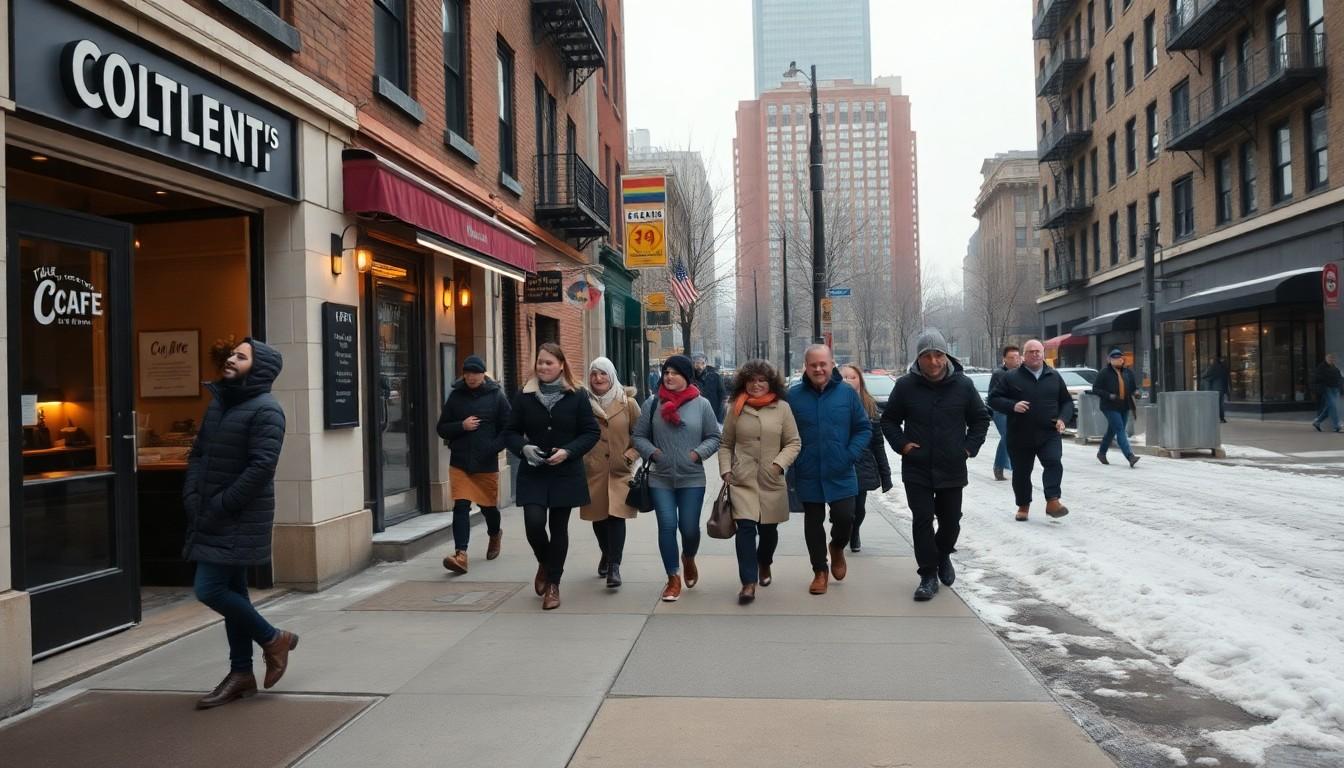
Readers are being invited to see New York City through a sapphic lens, where decades of LGBTQ+ history meet welcoming neighbourhoods, memorable food and a famously resilient spirit. Writer Mary P. Burns shares what makes the city special, from exploring its streets to enjoying skyline views, while also highlighting the practical challenges winter weather can bring.
Essential Takeaways
- A city with seemingly everything: New York offers culture, food and experiences for almost every interest.
- Sapphic life has changed: Burns describes a difficult beginning in 1978, followed by a more welcoming experience today.
- Resilience remains central: The city’s ability to recover from setbacks gives her hope.
- Winter access matters: Snow can make pavements, crossings and public transport especially difficult for people using canes, walkers or wheelchairs.
- The classic visitor tip: Choose an area that appeals to you, then explore on foot and eat locally.
New York City feels made for wandering
Burns’ description of New York is appealingly simple: it has almost anything a visitor could want, plus the occasional discovery they didn't realise they were looking for. That sense of surprise is part of the city's pull, whether you're following a favourite book, chasing a restaurant recommendation or simply turning down an unfamiliar street.
For first-time visitors, her advice is refreshingly unfussy. Pick the part of the city that interests you most, walk around and look for somewhere good to eat. It's a better strategy than trying to conquer every borough in one exhausting weekend, particularly in a city that rewards curiosity. Travel and LGBTQ+ publishing communities continue to spotlight stories that place queer lives in varied locations, rather than treating them as belonging to one single type of neighbourhood or city. ([2], [3])
A sapphic life shaped by changing times
Burns has lived in New York since 1978, giving her a rare view of how the city has changed across nearly five decades. She recalls that being openly sapphic was harder in those early years, when coming out was still becoming more visible and widely understood.
Today, she says people are welcoming when she introduces her wife of 23 years. That contrast is quietly powerful. It doesn't erase the fear or difficulty of earlier decades, but it shows how ordinary visibility can become a form of progress, especially when queer couples can move through daily life without having to explain their existence at every turn. LGBTQ+ news coverage continues to document the uneven political climate surrounding queer rights, making these personal accounts feel particularly important. ([5], [6])
Why New York's resilience still matters
Asked what gives her hope, Burns points to New York itself: the city survives anything. It's a short answer, but one that captures the sturdy, slightly stubborn character many people associate with the place. New York has a talent for absorbing disruption, reinventing itself and carrying on with dinner plans intact.
That resilience also sits alongside the city's vast queer cultural landscape. Independent writers, LGBTQ+ publishers and community-focused publications help keep sapphic stories visible, from contemporary romances to personal accounts of life in major cities. For readers following global LGBTQ+ storytelling, the point isn't that every place is perfect. It's that queer people are living, loving and making meaning everywhere. ([2], [3], [4])
Winter exposes the city's accessibility gaps
New York's romance becomes more complicated after a heavy snowfall. Burns uses a cane and says snowstorms can leave her waiting until much of the snow has melted before she feels able to go out. Poorly cleared bus stops, crossings and mid-block access points can turn an ordinary journey into a serious obstacle.
That detail is a useful reminder for visitors with mobility needs. A trip may look accessible on paper, but weather, pavement conditions and the distance between transport stops can change the experience entirely. Check local forecasts, plan routes with indoor alternatives and allow extra time after storms. Broader reporting on LGBTQ+ policy and public life also shows why inclusion has to be practical, not merely celebratory. ([5], [7])
What should visitors eat, see and remember?
Burns refuses to name one essential regional dish or drink, and in New York that may be the most honest answer. The city is too broad, too mixed and too hungry for a single culinary calling card. Follow your appetite instead: try the neighbourhood speciality, ask locals where they eat and leave room for one spontaneous stop.
For a big, cinematic evening, she recommends The View, the revolving restaurant at the top of the Times Square Marriott Marquis. Dinner comes with a constantly changing 360-degree panorama of Manhattan, the sort of view that can make even a familiar skyline feel newly dramatic. Just remember that New York is best experienced at street level too, where the city's real texture is found in its cafés, bookshops, bars and busy pavements. ([3], [4])
A city that keeps making room
Burns retired from corporate America in 2016 and now writes sapphic romances for Bold Strokes Books. Her story connects personal history, queer representation and the everyday pleasures of a city that can still surprise its long-term residents.
New York isn't without flaws, and its winter accessibility problems deserve attention. But its ability to offer community, possibility and a place for queer stories remains a compelling reason to visit, read about it and keep exploring. ([2], [4])
Explore New York slowly, and let the city choose a few surprises for you.
Source Reference Map
Story idea inspired by: [1]
Sources by paragraph: