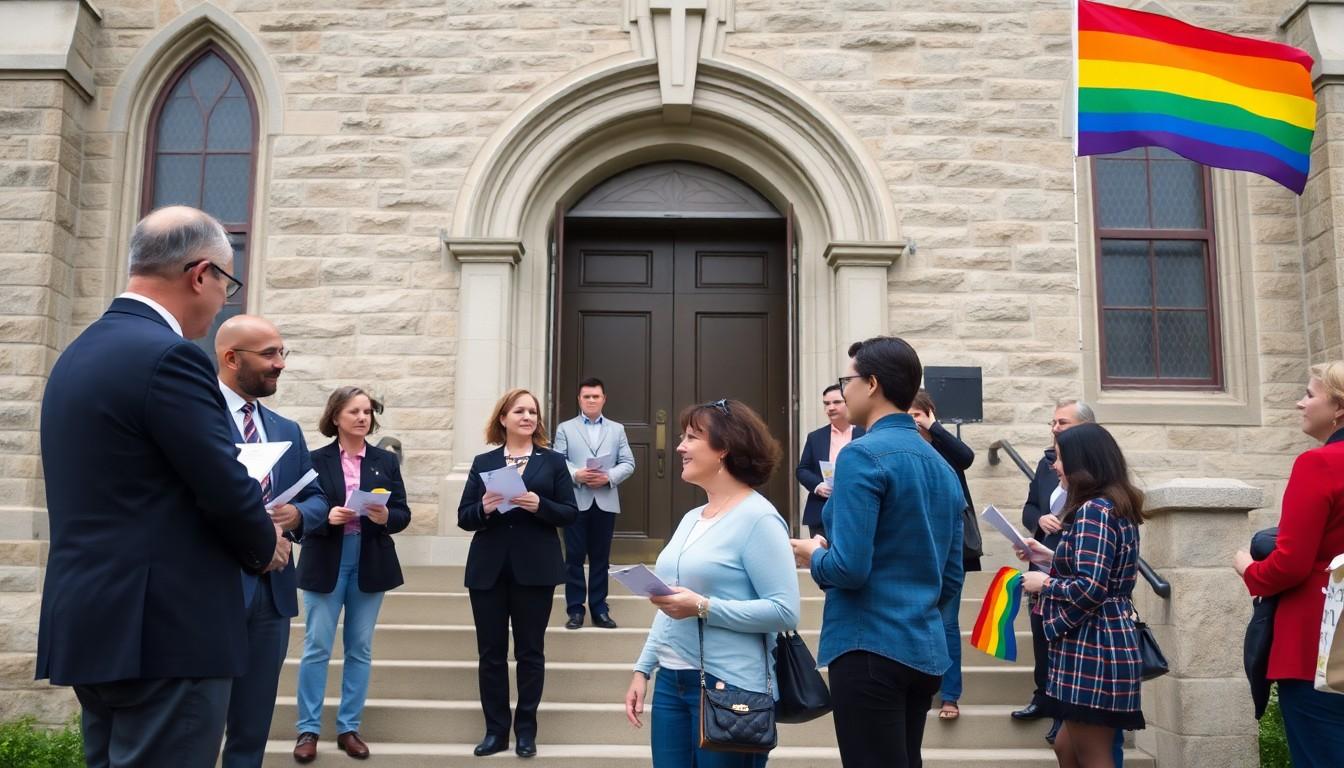
Attendees travelled to Minneapolis for the Full & Equal gathering to honour a landmark Episcopal Church resolution, reconnect with fellow campaigners and consider what inclusion requires today. The event brought together personal stories, institutional memory and a clear reminder that progress can feel both hard-won and unfinished.
Essential Takeaways
- A landmark resolution: In 1976, General Convention affirmed LGBTQ+ people’s full and equal claim to the Church’s care.
- A wider turning point: The same convention approved women’s ordination and advanced the modern Book of Common Prayer.
- Personal reasons mattered: Attendees came to find community, understand their history, support relatives and grow into their identities.
- The work continues: Participants highlighted trans inclusion, respectful language and practical action in local congregations.
- Memory has a purpose: Preserving stories helps newer generations understand both progress and unfinished work.
Minneapolis offered a rare moment to pause
For many people at Full & Equal, the most powerful part of the Minneapolis gathering was simply being in the room. The event marked five decades since Resolution A069 declared that gay and lesbian people were children of God with an equal claim to the Church’s love and pastoral care, according to Episcopal News Service.
That history carried an emotional weight. Some attendees had lived through rejection, delayed ordination or the quiet strain of having to explain themselves repeatedly. Others arrived more recently, hoping to understand the institution they had joined and the people who had helped change it.
The Episcopal Church’s own LGBTQ+ history materials place the 1976 resolution within a broader movement towards greater inclusion. It was a gathering where celebration and discomfort could sit side by side, which is often what honest history looks like.
One convention changed more than one conversation
The 1976 General Convention is remembered for several major decisions, not just its statement on LGBTQ+ people. The Church also approved the ordination of women to the priesthood and episcopate, while the process that led to the current Book of Common Prayer moved forward, according to the Episcopal Archives.
That overlap matters because attendees saw these changes as connected rather than isolated. Questions about who may lead, whose experiences shape worship and who receives full pastoral care all point towards the same underlying issue: whether a church's welcome is genuinely shared.
The Church has since documented LGBTQ+ milestones across decades, including later debates over ordination, marriage and gender identity. The long timeline makes the 1976 resolution look less like a finished chapter and more like an opening sentence.
Personal stories put the milestone in focus
Retired Bishop Nedi Rivera attended with a particularly direct reason. She has a gay grandchild and a transgender grandchild, and wanted to become a more useful ally while helping create a safer world for them.
That desire to learn ran through the gathering. Beth Whitaker described her congregation’s Pride committee as energetic and increasingly focused on trans young people and their families. For her, the value of Minneapolis was practical: take the lessons home and make local ministry better.
Others came to claim space for themselves. Sean McConnell spoke about coming out as bisexual, while Radiant Energy, who identifies as trans non-binary, described both the welcome and the painful misgendering they experienced at the event. Those moments underline why inclusion can't be measured only by resolutions or anniversaries.
Why the history still matters for congregations
Churches looking to strengthen LGBTQ+ ministry don't need to begin with grand gestures. Listening sessions, clear pronoun practices, support for families and visible backing from parish leaders can make a congregation feel safer in everyday life.
The Human Rights Campaign's overview of Episcopal positions notes the denomination's support for LGBTQ+ equality, but formal policy doesn't automatically settle local culture. A welcoming statement on a website is useful; consistent behaviour on a Sunday morning is what people remember.
That distinction is especially important for transgender and non-binary worshippers. A lanyard, badge or introduction can help, but respect also depends on preparation, correction without defensiveness and a willingness to keep learning. Small changes may seem modest, yet they can determine whether someone returns.
Looking back should lead to the next right step
Retired Bishop Gene Robinson compared progress to stopping briefly in a field to see how far the work has taken you before starting again. It’s a striking image for a movement that has spent decades pushing through institutional resistance and cultural change.
The Episcopal Church has invited members to mark the resolution’s 50th anniversary through commemoration and advocacy, while its Office of Government Relations has linked the anniversary to continued public action. That framing keeps the event from becoming a nostalgic photo opportunity.
David Hales, who works with the Church’s archives, also emphasised the importance of preserving people’s stories. For newer members, those accounts can turn an abstract institutional history into something warm, difficult and recognisably human. The past is easier to value when you can hear the voices that carried it.
Full & Equal offered a pause, not an endpoint.
Source Reference Map
Story idea inspired by: [1]
Sources by paragraph: