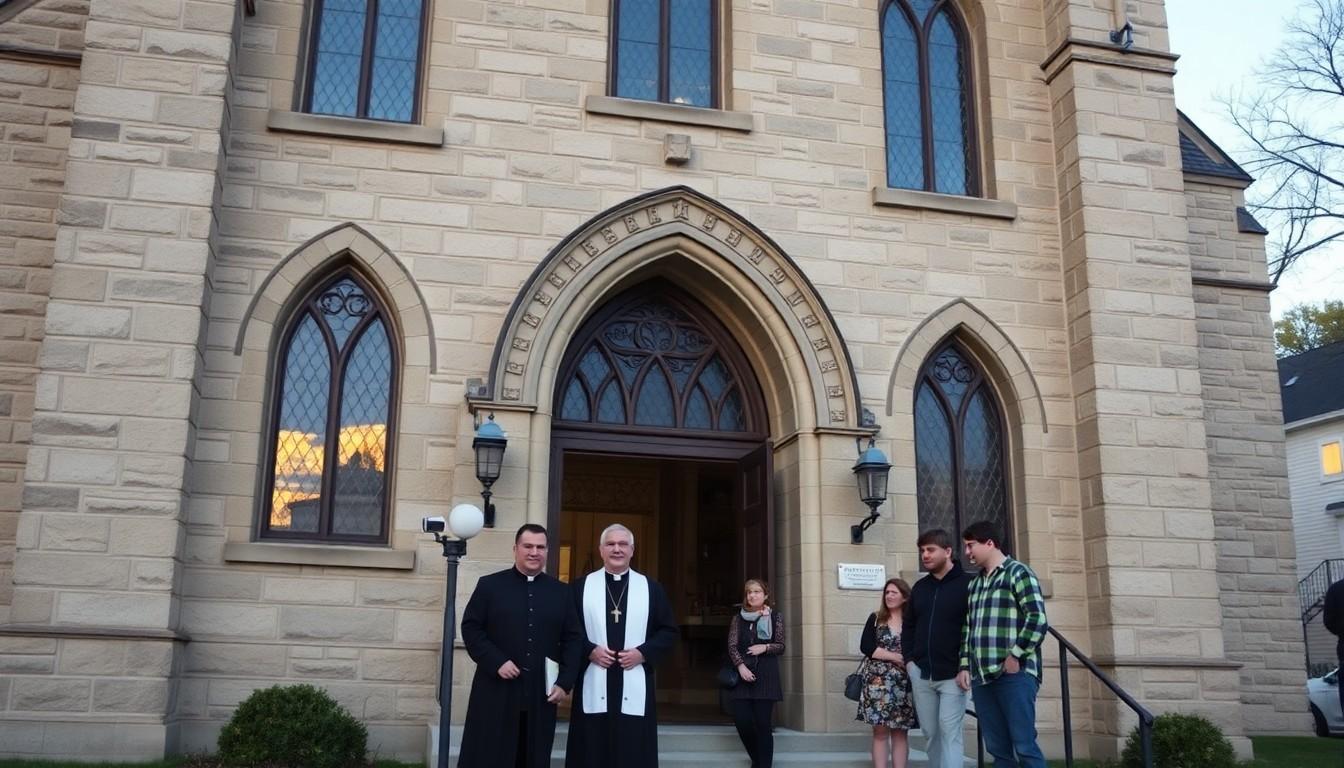
Church members gathered in Minneapolis to mark 50 years since The Episcopal Church affirmed LGBTQ+ people’s “full and equal claim” to the church’s care. The three-day event was less a celebration of victory than a candid look at unfinished work, painful history and the practical courage needed to protect inclusion in a more hostile political climate.
Essential Takeaways
- A historic promise: The 1976 resolution formally affirmed LGBTQ+ people’s equal place in the church.
- Nearly 200 people attended: The Minneapolis gathering combined worship, education and personal storytelling.
- The work remains unfinished: Speakers highlighted continuing discrimination, particularly affecting trans people.
- History is being preserved: Organisers plan to publish session videos, a documentary and supporting study materials.
- Advocacy is changing: Church leaders say older public campaigning methods may no longer be safe or effective.
A milestone, but not a victory lap
The atmosphere in Minneapolis was reflective rather than triumphant. Almost 200 participants met from 3 to 5 September for Full & Equal: 50 Years in Pursuit of a Promise, a gathering designed to examine what The Episcopal Church has done since its landmark 1976 resolution, and what it still owes future generations.
The original declaration said homosexual people were children of God with the same claim to the church's love, acceptance and pastoral care as anyone else. According to The Episcopal Church's historical record, that statement became a foundation for decades of campaigning, debate and gradual institutional change.
The Rev Susan Russell, who chairs the General Convention's LGBTQ+ inclusion task force, described the event as another stage in a relay race. It's an apt image: the baton has changed hands repeatedly, but nobody is pretending the finish line has been reached.
Why telling the stories matters
Personal testimony formed the heart of the event. Organisers used storytelling techniques associated with The Moth, inviting lay and ordained speakers to describe the past, the present and the future in vivid, human terms.
That approach matters because institutional history can become strangely tidy when reduced to resolutions and dates. The Episcopal Church's LGBTQ+ history includes public advances, but also fear, compromise, conflict and private acts of courage that rarely appear in official summaries.
One story came from Vermont, where Episcopalians supported marriage equality in the late 1990s and later developed local liturgical practices for same-sex couples before a churchwide blessing rite existed. The account, shared at the gathering, showed how local communities sometimes moved ahead carefully, creating room for change without pretending the wider institution was ready.
The present is more complicated
Speakers were clear that progress has not removed the dangers facing LGBTQ+ people. Presiding Bishop Sean Rowe singled out the treatment of trans people as a continuing moral crisis, while also warning that conventional advocacy methods can expose vulnerable communities to greater risk.
That tension is increasingly familiar across faith groups and charities. The Episcopal Church's Office of Government Relations has linked its anniversary work with renewed advocacy, suggesting that commemoration is being used as a platform for present-day action rather than simply remembrance.
The wider religious landscape is mixed. The Human Rights Campaign's overview of faith positions shows how denominations differ sharply on LGBTQ+ rights and inclusion. In that context, The Episcopal Church's public stance remains significant, but it also places responsibility on leaders to turn principle into practical protection.
What churches can learn from the past
The gathering's proposed archive could become one of its most useful legacies. Organisers aim to collect stories from the past 50 years, release recordings and build a documentary-based curriculum for congregations and dioceses.
For local churches, that creates an opportunity to do more than hold an anniversary service. They could record oral histories, invite older members to share memories, review safeguarding and inclusion policies, and discuss how national decisions affected people in their own pews.
The lesson is especially relevant for communities facing internal disagreement. The church's history shows that change often began with small, careful steps: testimony at a committee hearing, a locally written liturgy or a leader willing to stand beside people who had been kept at the margins.
The next chapter needs courage
At the closing Eucharist at St Mark's Cathedral, retired Bishop Gene Robinson reminded worshippers that the 2003 consecration of an openly gay bishop had carried real institutional risk. Other denominations watched to see whether The Episcopal Church would survive the decision, he recalled, before later taking similar steps themselves.
That history offers encouragement, but it isn't a guarantee. Bishop Bonnie Perry told participants that the church needs queer leaders, faithful lay people and allies willing to face a wounded world without hiding the pain that brought them there.
The gathering's message was therefore both hopeful and demanding. Full inclusion remains a promise in motion, and its future will depend on whether today's church is prepared to protect the people it once struggled to welcome.
It's a 50-year milestone, but the work is still being handed on.
Source Reference Map
Story idea inspired by: [1]
Sources by paragraph:
- Paragraph 1: [2], [3]
- Paragraph 2: [6], [7]
- Paragraph 3: [1], [3]
- Paragraph 4: [1], [2]
- Paragraph 5: [1], [6]
- Paragraph 6: [1], [2]
- Paragraph 7: [1], [7]
- Paragraph 8: [1], [4]
- Paragraph 9: [4], [5]
- Paragraph 10: [1], [2]
- Paragraph 11: [1], [3]
- Paragraph 12: [1], [4]
- Paragraph 13: [1], [6]
- Paragraph 14: [1], [7]
- Paragraph 15: [1], [2]
- Paragraph 16: [1], [3]