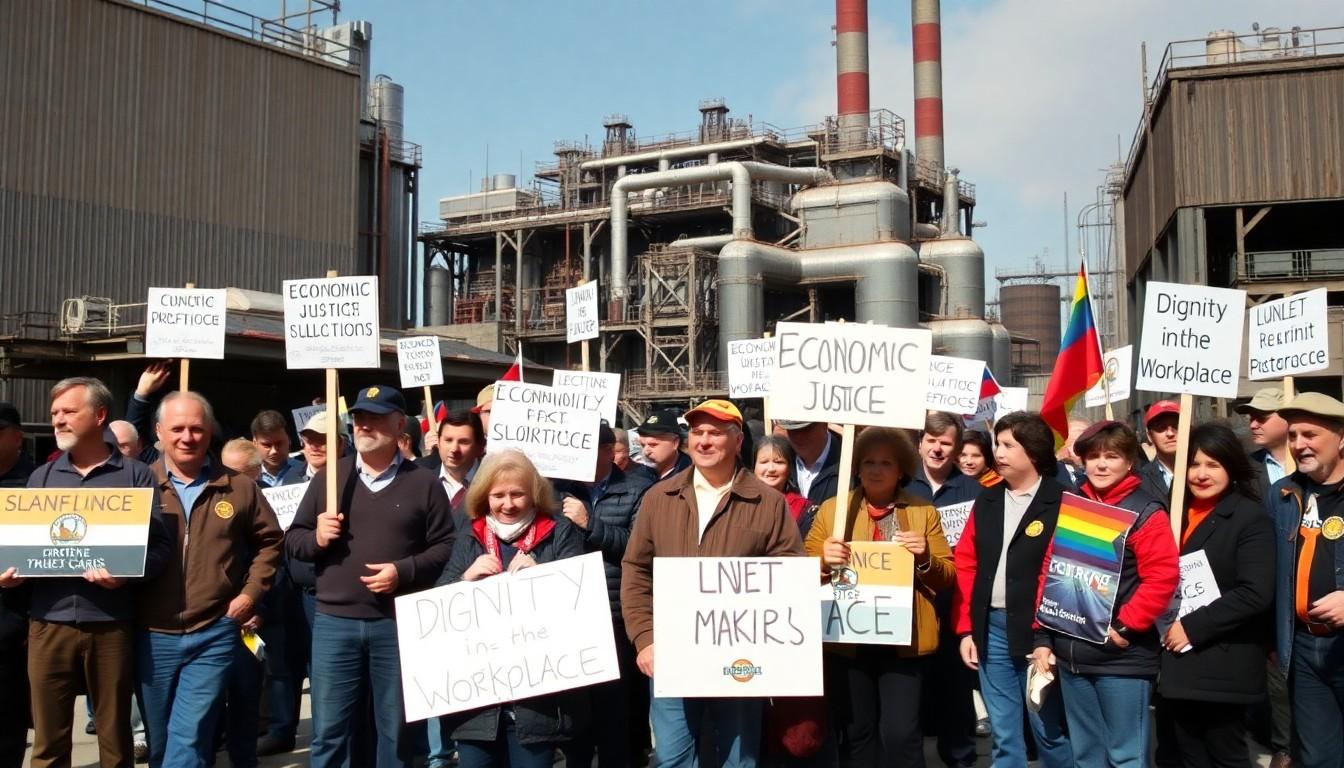
Shoppers may see Labour Day as one last summer break, but its deeper story is about collective power. From the 1882 New York parade to queer-led union campaigns, LGBTQ+ workers helped turn workplace solidarity into a practical route towards safety, dignity and fairer treatment.
Essential Takeaways
- Labour Day began with a march: Around 10,000 workers joined New York City's first parade in 1882.
- Queer workers faced real job losses: Before legal protections, suspicion about someone's sexuality or gender could cost them their livelihood.
- The Coors boycott changed the conversation: Gay liberation activists and Teamsters joined forces against anti-union and anti-gay employment practices.
- Unions became negotiating spaces: Members pushed for protection from discrimination, domestic-partner benefits and workplace support during the HIV/AIDS crisis.
- Pride and labour overlap: Housing, healthcare, wages and job security remain closely connected for LGBTQ+ workers.
Labour Day started with collective action
The first Labour Day parade wasn't a polished civic spectacle. It was a mass demonstration, with roughly 10,000 workers marching through New York City before gathering for food, music and speeches. According to the Washington Post, the holiday's early history is more complicated than the familiar story of one heroic founder. Historians have credited both Peter McGuire and Matthew Maguire, while the Central Labour Union helped organise the event.
That detail matters because labour movements rarely come from one person with a grand plan. They're built through committees, noisy meetings and people deciding that unfair conditions have lasted long enough. The celebration became a federal holiday in 1894, but the pressure behind it came from workers organising long before politicians put it on the calendar.
The same principle later shaped LGBTQ+ workplace activism. When bosses could dismiss someone because of their sexuality or gender identity, collective action offered something individual employees often lacked: protection, witnesses and bargaining power.
Why unions mattered so much to queer workers
For much of the 20th century, being openly LGBTQ+ could threaten a person's job, housing and financial stability. A workplace rumour, a police raid or an employer's prejudice could suddenly become an eviction notice or an empty bank account.
That made unions especially important. A collective agreement could replace arbitrary dismissal with procedures and the requirement for just cause. It didn't remove discrimination overnight, but it gave workers a route to challenge it instead of facing management alone. As scholarship collected by Temple University Press shows, LGBTQ+ organising inside unions became a significant part of the wider fight for workplace equality.
This history also explains why employment rights remain such a central concern. A rainbow logo is pleasant enough, but a fair disciplinary process, affordable healthcare and protection from dismissal are considerably more useful when the bills arrive.
The Coors boycott forged an unlikely alliance
The 1970s Coors boycott became one of the clearest examples of queer and labour activism working together. Gay liberation campaigners in the San Francisco Bay Area joined Teamsters in opposing the brewer, whose employment practices included intrusive screening of job applicants and hostility towards organised labour.
The campaign wasn't merely symbolic. Activists refused to buy the beer, while union drivers challenged its distribution. The Teamsters' own account describes the boycott as a turning point, helping build trust between rank-and-file union members and gay activists. Research discussed by JSTOR Daily likewise presents it as a powerful example of economic pressure being used to challenge discrimination.
The campaign also showed why solidarity can be practical rather than sentimental. One group brought consumer organising and community networks; the other brought transport workers and industrial leverage. Together, they made a familiar brand part of a much larger argument about who gets to work safely and who controls the workplace.
Pride moved into the bargaining room
By the late 1970s and 1980s, LGBTQ+ caucuses and networks were forming within major unions. They pushed for contract language covering sexual orientation, domestic-partner benefits and fair treatment for workers living with HIV or AIDS.
The Washington Post has noted that organised labour was an important arena for LGBTQ+ rights before national legal protections arrived. The fight was often won in ordinary, unglamorous places: steward meetings, grievance procedures and negotiations over employee benefits. Those victories could change daily life long before a court ruling made headlines.
Pride at Work eventually became an official constituency group of the AFL-CIO in 1997, reflecting how far the relationship between queer activism and organised labour had developed. The movement had moved from the margins of union politics into the central conversation about who labour organisations represented.
The fight still links wages, healthcare and freedom
Pride and labour aren't identical movements, but they repeatedly meet around the same pressures. If healthcare is tied to employment, losing a job can mean losing essential treatment. If rent rises faster than wages, discrimination becomes even harder to escape. And if a worker is isolated, challenging a powerful employer can feel almost impossible.
The Coors story remains useful because it offers a simple lesson: solidarity works best when it crosses familiar boundaries. A union member, a queer activist and a consumer may have different reasons for joining a campaign, but they can still pull in the same direction.
So Labour Day deserves more than a barbecue and a long weekend. It can also be a reminder that workplace rights were won by people who organised before the law caught up, and that dignity at work is still something workers have to defend together.
It's a small holiday with a remarkably large argument behind it: nobody should have to choose between earning a living and being themselves.
Source Reference Map
Story idea inspired by: [1]
Sources by paragraph: