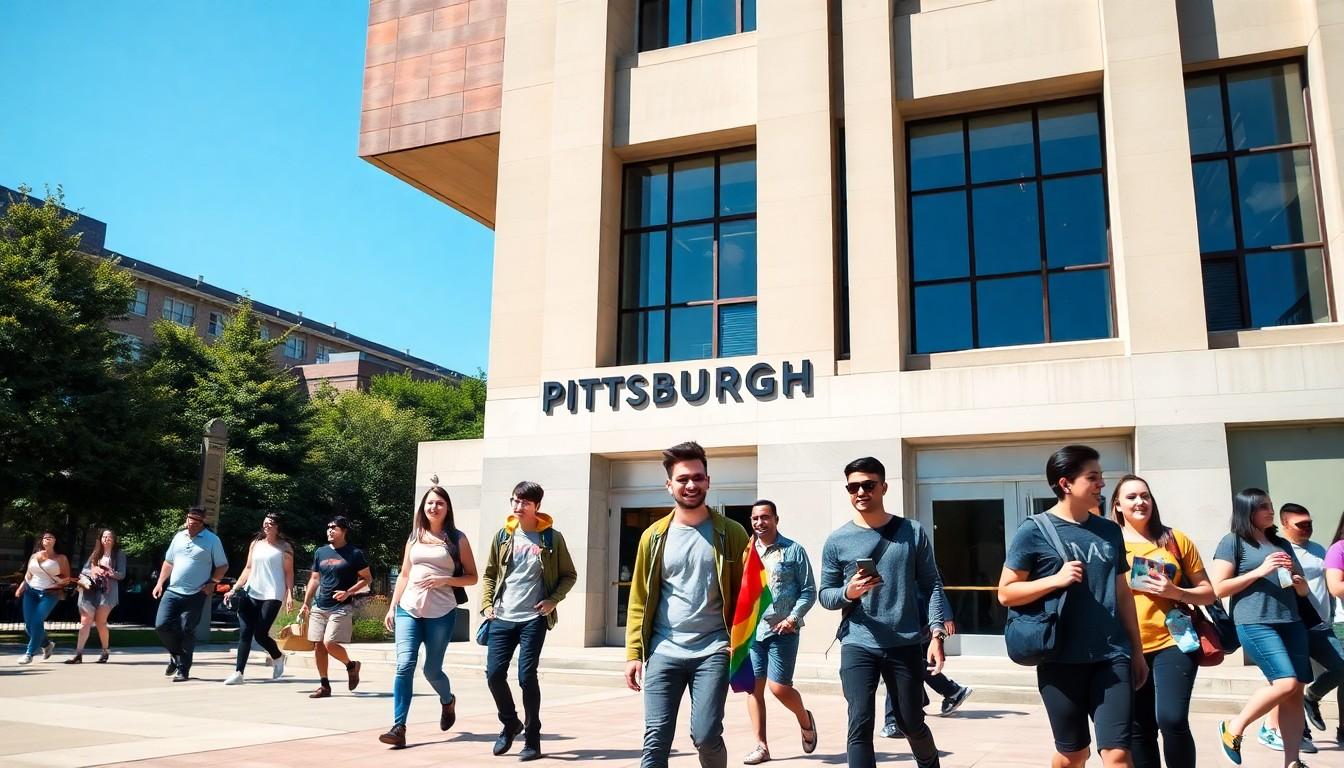
Readers are finding hope in Pittsburgh’s queer community, from Kits Blanc’s candid endometriosis advocacy to students building LGBTQIA+ belonging at the University of Pittsburgh. Together, these stories show why inclusive spaces, honest health conversations and ordinary moments of love can make everyday freedom feel wonderfully real.
Essential Takeaways
- Health visibility: Kits Blanc is challenging the assumption that endometriosis belongs to one gender.
- Community support: Pittsburgh offers LGBTQIA+ spaces where people can meet, learn and simply be themselves.
- Everyday liberation: A dance between two husbands became a powerful moment of safety and joy.
- Practical message: Inclusive healthcare and welcoming social spaces both matter, especially for people who are often overlooked.
Endometriosis doesn’t fit a gender stereotype
Endometriosis is often discussed as though it affects only one kind of person. Kits Blanc’s experience pushes back against that narrow picture, bringing a trans man’s perspective to a condition marked by pain, diagnosis delays and, all too often, disbelief.
That visibility has a practical purpose. When health information is wrapped too tightly in gender assumptions, people can struggle to recognise symptoms or find care that respects their identity. Reporting by Giddy has highlighted the particular challenges trans men can face while seeking help for endometriosis, including discomfort around language and medical expectations.
Blanc’s advocacy is grounded in lived experience, but it reaches beyond his own story. His work helps other patients understand that they’re not unusual for needing care that acknowledges both their medical needs and who they are.
Why honest patient stories can change care
Endometriosis can involve persistent pain, surgery and a long route to diagnosis. For many patients, the emotional burden comes alongside the physical one, particularly when symptoms are minimised or conversations become awkwardly gendered.
The Endometriosis Foundation of America has promoted patient education and wider discussion around the condition, helping people find language for experiences that can otherwise feel isolating. Blanc’s fundraising appeal for surgery reflects the reality that treatment can also bring serious financial pressure.
For anyone looking for support, it’s worth keeping a symptom record, asking what treatment options are available and seeking a second opinion when concerns are repeatedly dismissed. A clinician’s willingness to listen matters just as much as the appointment itself.
Pittsburgh’s LGBTQIA+ spaces offer room to breathe
Healthcare is only one part of belonging. At the University of Pittsburgh, LGBTQIA+ inclusion initiatives give students places to connect, organise and explore identity without arriving with every answer neatly prepared.
The university’s Rainbow Office, based in the William Pitt Union, supports LGBTQIA+ students through community, resources and programming. Its directory also places the space within a wider student-union network, making it easier for newcomers to find practical support rather than relying on chance encounters.
That matters during a major life transition. Starting university can be exciting, but it can also make identity questions feel louder. A welcoming room, a low-pressure event or a friendly conversation can be enough to turn a confusing first week into the beginning of a community.
Sometimes queer liberation looks wonderfully ordinary
The most striking moment in the newsletter is also the simplest: a husband dancing with his husband in public without feeling watched, challenged or forced to hide.
There’s a tendency to describe queer progress through major public events, and those moments matter. But safety can also appear in a quieter form, somewhere between songs at a dance party, when affection no longer feels like a calculated risk.
That kind of ordinary happiness is easy to underestimate. Yet for people who’ve spent years monitoring how they move through public space, being visibly together can feel enormous. It’s a small scene with a big emotional aftertaste.
Building belonging takes more than one good story
The common thread running through these Pittsburgh stories is permission, although nobody should have to ask for it. Patients deserve to describe their bodies honestly. Students deserve spaces where they can question, change and grow. Couples deserve to enjoy a night out without shrinking themselves.
For readers seeking LGBTQIA+ community, starting small is often the least intimidating route. Try a student centre, local event, support group or community organisation, and give yourself time to find the people and spaces that feel right.
The outlook is encouraging, but inclusion still needs active care. As these stories show, visibility can open a door, while community is what helps people stay in the room.
Freedom doesn’t have to arrive with fireworks. Sometimes it looks like better language at a medical appointment, a welcoming university office or two people dancing without fear.
Find the spaces that let you be fully yourself.
Source Reference Map
Story idea inspired by: [1]
Sources by paragraph:
- Paragraph 1: [6], [5]
- Paragraph 2: [2], [6]
- Paragraph 3: [5], [7]
- Paragraph 4: [3], [4]
- Paragraph 5: [3], [4]
- Paragraph 6: [6], [7]
- Paragraph 7: [5], [7]
- Paragraph 8: [3], [4]
- Paragraph 9: [3], [4]
- Paragraph 10: [6], [5]
- Paragraph 11: [3], [4]
- Paragraph 12: [2], [3]
- Paragraph 13: [3], [4]
- Paragraph 14: [2], [5]