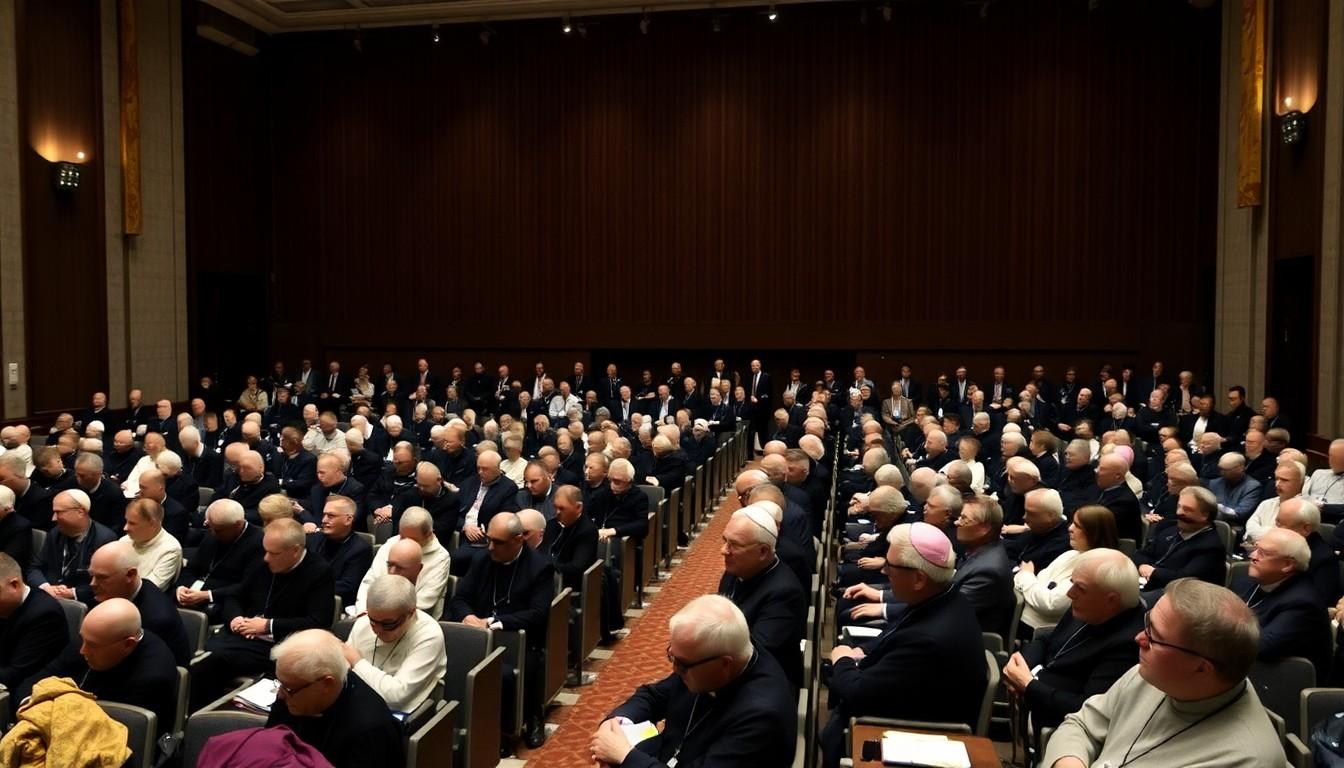
Church leaders, priests and pastoral workers gathered in Rome for a landmark national meeting on LGBTQ ministry in Italy. Their focus was practical: sharing diocesan experience, improving training and building a more welcoming, integrated approach within ordinary church life.
Essential Takeaways
- A sizeable gathering: Around 200 people attended, including priests and 10 bishops involved in diocesan LGBTQ ministry.
- Practical examples: Florence, Bari, Cremona and Chiavari presented pastoral work already under way.
- A listening-led approach: Speakers stressed accompaniment, recognition and education rather than judgement.
- Training remains central: Formation for priests and pastoral volunteers was identified as a key priority.
- National coordination: A bishops' working group is expected to develop guidance for LGBTQ pastoral ministry.
A national meeting with real momentum
The atmosphere in Rome was serious but energised. Around 200 participants gathered at the Jesuit headquarters for Italy's first national conference focused specifically on pastoral workers accompanying LGBTQ people, with the room filled largely by priests, alongside bishops and lay representatives.
The meeting came nearly a year after a major LGBTQ Christian jubilee in Rome, suggesting that the conversation is moving from occasional events towards a more organised national network. Avvenire reported that the conference centred on listening, welcome and education in diocesan life.
That shift matters. Rather than treating LGBTQ ministry as a specialist corner of church activity, participants described it as part of ordinary pastoral work. It is a subtle change in emphasis, but one with potentially far-reaching consequences for parishes, youth groups and formation programmes.
Four dioceses shared what is already working
The morning session placed local experience at the centre. Bishops from Florence, Bari, Cremona and Chiavari presented examples of pastoral practice, showing how dioceses are developing initiatives that involve different parts of church life rather than relying on one named project or volunteer.
According to Avvenire, these examples included listening, accompaniment and education, with particular attention to preparing priests and pastoral workers. That practical emphasis is important because good intentions can quickly run out of steam without people who know how to handle difficult conversations with care.
Gionata's account likewise highlighted the value of bishops speaking directly about their dioceses and the work of their collaborators. For families and LGBTQ Catholics, that kind of visible leadership can make a local church feel less like a closed door and more like a place where questions can be asked honestly.
From welcome to recognition and fuller participation
The conference also reflected a wider debate about language. A report by ANSA quoted Cardinal Matteo Maria Zuppi's call for the Church not to judge transgender people but to accompany them, while other discussion has pushed beyond the familiar vocabulary of welcome towards recognition and full integration.
That distinction may sound technical, but it is felt keenly by people who have spent years being tolerated without feeling fully included. New Ways Ministry noted an Italian bishop's preference for speaking about recognition and complete participation, rather than stopping at a general invitation to feel welcome.
In the afternoon, national Catholic movements and organisations, including Italian Scouts, Catholic Action, the Federation of Catholic University Students and the Focolare Movement, described their own progress. Their stories included delays and difficulties, but also examples of LGBTQ people taking part in formation, service and apostolic work.
Why training could make the biggest difference
One of the clearest messages from the meeting was that pastoral change needs preparation. Priests, teachers and volunteers may want to support LGBTQ people, yet still lack the vocabulary or confidence to respond well when a young person comes out, a family asks for help or a transgender person seeks a place in parish life.
The conference connected this challenge with the wider Synod process. Vatican News reported on the work of the Synod's group dealing with emerging questions, including the need for the Church to understand new social and anthropological realities through a pastoral lens.
That doesn't remove theological disagreement, but it encourages a different starting point: listen first, understand the person in front of you and then consider how the community can respond. In everyday terms, that means fewer improvised reactions and more thoughtful, consistent support.
A network that could shape the next chapter
Participants divided into six regional groups to exchange contacts and discuss future collaboration. The aim was not simply to applaud encouraging examples, but to connect people who can share resources, training and hard-won lessons across dioceses.
The meeting ended with an open discussion and a plan for further appointments. Bishop Giampaolo Dianin, the Italian bishops' delegate for LGBTQ pastoral ministry, is expected to chair a working group developing national guidance, giving the movement a clearer institutional framework.
Religion Digital described the Italian gathering as part of a broader effort to listen, accompany and teach within the Church. Its long-term impact will depend on what happens after the applause fades: whether dioceses invest in training, whether LGBTQ people are invited into meaningful roles and whether local practice becomes more consistent.
For now, the most striking detail is perhaps the simplest one. Bishops, priests and pastoral workers sat together to compare experience in public, practical terms. For many LGBTQ Catholics and their families, that visible willingness to listen may be where change begins.
It's a significant step towards a more connected and less improvisational approach to LGBTQ pastoral care in Italy.
Source Reference Map
Story idea inspired by: [1]
Sources by paragraph:
- Paragraph 1: [2], [4]
- Paragraph 2: [5], [7]
- Paragraph 3: [2], [5]
- Paragraph 4: [2], [5]
- Paragraph 5: [5], [2]
- Paragraph 6: [3], [7]
- Paragraph 7: [4], [5]
- Paragraph 8: [2], [5]
- Paragraph 9: [6], [7]
- Paragraph 10: [6], [2]
- Paragraph 11: [5], [4]
- Paragraph 12: [4], [5]
- Paragraph 13: [5], [7]
- Paragraph 14: [2], [4]
- Paragraph 15: [3], [6]
- Paragraph 16: [5], [7]