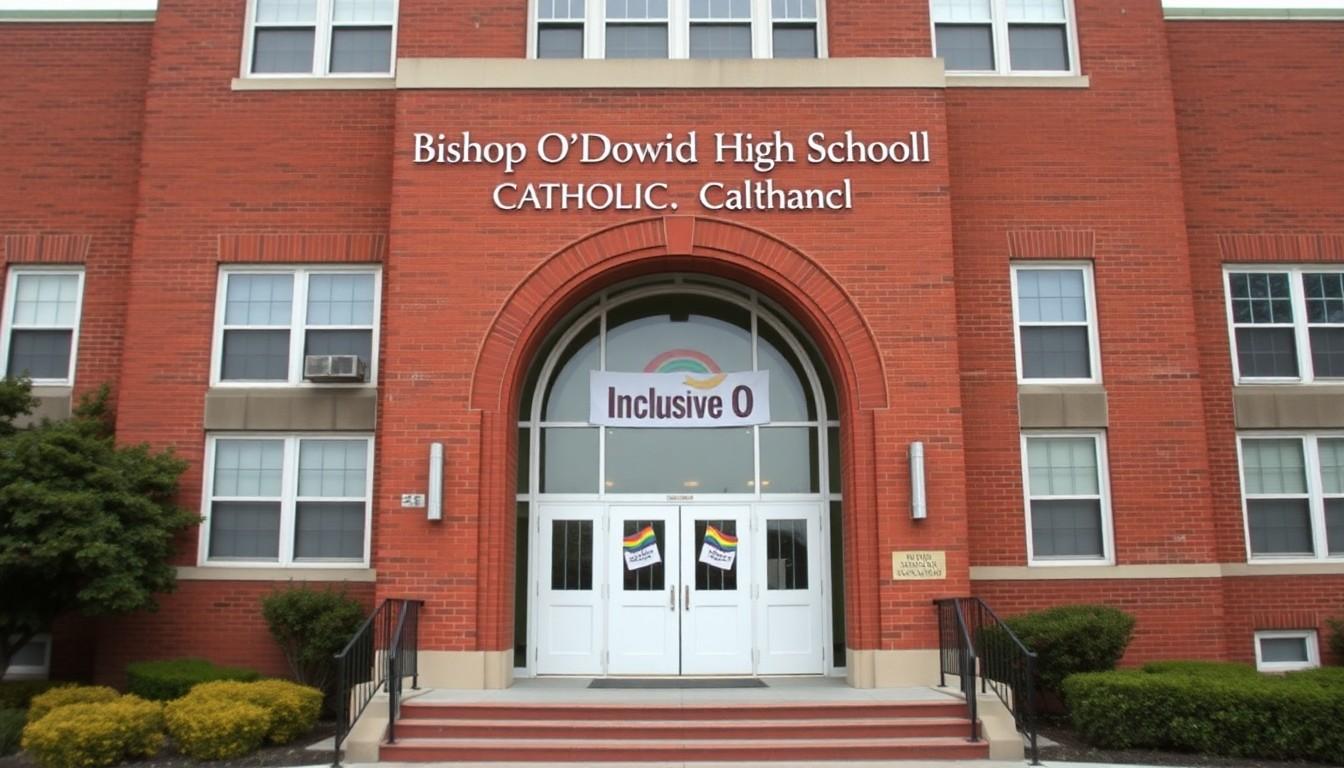
A Catholic high school in Oakland has replaced classroom Pride flags with a rainbow-filled version of its logo, hoping to support LGBTQ+ students without deepening tensions. The Inclusive O has won cautious praise from some families and national advocates, but alumni and local campaigners say the change feels like a painful retreat from a clearer sign of welcome.
Essential Takeaways
- A new symbol: Bishop O'Dowd High School's logo now uses rainbow colours to signal belonging.
- A reluctant change: Reports say the Oakland Diocese directed the school to remove its Pride flags.
- A divided response: Some families see the Inclusive O as welcoming, while alumni view it as a step backwards.
- A wider question: Religious schools are weighing visible LGBTQ+ support against internal disputes over symbolism.
- A practical concern: For students, the difference between a public flag and a quieter logo can feel significant.
Why the Inclusive O has become such a flashpoint
The dispute isn't really about a logo. It's about what students believe a school is prepared to say, publicly and unmistakably, about who belongs there.
Bishop O'Dowd High School in Oakland removed Pride flags from classrooms after direction from the Diocese of Oakland, according to KQED. In their place came the rainbow-coloured Inclusive O, a softer visual cue that keeps the school's identity at its centre while still nodding towards LGBTQ+ inclusion.
The design may look modest, but the emotional stakes are anything but. The flags had reportedly been displayed in some classrooms for decades, giving many students and alumni a familiar, visible sign of safety. As the San Francisco Chronicle reported, the replacement has therefore landed very differently depending on whether someone sees compromise as progress or as retreat.
A compromise welcomed by some families
For the school, the new emblem is intended to avoid allowing one symbol to overshadow its wider pastoral mission. President Kim Walsh described the flags as a source of tension and said the Inclusive O was meant to affirm that LGBTQ+ pupils, families and staff are seen, valued and part of the community, according to ABC7 News.
That approach has found support among some parents. One O'Dowd parent told ABC7 that their child, who identifies with the Pride flag, still felt the school was inclusive and understood what the institution stood for. It's a useful reminder that students don't all read symbols in the same way. A rainbow logo may feel reassuring to one teenager, while another may want the directness of an actual Pride flag.
National LGBTQ+ education advocates have offered cautious encouragement, too. Metro Weekly reported that Melanie Willingham-Jaggers of GLSEN welcomed any effort by a religious school to acknowledge and support LGBTQ+ young people, even while noting that an outright ban on Pride symbols would ideally not be necessary.
Why alumni say the change hurts
Critics argue that visibility matters most when it carries some risk. Removing the flags after years of displaying them, they say, can look less like thoughtful evolution and more like a retreat under pressure.
The Oaklandside reported comments from Bay Area LGBTQ+ advocate Rick Oculto, who described the reversal as especially painful because it followed years of messaging about acceptance. Alumni have also used social media to say the school is stepping away from a more confident tradition of inclusion, according to New Ways Ministry's account of the controversy.
That reaction isn't hard to understand. A flag in a classroom is immediate and legible: students don't need to decode it, search for an explanation or wonder whether it has been placed somewhere discreet. A logo can be elegant and carefully designed, but it may also feel polished where pupils were looking for something plain and brave.
Catholic schools are navigating a much bigger argument
O'Dowd's decision sits inside a broader struggle over how Catholic schools respond to LGBTQ+ students while remaining aligned with diocesan guidance. KQED reported that the school initially resisted removing the flags and only took them down before the summer break, later marking the change with a chapel ceremony.
The Bay Area has seen similar tensions before. New Ways Ministry noted that the Oakland Diocese previously pressed another Catholic school to restrict the use of alternative pronouns for transgender, non-binary and gender-nonconforming students. That background helps explain why the Inclusive O is being judged as part of a pattern, rather than as an isolated branding exercise.
Meanwhile, the political debate is widening. Hoodline and California Catholic coverage show how the school has become a reference point in arguments over whether classroom symbols represent welcome, politics or cultural messaging. For Catholic educators, the challenge is stark: a gesture intended to lower the temperature can still leave LGBTQ+ students asking who the compromise was really designed to protect.
What should schools learn from the reaction?
The clearest lesson is that inclusion needs more than a visual identity. A rainbow emblem may help, but students are likely to judge the school by everyday details too: how complaints are handled, whether staff intervene when slurs are used, how names and pronouns are respected, and whether queer pupils can participate fully in school life.
Schools considering a similar move should ask students directly what makes them feel safe, rather than assuming a new symbol will settle the question. They should also explain why a change is being made, where the new emblem will appear and what practical commitments sit behind it. Otherwise, even a well-intentioned design risks looking like a quiet substitute for action.
The Inclusive O may yet become a useful model for schools trying to work within religious constraints. But as this reaction shows, trust is built through consistency. One parent may see a rainbow logo and feel reassured; another student may see the missing flag first.
A symbol can open the door, but daily behaviour is what makes people stay.
Explore inclusion through both visible symbols and meaningful action.
Source Reference Map
Story idea inspired by: [1]
Sources by paragraph:
- Paragraph 1: [3], [4]
- Paragraph 2: [3], [2]
- Paragraph 3: [2], [3]
- Paragraph 4: [4], [6]
- Paragraph 5: [5], [7]
- Paragraph 6: [2], [6]
- Paragraph 7: [3], [1]
- Paragraph 8: [5], [7]
- Paragraph 9: [3], [5]
- Paragraph 10: [4], [6]
- Paragraph 11: [2], [3]
- Paragraph 12: [5], [7]
- Paragraph 13: [2], [4]
- Paragraph 14: [3], [6]
- Paragraph 15: [5], [7]