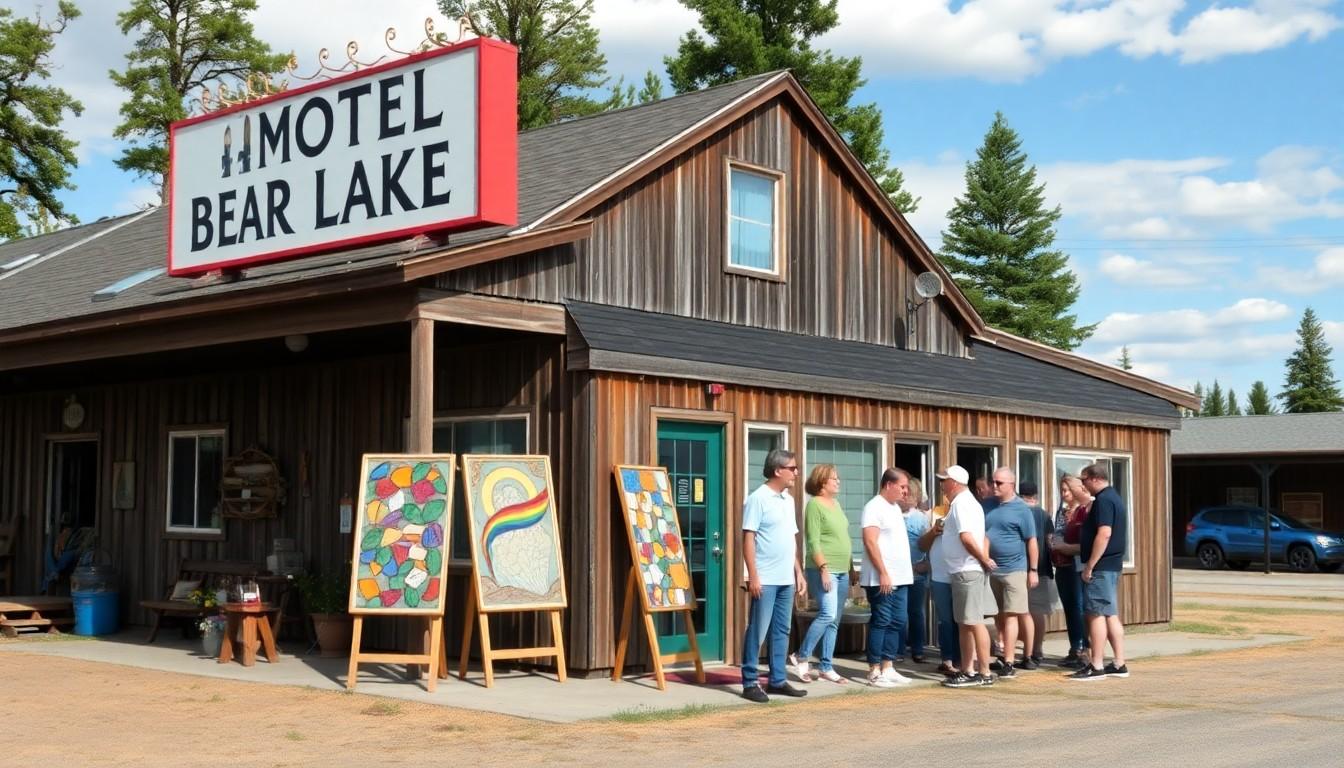
Queer artist Brooke Brewster is turning stained glass, workshops and pop-up events into vital community spaces in Northern Michigan, where visibility can be scarce but the need for belonging is unmistakable.
Essential Takeaways
- Art becomes connection: Brewster’s stained-glass work opens conversations in places where queer visibility is limited.
- Community takes planning: Rural LGBTQ+ events often need to be deliberately created rather than casually discovered.
- Motel Bear Lake matters: The inclusive venue has helped provide a home for queer-friendly art retreats.
- The work is distinctive: Whimsical, non-traditional stained glass stands apart from more familiar rural landscape art.
- Small gestures count: A rainbow sign, welcoming business or visible ally can make an isolated person feel safer.
Stained glass with a sharper point of view
There’s something wonderfully tactile about stained glass: the cut edges, the jewel-like colour and the way sunlight turns a quiet window into a small spectacle. For Northern Michigan artist Brooke Brewster, it’s also become a way to make space for people who don’t always see themselves reflected in their surroundings.
Brewster creates whimsical pieces through Broken Glass Co., using traditional stained-glass techniques while bringing a distinctly queer, contemporary sensibility to the craft. Northern Express describes the work as part of an artistic journey that began while Brewster was teaching high-school art and inherited the materials and knowledge to explore glassmaking. [2]
That difference matters. In a region where galleries and markets may favour familiar images of barns, forests and lakes, Brewster’s work offers another version of rural life, one with room for bright colour, individuality and a little delightful weirdness.
Why rural queer community can be hard to find
Moving away from a city can promise peace, space and a slower pace. But quiet can feel very different when there are few LGBTQ+ venues, events or obvious signs of welcome nearby. A social life in the countryside often needs advance planning, a reliable car and, sometimes, the courage to attend something without knowing exactly who will be there.
That’s why the story behind Brewster’s work is bigger than the objects themselves. Their workshops and pop-ups have helped connect queer residents, allies and curious newcomers who might otherwise remain scattered across a wide area. The Northern Express profile presents the artist as someone using creativity to push back against rural isolation. [2]
The need isn’t limited to younger people, either. Inclusive rural spaces can bring together different generations, including people who grew up locally, those who moved from cities and others who have spent years keeping their identity private. A table at an art event can become an introduction, a recommendation or simply proof that someone else is there.
Motel Bear Lake gives the idea a home
Motel Bear Lake has become an important partner in that effort. The property promotes itself as an inclusive destination, with a focus on hospitality, creativity and a more welcoming kind of northern getaway. MyNorth has highlighted the motel’s role in its community-minded revival, including its appeal to visitors looking for something warmer than a standard overnight stop. [3]
Together, Brewster and the motel have hosted Make Art Retreats, combining hands-on creative sessions with the relaxed atmosphere of a small resort. The retreat programme invites guests to spend time making, learning and meeting others, rather than simply passing through. Details from Motel Bear Lake show the event is designed as an immersive art experience, with space for participants to work at their own pace. [4]
That combination feels particularly effective. Art gives people something to do with their hands, while the setting makes conversation easier. Nobody has to arrive with a polished introduction or an established friendship group; they can start with glass, tools and a shared table.
A retreat can be more than a weekend away
The Make Art Retreat has drawn attention beyond the local area, reflecting a wider appetite for creative gatherings that are also genuinely inclusive. The West Michigan Tourism Association has promoted the retreat as an upcoming event at Motel Bear Lake, signalling its growing place in the region’s visitor and arts calendar. [5]
For participants, the appeal is practical as well as emotional. A planned retreat removes some of the uncertainty that can surround rural LGBTQ+ travel: where to go, whether the venue is welcoming and whether there’ll be anyone else to meet. It also gives visitors a reason to stay longer and experience the area on terms that feel comfortable.
Crooked Tree Arts Center’s instructor information further places Brewster within a broader teaching and creative community, rather than treating the artist’s work as a one-off local curiosity. [6] That matters because workshops can have a longer life than an exhibition. Someone may leave with a finished piece, a new skill and the confidence to attend the next event.
The quiet power of being visibly welcoming
Brewster’s wider message is simple but pointed: queer people have always lived and worked in rural communities. They’re farmers, teachers, tradespeople, business owners and neighbours, even when public visibility suggests otherwise.
A small sign of acceptance can carry surprising weight in that environment. A business displaying a rainbow sticker, a venue clearly stating its values or an organiser making inclusion part of the event description can help someone decide whether it’s safe to walk through the door. It’s not a substitute for genuine protection, but it’s a start.
The artist’s contributor profile describes Brewster as a queer Northern Michigan artist whose work and community-building efforts are closely connected. [7] That link is the heart of the story: the stained glass isn’t only decoration. It’s a bright, physical reminder that rural life can hold difference, joy and belonging too.
For anyone considering a creative retreat, the sensible approach is to check the programme, accessibility, accommodation details and group format before booking. If you’re buying handmade work, ask where it was made and whether the artist offers workshops or local events; your purchase may support a much wider community effort than you realise.
Rural queer joy deserves room to grow
Brewster’s work suggests that change doesn’t always arrive through a grand institution or a new city-centre venue. Sometimes it begins with a market stall, a workshop table or a motel willing to make room for something different.
That approach won’t erase hostility overnight, but it can make isolation less absolute. In a small town, one welcoming event can lead to a friendship, a collaboration or the feeling that staying home doesn’t mean staying hidden.
And that may be the most hopeful part. Rural queer life doesn’t need to be invented from scratch; it needs to be seen, supported and given somewhere to gather.
It's a small piece of glass, but it can hold a surprisingly large sense of home.
Source Reference Map
Story idea inspired by: [1]
Sources by paragraph: