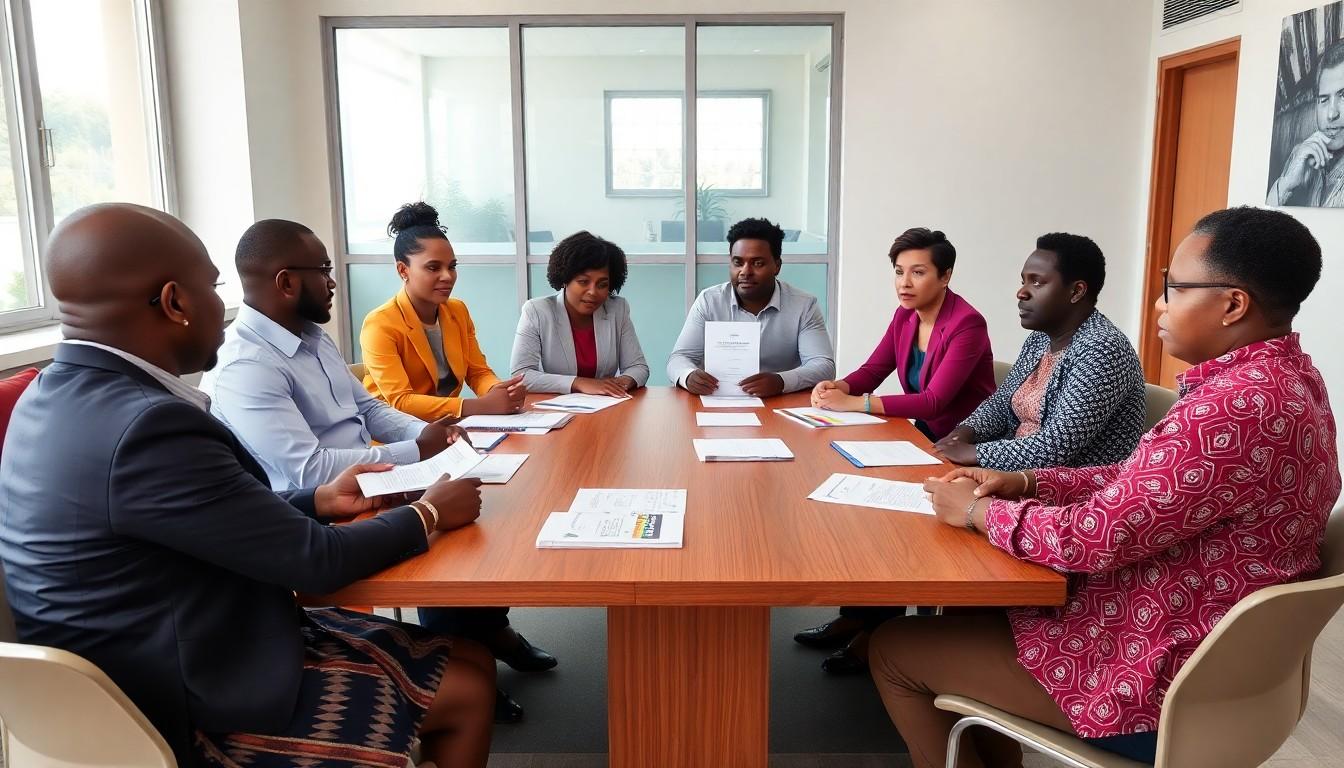
Community advocates and institutions in Mauritius are sharpening their response to discrimination against intersex and transgender people, with new training focused on legal rights, healthcare and practical inclusion. The initiative matters because visibility alone doesn't guarantee safety or equality, particularly when reporting systems and institutional knowledge remain uneven.
Essential Takeaways
- Two focused training days: Sessions examined intersex rights on 25 August and transgender inclusion on 31 August 2026.
- Practical institutional focus: Participants explored healthcare, legal recognition, reporting, privacy and non-discrimination.
- Consent was central: Discussions highlighted bodily integrity and the importance of involving children in healthcare decisions.
- Healthcare gaps remain: Transgender participants can face inconsistent access and a lack of standardised gender-affirming protocols.
- The programme continues: Further sessions will cover hate speech, evidence, policy change, advocacy and litigation.
Mauritius moves from awareness to practical LGBTQIA+ rights work
The most important shift isn't simply that intersex and transgender rights are being discussed in Mauritius. It's that organisations are working through what institutions should actually do when someone faces discrimination, inaccessible healthcare or a failure to respect their identity.
The Young Queer Alliance's two-day capacity-building programme brought together civil society groups and human rights institutions for exactly that reason. According to the organisation's programme outline, the sessions were designed to turn legal and human rights principles into practical responses, rather than leaving inclusion as a well-meaning statement.
Mauritius has seen greater visibility for LGBTQIA+ communities in recent years, although visibility can bring both recognition and exposure. Reporting by the Washington Blade has previously highlighted the growing public presence of the country's intersex community, while local and international rights groups continue to document the need for stronger protections and implementation.
Why intersex rights demand careful healthcare decisions
The first training day focused on intersex rights and representation, including the legal, medical and human rights issues linked to variations in sex characteristics. Participants examined discrimination, bullying, violence and non-consensual medical interventions, all areas where institutional decisions can have lifelong consequences.
A particularly important theme was informed consent. The discussions considered when medical treatment is necessary and when it may safely be delayed, with dignity, privacy and bodily integrity kept at the centre. That may sound like straightforward healthcare practice, but it becomes much more complicated when decisions are made for children who can't yet fully express their own wishes.
The programme also looked at access to personal medical records, justice and legal recognition. Existing Mauritian provisions may allow sex to be registered as "undetermined" in certain circumstances, but the training stressed that a legal provision only helps if people can use it without confusion, delay or discrimination.
Transgender inclusion reaches schools, workplaces and clinics
The second day turned to transgender rights, exploring gender identity, gender expression, privacy, autonomy and access to remedies. Participants reviewed protections under several parts of Mauritian law, including legislation covering equal opportunities, workers' rights, children and civil status.
The conversation also moved beyond legal wording. Respecting a person's name and pronouns, challenging stereotypes and creating safe environments are everyday actions, but they can make the difference between a service that feels accessible and one that feels quietly hostile.
Healthcare was another pressure point. The training identified gaps in gender-affirming care, inconsistent access and the absence of standardised protocols. For transgender people seeking help, that uncertainty can mean repeated explanations, uncomfortable encounters and delays in receiving appropriate support.
Comparisons with South Africa, Argentina and India offered useful context, though the programme acknowledged that Mauritius needs solutions suited to its own legal and social landscape. Copying another country's model wholesale rarely works; adapting good ideas is the more realistic route.
Reporting discrimination is the missing piece
One of the clearest messages from the sessions was that unreported discrimination often disappears from the official picture. If an incident isn't recorded, institutions may not see a pattern, policymakers may underestimate the problem and services may never be redesigned.
That makes reporting mechanisms more than administrative paperwork. They help establish where discrimination happens, who is affected and whether existing protections are working in practice. Rights in Exile's country resources and CIVICUS reporting have both pointed to the importance of documentation and accountability when assessing LGBTQIA+ rights in Mauritius.
Of course, reporting only works when people trust the process. Institutions need clear routes for complaints, confidentiality safeguards and staff who understand the issues. Otherwise, asking people to report harm can feel like handing them another burden.
What comes next for LGBTQIA+ advocacy in Mauritius?
The training is part of a wider five-day programme supported by The Other Foundation. Upcoming sessions will address anti-gender movements and hate speech, evidence for policy change, and advocacy and litigation for transgender and intersex inclusion.
That broader mix is significant. Legal knowledge helps people understand their rights, but evidence can persuade policymakers, while advocacy and litigation offer routes to challenge entrenched barriers. Local reporting by L'Express has also helped place Mauritius within wider conversations about LGBTQIA+ rights and reform.
The next test will be whether participants can carry the learning back into their organisations. A respectful form, a better complaint process, a clearer healthcare referral or a staff policy that uses inclusive language may sound small, but these are the practical details through which equality becomes visible in daily life.
The programme's direction is encouraging because it treats inclusion as ongoing work, not a one-off event. As community advocates have shown, progress becomes sturdier when institutions listen, document problems and act on what they learn.
A safer Mauritius will be built through informed institutions, reliable reporting and everyday respect.
Source Reference Map
Story idea inspired by: [1]
Sources by paragraph:
- Paragraph 1: [2], [4]
- Paragraph 2: [3], [5]
- Paragraph 3: [4], [7]
- Paragraph 4: [6], [7]
- Paragraph 5: [5], [6]
- Paragraph 6: [2], [3]
- Paragraph 7: [4], [7]
- Paragraph 8: [5], [6]
- Paragraph 9: [2], [7]
- Paragraph 10: [3], [5]
- Paragraph 11: [6], [7]
- Paragraph 12: [2], [4]
- Paragraph 13: [3], [6]
- Paragraph 14: [5], [7]
- Paragraph 15: [2], [3]
- Paragraph 16: [4], [6]
- Paragraph 17: [5], [7]