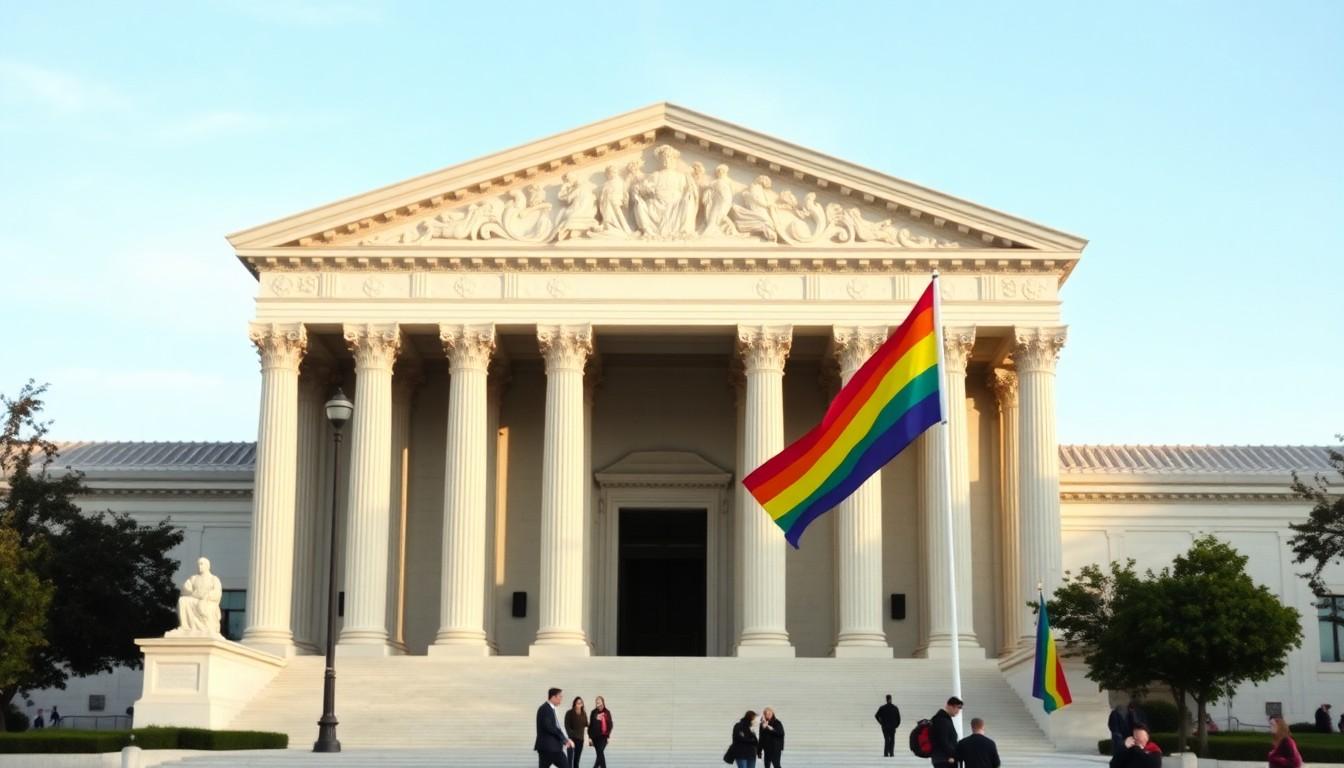
Readers interested in queer historical fiction are being drawn to Alex Charns's Queer Justice, a legal thriller shaped by real FBI records, a disputed Supreme Court scandal and the long shadow of political secrecy. The novel matters because it asks how much truth can survive when official files are incomplete, biased or deliberately buried.
Essential Takeaways
- Real records sparked the fiction: Charns says years of FOIA litigation uncovered FBI files concerning Justice Abe Fortas.
- A dangerous allegation drives the plot: The story centres on a claim that could have destroyed a judge's career, regardless of whether it was true.
- Queer lives sit beyond the paperwork: Characters Cake and Max restore the humanity missing from bureaucratic reports.
- The timeline reaches the present: Investigations in 2016 and 2021 examine how unreliable old interviews can be.
- The central question lingers: The novel explores whether institutions protect justice or use secrets as leverage.
A forgotten FBI file becomes the novel's spark
The most striking detail behind Queer Justice isn't invented. Alex Charns says the story began with a document obtained after 13 years of FOIA litigation against the FBI, where records concerning the Supreme Court had allegedly been kept in J. Edgar Hoover's private files.
That discovery gave the novel its sharpest edge. According to the History News Network, the Fortas episode has long raised questions about surveillance, political pressure and the possibility that private information was used to influence a sitting justice. It sounds like a thriller because, frankly, the historical record already contains plenty of thriller material.
The Smoking Gun's published documents also helped bring the controversy into public view, showing how an accusation could become politically explosive even when its reliability remained uncertain. In Charns's hands, that uncertainty becomes the engine of the story rather than a loose end.
When an allegation becomes a weapon
Queer Justice follows a defence lawyer whose young client makes a startling claim about a Supreme Court justice. From there, the narrative moves through FBI surveillance, political coercion and old secrets that refuse to stay buried.
The alleged encounter involving Fortas carries particular weight because exposure alone could have ended a career. That is the disturbing point: in a period when queer identity could threaten employment, reputation and even liberty, evidence didn't need to be conclusive to be dangerous.
Historical reporting has also shown how government files can become political tools. The Washington Post's archive coverage of large-scale FBI records illustrates the sheer reach of the Bureau's information-gathering culture, while court records from FOIA litigation show how difficult it can be to force institutions to disclose what they hold.
The people missing from official records
Bureaucratic files have a distinctive chill. They reduce complicated lives to names, allegations and clipped observations, leaving little room for tenderness, fear or ordinary joy.
Charns says characters including Cake and Max allowed him to imagine the human reality behind that paperwork: professionals living quietly, and sometimes secretly, because being open could cost them their work or freedom. That shift from document to person is where the book's queer perspective becomes most valuable.
It also connects the novel to a broader problem in historical storytelling. Records often preserve the voice of the investigator, not the person being watched. As reporting on FBI files and surveillance has repeatedly shown, official language can look authoritative while still reflecting the assumptions and prejudices of its authors.
Why the story reaches into 2016 and 2021
Rather than ending with the original scandal, Queer Justice follows a later investigation by Mitch Jr., a modern queer attorney. The extended timeline lets Charns test what happens when a new generation revisits evidence created under very different social and political conditions.
That matters because old interviews can seem definitive simply because they have survived. In reality, the wording, omissions and circumstances surrounding them may be just as important as the statements themselves. The novel's later chapters therefore turn the investigation inward, asking who gets believed and who controls the official version.
The approach echoes the practical challenges of archival research. Legal filings linked to disclosure disputes show that finding a document isn't the same as proving its meaning, while historical coverage of FBI material demonstrates how incomplete files can leave researchers piecing together a story from fragments.
A legal thriller with an uncomfortable afterlife
The book's real power lies in the overlap between history and invention. Charns says the factual investigation ended at the point where the fiction began, giving the novel room to explore motives, relationships and consequences that a file could never fully record.
That boundary should appeal to readers who enjoy legal thrillers with a documentary backbone. The plot offers suspense, but its deeper subject is institutional memory: how governments preserve information, how journalists and researchers interpret it, and how easily a private life can become currency in a public struggle.
For readers, the result is less a simple historical reconstruction than a warning about certainty. A sealed file may contain a clue, a distortion or both. And sometimes the most revealing question isn't what the record says, but who had the power to write it.
Small files can cast remarkably long shadows, especially when justice and identity are involved.
Source Reference Map
Story idea inspired by: [1]
Sources by paragraph:
- Paragraph 1: [2], [3]
- Paragraph 2: [4], [7]
- Paragraph 3: [5], [6]
- Paragraph 4: [2], [3]
- Paragraph 5: [4], [7]
- Paragraph 6: [5], [6]
- Paragraph 7: [2], [4]
- Paragraph 8: [3], [5]
- Paragraph 9: [6], [7]
- Paragraph 10: [2], [5]
- Paragraph 11: [3], [4]
- Paragraph 12: [6], [7]
- Paragraph 13: [2], [3]
- Paragraph 14: [4], [5]
- Paragraph 15: [6], [7]