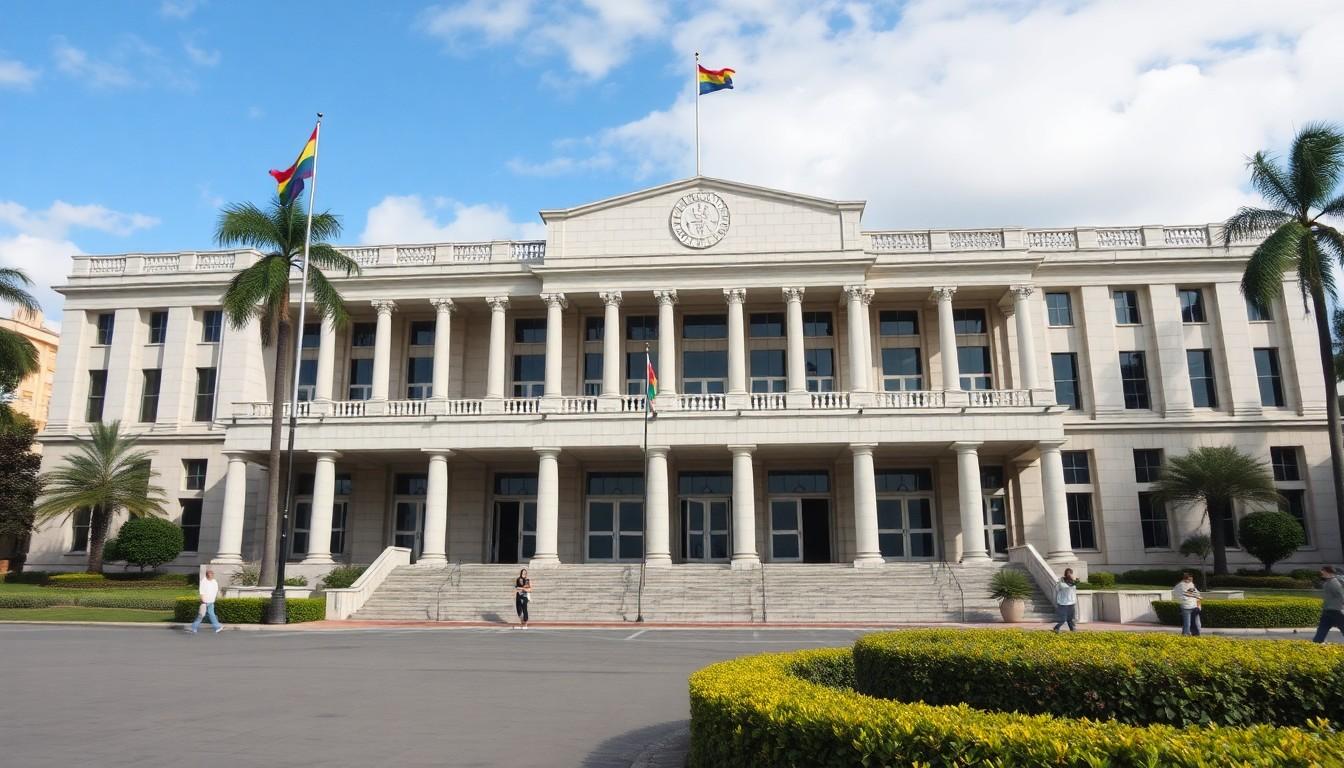
Ecuador’s latest adoption reform aims to move children through care more quickly, but campaigners warn the law discriminates against LGBTQ+ people and could threaten families supporting transgender children. The measures took effect in August, despite Ecuador’s same-sex marriage protections and wider constitutional equality guarantees.
Essential Takeaways
- Different-sex couples only: The reform limits joint adoption to heterosexual couples.
- Single adopters screened by sexuality: Single applicants must be heterosexual under the new rules.
- Custody concerns: Vague language about “promoting” gender-affirming care could put some families at risk.
- Rights groups object: Human Rights Watch and Ecuadorian LGBTQ+ organisations say the changes rely on prejudice rather than evidence.
- A striking legal tension: Ecuador has recognised same-sex marriage nationwide since 2019.
Ecuador says the changes will speed up adoptions
The reform took effect on 14 August after Ecuador’s National Assembly approved it unanimously, with 118 votes in favour. Its stated purpose is straightforward enough: reduce delays and help children leave foster care sooner. According to the National Assembly, the legislation updates several legal frameworks to make the adoption process more efficient.
That practical goal has broad appeal. Children shouldn't spend years waiting while paperwork crawls between agencies, and families need a process that's clear rather than labyrinthine. But the law's eligibility rules have turned an administrative reform into a major LGBTQ+ rights dispute.
The Ecuadorian LGBT Federation said improving adoption procedures is “a legitimate and necessary objective”, while insisting that sexual orientation can't fairly become a barrier. Its position, reported in the organisation's public statement, is that heterosexuality doesn't prove someone will be a good parent.
Who can adopt under the new rules?
The legislation says children may be adopted jointly only by different-sex couples. It also requires single adopters to be heterosexual, creating a separate restriction for people who apply alone.
That wording raises an awkward practical question: how would officials establish whether a single applicant is straight? The Ecuadorian LGBT Federation warned that institutions could be forced to investigate or make judgements about a person's sexuality, a process that risks being invasive as well as discriminatory.
Human Rights Watch has described the reform as embedding bias in the adoption system. Cristian González Cabrera, the organisation's senior LGBT rights researcher, said the goal of improving adoption could not justify rules that undermine children's welfare or treat LGBTQ+ people as inherently less capable parents.
Why trans families are also worried
The law goes beyond adoption eligibility. Critics say it could create a route to custody challenges where parents are accused of “promoting” gender-affirming care for a transgender child.
The concern is the lack of a clear definition. Supporters of a trans child could conceivably face scrutiny simply for helping them access appropriate healthcare or live openly, campaigners argue. The Ecuadorian LGBT Federation said supporting transgender children doesn't make a family hostile to childhood, while Human Rights Watch warned that the provision could damage children's health.
That uncertainty matters in family law, where even ambiguous language can have a chilling effect. Parents may hesitate before seeking help, and professionals may become more cautious around children who need support. For a young person already navigating a difficult situation, that kind of fear can make home feel less secure.
A sharp contrast with Ecuador’s equality record
Ecuador legalised same-sex marriage nationwide in 2019 following a Constitutional Court ruling. Its 2008 Constitution also includes broad protections against discrimination, making the new adoption restrictions look especially stark.
The tension reflects a wider pattern across Latin America. Marriage equality and parental recognition don't always advance together, so LGBTQ+ families can win one legal battle while facing uncertainty in another. Adoption rules, birth registration and custody protections often remain vulnerable to political shifts.
The Associated Press and JURIST have reported on the international criticism surrounding Ecuador's reform, while Human Rights Watch has argued that lawmakers should base adoption policy on evidence about children's welfare, not stereotypes about sexuality or gender identity. That seems a fairly basic standard for any child-protection system.
What happens next for LGBTQ+ families?
The immediate issue is how authorities interpret and apply the new provisions. A law that excludes LGBTQ+ couples is already clear enough in its effect, but the rules concerning single adopters and gender-affirming care could produce further disputes through individual cases.
The reform may now face legal and political pressure from rights groups, families and advocates. Ecuador's existing equality framework could become central to future challenges, particularly if courts are asked to weigh the adoption law against constitutional non-discrimination principles.
For prospective parents, the message is unfortunately complicated: legal marriage rights don't necessarily guarantee equal access to adoption. Families considering the process will need reliable advice from Ecuadorian legal and child-welfare specialists, especially while the new rules are being tested.
The reform was meant to shorten a child's wait for a family. Instead, critics fear it may make the system narrower, harsher and less fair.
Explore the legal details carefully, because equality in family life shouldn't depend on who gets to apply.
Source Reference Map
Story idea inspired by: [1]
Sources by paragraph:
- Paragraph 1: [2], [3]
- Paragraph 2: [3], [6]
- Paragraph 3: [4], [5]
- Paragraph 4: [2], [7]
- Paragraph 5: [4], [6]
- Paragraph 6: [2], [7]
- Paragraph 7: [4], [5]
- Paragraph 8: [2], [7]
- Paragraph 9: [3], [6]
- Paragraph 10: [5], [7]
- Paragraph 11: [2], [4]
- Paragraph 12: [3], [6]
- Paragraph 13: [2], [5]
- Paragraph 14: [4], [7]
- Paragraph 15: [2], [3]
- Paragraph 16: [5], [6]
- Paragraph 17: [2], [4]
- Paragraph 18: [3], [7]
- Paragraph 19: [2], [5]
- Paragraph 20: [4], [6]