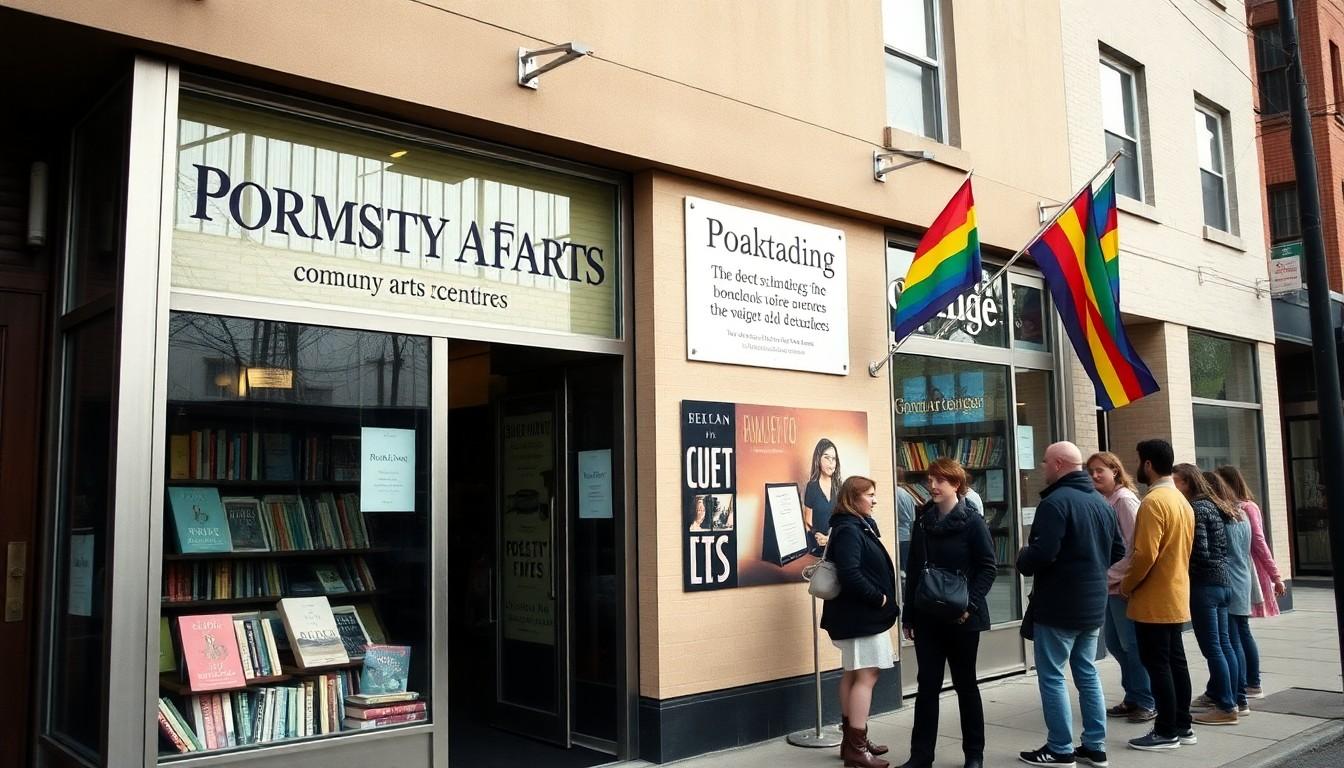
Readers are being invited into a fresh monthly poetry drop from Queer Love Project, bringing together four poems about queer care, desire, missed chances and flirtation. The September collection matters because it makes room for both public courage and private uncertainty, moving from a school playground to a beach, a convenience shop and the charged intimacy of an online image.
Essential Takeaways
- Four distinct voices: The collection moves between narrative poetry, intimate reflection, playful observation and lush desire.
- Queer care takes centre stage: One poem follows an adult helping a child challenge homophobia at school.
- Desire stays complicated: The poems explore attraction, regret, missed timing and the feelings that linger after relationships end.
- The settings feel close to home: A laundry room, convenience store, kitchen and digital feed become emotionally charged spaces.
- Readers can support new writing: Queer Love Project is offering a discounted annual subscription during its second anniversary celebrations.
Four poems, four sharply different moods
The strongest feature of this September poetry drop is its range. Rather than settling into one house style, the collection shifts from the green openness of a playground to the dazzling glare of a beach, then into the awkward intimacy of a shop counter and the feverish gaze of social media.
That variety gives the issue a pleasingly human rhythm. One poem asks what courage looks like when you're young; another wonders how a friendship or romance quietly changes shape. Elsewhere, a brief encounter turns lipstick shopping into a meditation on art, attraction and the things people almost say.
A child asks what being “good” means
Ivy T. Schweitzer's poem follows a child trying to understand a homophobic insult heard at school. The scene begins in distress, with the child seeking help from an adult surrounded by schoolwork and domestic clutter, but it gradually becomes a story about language as a form of action.
The poem's power lies in its small scale. There are no grand speeches or tidy institutional solutions. Instead, a child sounds out a difficult word, writes a letter and discovers that a private act can travel much further than expected. Schweitzer's wider work also reflects her long engagement with poetry, teaching and gender studies, according to Dartmouth and poet-biography pages.
Desire doesn't always arrive on time
Raziela Orlinat's poem turns towards the ache of realising that someone who once loved you no longer does. Its speaker looks back across friendship, intimacy and relationships, asking when the emotional door closed and whether it might have been possible to notice sooner.
The result feels less like a conventional love poem than an inventory of missed signals. Memories of jewellery, poetry and sunlight become more vivid than the relationships that replaced them. Orlinat's biography adds useful context: she writes from an openly queer, feminist and survivor-informed perspective, and her work has appeared in literary projects including The Watermark and competition programmes listed by TulipTree Publishing.
A convenience store becomes a tiny stage
Katerina Dementeva's poem is lighter on its feet, but it isn't weightless. Faced with shelves of mascara and eye shadow but no lipstick, the speaker gets drawn into a brief, blush-filled exchange with the sales assistant.
It's funny because the practical problem remains unsolved. Yet the encounter becomes more interesting than the shopping trip itself, suggesting that poetry can begin in the gap between what someone needs and what suddenly captures their attention. The poem's charm comes from that quick spark, where an ordinary retail moment turns flirtatious and strange.
Screens, skin and the politics of looking
Jacob Gur's "Exercise in Wish Fulfillment" considers the act of being watched. It moves between romantic literary imagery, a staged image of a man's body and the speaker's awareness of thousands of online gazes.
The poem is especially interested in how desire borrows from older forms. Classical beauty, melodrama, colonial language and social-media hashtags overlap, creating something both sumptuous and unsettling. The effect is not a simple celebration of attraction; it's a question about who gets to look, who gets turned into an image and what happens when fantasy meets history.
Why this collection feels timely
Together, the poems show queer writing at its most expansive. Queerness appears not only in declarations of identity or romance, but in teaching, memory, shopping, embarrassment, friendship, performance and the struggle to interpret another person's face.
That breadth is part of the pleasure. The issue doesn't insist that queer experience should sound one particular way. It can be tender, funny, wounded, awkward, sensual or politically alert, sometimes within the same page. For anyone looking for contemporary queer poetry about desire and identity, this is a compact collection with plenty to linger over.
The Queer Love Project is also marking its second anniversary with a reduced annual subscription price. For readers who want to support emerging queer writers, that makes the poetry drop feel like both a reading experience and a small act of solidarity.
Read slowly, and let the poems change the temperature of the room.
Source Reference Map
Story idea inspired by: [1]
Sources by paragraph: