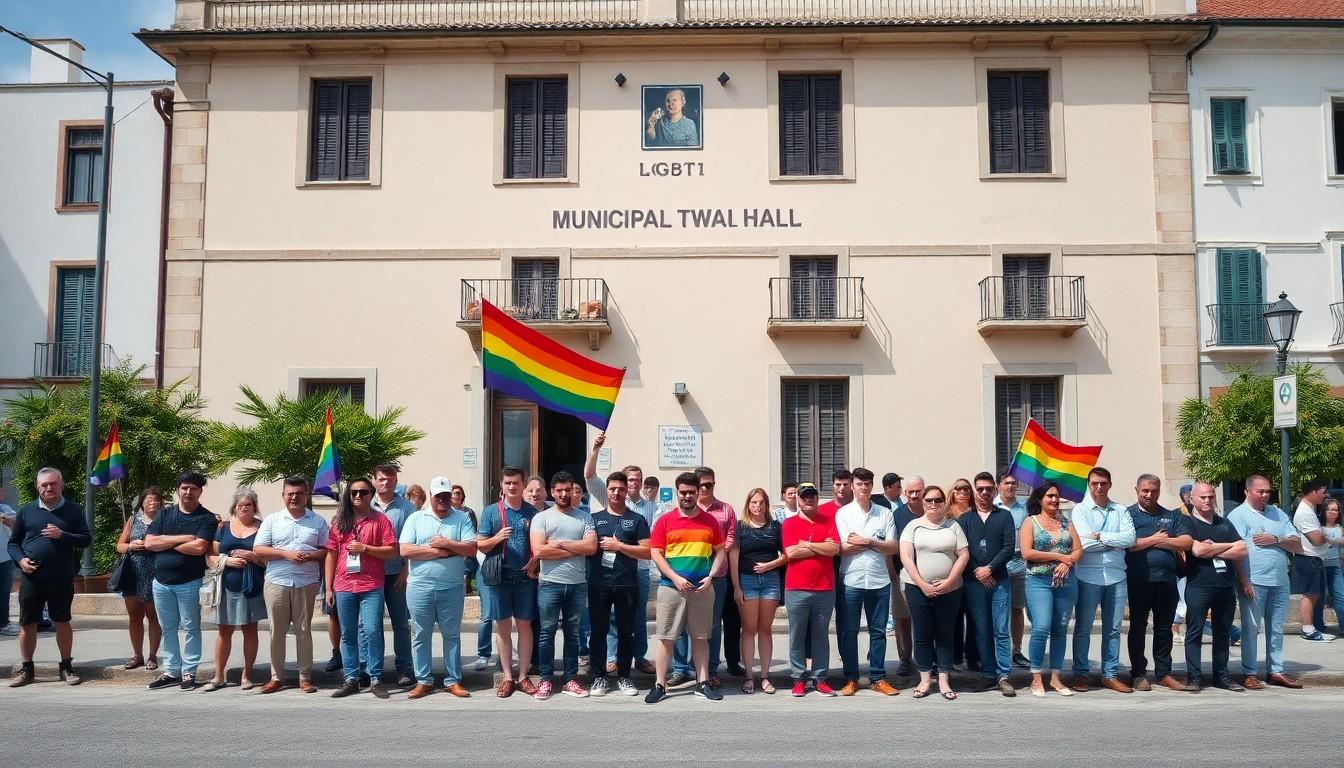
Residents in Portici faced an ugly start to Vesuvio Pride, with hostile banners appearing along the route before the march. The incident triggered swift condemnation from the council and organisers, while supporters prepared to turn a threatening gesture into a public display of inclusion, memory and community courage.
Essential Takeaways
- Offensive banners appeared overnight: The signs were found along Corso Umberto before the Pride procession.
- The council acted quickly: Portici officials reported the incident, removed the material and supported police inquiries.
- Organisers refused to retreat: Pride Vesuvio said the march would remain a joyful and determined public event.
- The event carried personal meaning: The 2026 edition was dedicated to Ciro Ciretta Cascina, adding remembrance to its message of visibility.
- Support extended beyond one day: Pride week included talks, cultural events and appearances by prominent activists.
A hostile message met by a public response
The discovery of threatening, homophobic banners turned a day intended to celebrate rights into a tense morning in Portici. The signs appeared on Corso Umberto, the same road due to welcome the Vesuvio Pride procession, giving the incident an especially pointed and intimidating feel.
Yet the response was immediate. According to reports from Radio Pride and the event organisers, the march was expected to continue with backing from local institutions and participating communities. That matters because public Pride events aren't simply colourful parades. They make inclusion visible, particularly when some people would rather push it back into silence.
The episode also followed online abuse aimed at Imma Battaglia and Eva Grimaldi after a video connected with the event circulated widely. Social media can make hostility feel both distant and relentless, so seeing a city respond in person carries a different kind of weight.
Portici's council moves to remove the banners
Portici's administration condemned the display, alerted law enforcement and arranged for the material to be removed. Investigators also seized items believed to be connected with the overnight action, according to the local account.
That practical response helped restore the streets before the procession, but it also sent a wider signal. Removing abusive material isn't the same as removing prejudice, of course, yet it shows that public space belongs to everyone, not just to the loudest or most aggressive voices.
The council's support also fits the broader build-up to Vesuvio Pride. Organisers had promoted a full programme of events in Portici, with local participation and institutional backing designed to make the week about more than one march.
Why this Pride carries extra emotional weight
The 2026 Vesuvio Pride was dedicated to Ciro Ciretta Cascina, giving the event a strong thread of remembrance alongside its demands for equality. Dedications like this can change the atmosphere of a march, making it feel less like a single afternoon and more like a shared record of the people and struggles that shaped a movement.
The programme also included public conversations and cultural moments. Imma Battaglia's appearance in Portici, including a book presentation reported by LGBT World, connected the local event to a longer history of activism, visibility and resistance.
Battaglia has spoken publicly about the experiences that shaped her activism, including her early battles over LGBT rights and Pride. That history helps explain why a hostile banner can never be treated as harmless provocation. For many campaigners, these events sit alongside memories of real exclusion and personal risk.
The march becomes a test of civic confidence
Pride organisers responded by insisting that threats would not dictate the day's mood. Danilo Di Leo, president of the Pride Vesuvio association, said the event would remain a celebration of freedom and beauty while condemning the growing climate of hostility around it.
That combination of celebration and firmness is familiar across modern Pride events. The music, flags and bright colours are welcome, but they don't erase the political purpose. They make the message easier to see: people who have often been told to stay hidden are claiming streets, stages and attention.
Local organisers have also built a network that stretches beyond Portici. Coverage from Radio Pride and Corriere della Sera points to a wider culture of activism around the Vesuvio initiative, including work to amplify voices that might otherwise struggle to be heard.
What supporters can do when hate appears
For people attending a Pride march, the most useful response is usually calm, organised solidarity. Follow advice from stewards, avoid direct confrontation with suspected perpetrators and report threatening material or behaviour to organisers or the police. A bright outfit is optional; looking after one another isn't.
It also helps to support the event beyond the headline day. Attending talks, buying from community-led projects, sharing accurate information and listening to local activists can turn a one-day gesture into something more lasting.
Portici's experience is a reminder that visibility can attract hostility, but it can also draw out courage. As supporters gathered for Vesuvio Pride, the strongest answer to intimidation was not silence, but a city showing up together.
It's a small act of solidarity multiplied by thousands of people.
Source Reference Map
Story idea inspired by: [1]
Sources by paragraph:
- Paragraph 1: [3], [5]
- Paragraph 2: [2], [3]
- Paragraph 3: [4], [6]
- Paragraph 4: [3], [5]
- Paragraph 5: [2], [3]
- Paragraph 6: [4], [6]
- Paragraph 7: [6], [7]
- Paragraph 8: [2], [7]
- Paragraph 9: [3], [5]
- Paragraph 10: [2], [7]
- Paragraph 11: [3], [4]
- Paragraph 12: [2], [5]
- Paragraph 13: [6], [7]
- Paragraph 14: [2], [3]
- Paragraph 15: [4], [5]
- Paragraph 16: [2], [7]
- Paragraph 17: [3], [5]
- Paragraph 18: [2], [6]