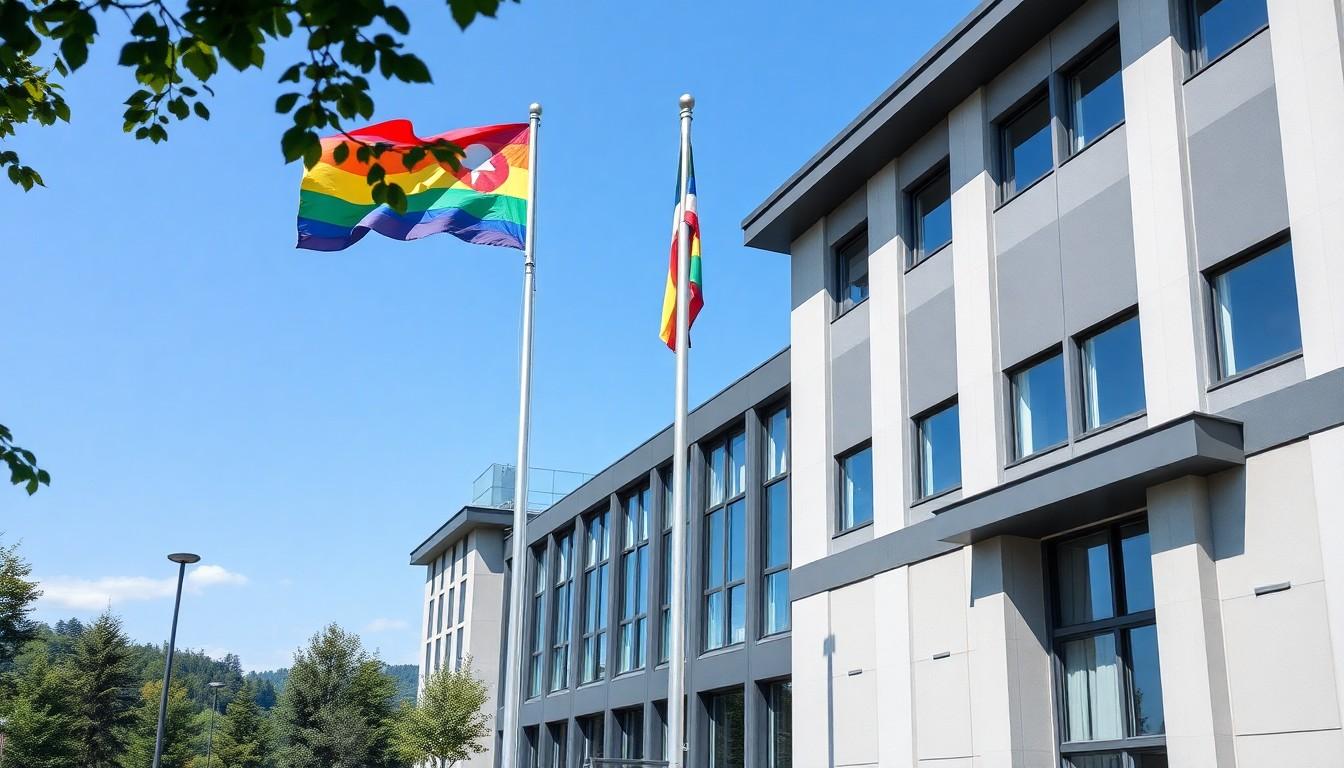
Switzerland is edging towards clearer nationwide protection for LGBTQ+ people after the Federal Council acknowledged the harm caused by conversion practices. The move matters because safeguards currently differ between cantons, leaving people with uneven protection depending on where they live.
Essential Takeaways
- National rules are being considered: The Federal Council says clearer federal regulation could replace Switzerland's patchwork approach.
- Protection varies locally: Neuchatel and Valais have introduced bans, while other cantons are considering restrictions.
- The practices can cause harm: Conversion practices aim to change or suppress sexual orientation, gender identity or gender expression.
- Europe is tightening standards: Eight EU countries have explicit national bans, adding pressure to Switzerland's debate.
- Legislation isn't guaranteed: The report opens the door to action, but no final law or timetable has been announced.
Switzerland's patchwork system is under scrutiny
The strongest message from the Swiss government's latest review is that conversion practices haven't disappeared. The Federal Council acknowledged that LGBTQ+ people can still be subjected to attempts to change or suppress who they are, with potentially serious psychological consequences.
The issue is particularly awkward in a country where legal protection can change at the cantonal border. Neuchatel introduced Switzerland's first cantonal ban in 2023, followed by Valais, while Vaud and Geneva have also moved towards tighter controls, according to Swissinfo. That creates a system which may look increasingly difficult to justify: the same conduct can attract different levels of protection depending on location.
What conversion practices actually target
Conversion practices are attempts to alter a person's sexual orientation, gender identity or gender expression. They can take place in religious, therapeutic or informal settings, and may be presented as counselling or spiritual guidance rather than openly described as a programme to change someone.
That distinction matters. Watson reported that a notable share of LGBTQ+ people in Switzerland say they've encountered conversion therapy or related practices, underlining that this isn't simply an abstract legal argument. International medical and psychological organisations have rejected the idea that LGBTQ+ identities require correction, while the Swiss government has also stated that such practices can cause considerable suffering.
Why a federal ban could change everyday protection
Switzerland already has legal provisions that may apply to abusive or coercive conduct. The problem, as the Federal Council's review suggests, is that existing protections don't necessarily provide one clear national standard specifically addressing conversion practices.
A federal law could make the rules easier to understand for victims, families, professionals and enforcement agencies. It might also reduce the uncertainty created by a growing list of cantonal measures, particularly for people who move between cantons or seek help outside their home area.
For anyone trying to judge what a future ban might look like, the detail will matter. Germany's national approach, for example, focuses mainly on minors and adults whose ability to consent is compromised, while other European countries have adopted wider restrictions.
Europe is adding momentum to the debate
Switzerland isn't in the European Union, but it isn't debating this in isolation. Eight EU countries, including France, Germany, Malta, Spain and Portugal, now have explicit national bans, while the European Commission has called on all member states to prohibit conversion practices.
The Commission is expected to issue a formal recommendation in 2027, according to the reported European policy timetable. That doesn't force Switzerland to follow suit, but it adds political pressure and gives Swiss lawmakers a growing set of models to examine.
There is also a practical lesson in Europe's varied approaches. A ban can be broad or tightly defined, focused on certain victims or covering all people, and backed by different penalties. The wording will determine whether new legislation offers meaningful protection or simply creates another layer of legal uncertainty.
What happens next?
The Federal Council has rejected conversion practices but hasn't committed to a particular bill. Its report is better understood as an important opening than a finished policy: parliament must still decide whether to turn the call for clearer rules into legislation.
That process is likely to bring familiar questions into sharper focus. Lawmakers will need to consider definitions, consent, professional regulation, religious settings, enforcement and support for people who have already experienced harm. Those details may sound technical, but they determine whether protection works beyond the headline.
For LGBTQ+ communities, the central issue is refreshingly simple. Safety shouldn't depend on a postcode. As Switzerland weighs its next step, a consistent national standard could offer clarity where the current system leaves too many grey areas.
A clearer national rule could make protection more equal, visible and practical.
Source Reference Map
Story idea inspired by: [1]
Sources by paragraph:
- Paragraph 1: [4], [6]
- Paragraph 2: [5], [6]
- Paragraph 3: [4], [6]
- Paragraph 4: [5], [6]
- Paragraph 5: [3], [4]
- Paragraph 6: [4], [7]
- Paragraph 7: [2], [3]
- Paragraph 8: [4], [6]
- Paragraph 9: [5], [6]
- Paragraph 10: [4], [7]
- Paragraph 11: [3], [4]
- Paragraph 12: [6], [7]
- Paragraph 13: [2], [3]
- Paragraph 14: [4], [6]
- Paragraph 15: [3], [4]
- Paragraph 16: [4], [6]
- Paragraph 17: [2], [7]
- Paragraph 18: [3], [6]
- Paragraph 19: [4], [6]
- Paragraph 20: [3], [4]