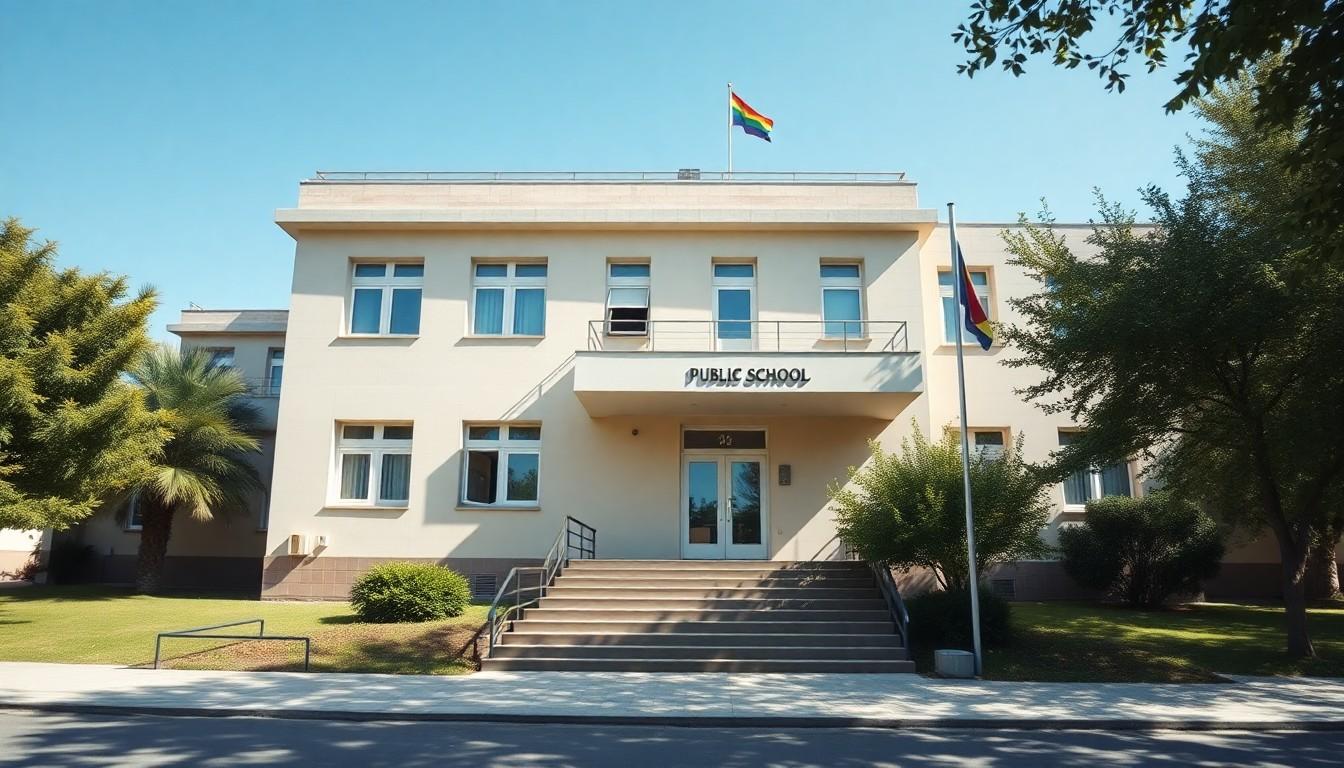
A fresh row over Greek primary-school textbooks and references to same-sex parents has reignited a wider argument about LGBT visibility, education and political distraction. At the centre is a simple question: should classroom materials reflect the families children already know, or preserve a narrower picture of family life?
Essential Takeaways
- The dispute centres on representation: New primary-school material reportedly includes families with same-sex parents.
- Critics call it ideological: Conservative voices have described the references as part of a so-called “woke” agenda.
- Supporters see inclusion: LGBT advocates argue that children deserve books reflecting real families without turning identity into a political football.
- The wider issue is access: The debate reaches beyond textbooks to equal treatment in education, healthcare and public life.
- Language matters: A short reference in a schoolbook can reassure some children, while making others feel suddenly singled out.
A schoolbook row that is really about visibility
The latest argument began with references to families headed by same-sex parents in primary-school books, including material aimed at younger pupils. Reports from Greek media say the passages have prompted criticism from conservative politicians and commentators, while supporters regard them as an ordinary attempt to reflect modern family life.
That contrast explains why the discussion has become so heated. A family drawing or a line of text may look small on the page, but it can carry enormous emotional weight for a child who has two mums, two dads, or a family structure that doesn't match older classroom stereotypes.
According to To Vima, the references have also exposed disagreement within the governing camp, turning an education question into a broader political dispute. The result is familiar: the lesson itself risks disappearing beneath the noise.
Why LGBT groups say the argument is being misdirected
LGBT organisation Orlando, as reported by The Press Project, argues that debates about counting genders or removing inclusive references can draw attention away from more pressing concerns. Its position is that public services, household finances, education and trust in institutions deserve sustained political scrutiny too.
That doesn't mean representation is trivial. The point is that queer people can be treated as a convenient culture-war target whenever politicians want to energise a socially conservative audience. When that happens, visibility becomes a prop rather than a serious discussion about equal participation.
The organisation has called for public education and healthcare that work for everyone, regardless of gender, sexuality, class, race, ethnicity or physical characteristics. It's a broad demand, but a practical one: inclusion isn't confined to a sentence in a textbook.
What the new books reportedly show
Greek reports have described illustrations or references to households with same-sex parents in books for younger primary-school children. Proto Thema reported comments from government spokesperson Pavlos Marinakis, who defended a traditional formulation of family roles while the issue continued to attract criticism.
Meanwhile, iefimerida and Parapolitika reported responses from the Education Ministry and the author involved in the disputed material. The author has pushed back against accusations that the books are promoting an ideological programme, framing the references instead as part of a wider picture of families.
That distinction matters. Describing a family isn't the same as instructing children what their own family must look like. In a classroom, the absence of a group can send a message just as clearly as its presence.
Inclusion works best when it feels ordinary
For teachers and parents, the most useful question is probably not whether a book contains a reference to same-sex parents, but whether the material treats families consistently and age-appropriately. A calm, everyday mention is usually less confusing than a sudden political storm around it.
Schools can also avoid turning representation into a special event. Children generally understand that families differ in shape, language and routine. A story that includes several kinds of household can make that variety feel as unremarkable as having grandparents nearby, living with one parent or sharing a home with siblings.
The coverage from Rua.gr and other Greek outlets shows how quickly a curriculum detail can become a national flashpoint. But for pupils, the real test is quieter: can they open a book and recognise their lives without feeling exposed or turned into an argument?
The debate is heading beyond one textbook
The dispute is unlikely to end with a single edition or classroom passage. As The Press Project reported, Orlando's response places the controversy within a longer struggle over queer visibility and equal access to public institutions.
That wider context is important because textbook language rarely stands alone. It sits alongside school policies, teacher training, healthcare access and the everyday experience of whether public services treat people with dignity. A child may notice a drawing in a book, but families notice the whole system.
There is room for disagreement about wording, age and curriculum design. What deserves more caution is the habit of making minority families carry the burden of a much larger political argument. Children need accurate, thoughtful education, not another culture-war prop.
A schoolbook should help children see the world more clearly, not make some families disappear from it.
Source Reference Map
Story idea inspired by: [1]
Sources by paragraph: