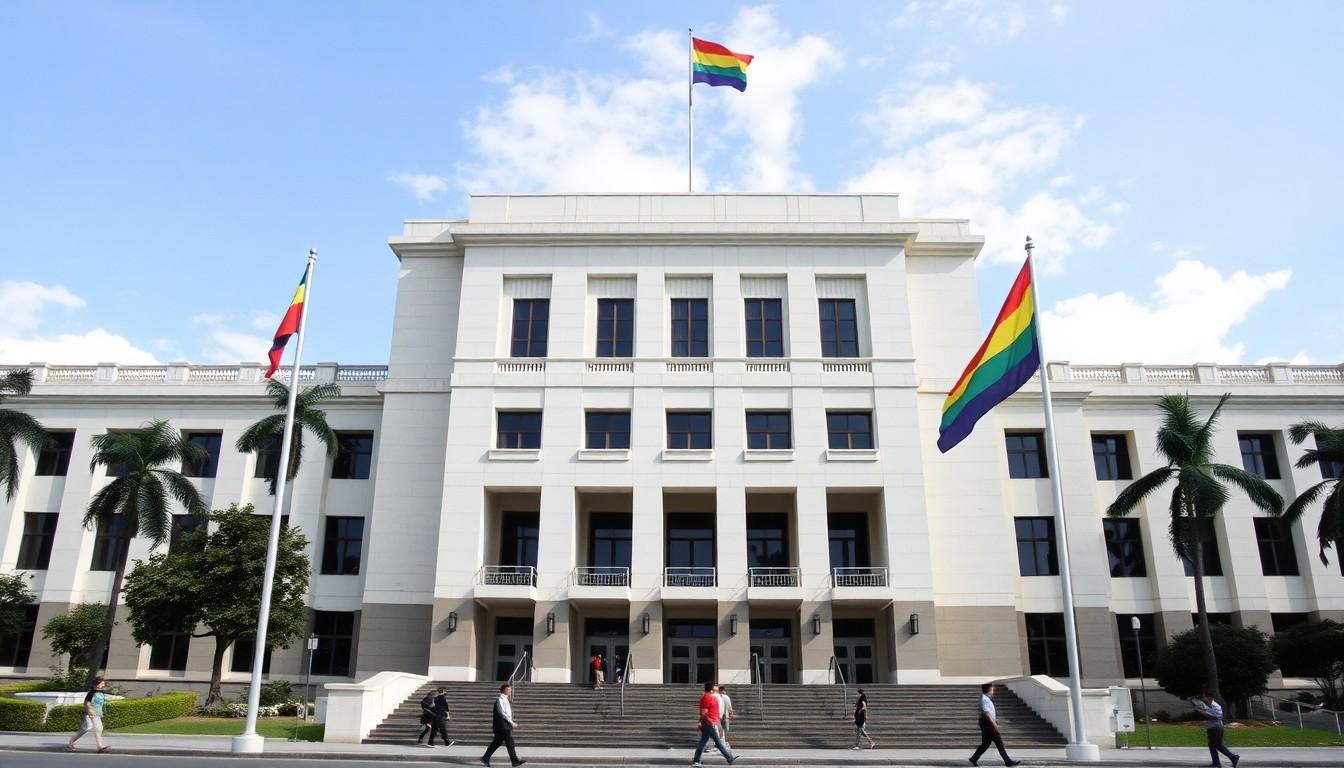
Advocates are challenging Ecuador’s new adoption law, which aims to speed up placements but excludes same-sex couples and restricts some single applicants. The measure has also raised concerns about transgender children’s care, putting a sharp question mark over a reform intended to move young people out of foster care more quickly.
Essential Takeaways
- New eligibility rules: Same-sex couples are barred from adopting, while single applicants must meet a heterosexuality requirement.
- Trans care concerns: Parents could risk losing custody for allegedly “promoting” gender-affirming care, although the wording is unclear.
- Reform’s stated aim: The law seeks to reduce delays and give adoption cases clearer timelines.
- Rights contradiction: Critics say the policy conflicts with Ecuador’s constitutional protections against discrimination.
- Wider context: Ecuador legally recognises same-sex marriage and offers several LGBTQ+ protections.
A faster adoption process, with a deeply controversial condition
Ecuador’s adoption reform is designed to tackle a familiar problem: children spending too long in temporary care while applications move through a slow and complicated system. The National Assembly approved the measure unanimously, and it took effect on 14 August, introducing new rules intended to make the process more predictable. According to El Diario, the changes include defined stages and timelines for adoption cases.
But the headline reform comes with a major qualification. The law says children may be adopted only by different-sex couples, while single applicants must also be heterosexual. That means the country has placed sexual orientation directly inside its adoption criteria, rather than judging applicants primarily on their ability to provide a safe and stable home.
Human Rights Watch described the efficiency goal as legitimate, but said it shouldn't become a route for embedding discrimination. Its criticism is particularly pointed because the measure goes beyond what Ecuador's Constitution explicitly says about single parents.
Same-sex couples are now shut out
The new rule creates an especially striking divide in a country where same-sex marriage is legal. LGBTQ+ Ecuadorians can enjoy broad legal recognition in several areas, yet same-sex couples are now excluded from adopting as couples. La Prensa reported that the law prevents homosexual couples from becoming adoptive parents.
For critics, the issue isn't simply whether the rule feels unfair. They argue there's no sound evidence that a parent's sexual orientation determines their fitness to care for a child. The Ecuadorian LGBTQ+ Federation has made the point in plain terms: heterosexuality doesn't prove someone will be a good parent, just as being LGBTQ+ doesn't make someone incapable.
The policy could also create an awkward and intrusive question for single applicants. If heterosexuality is a legal requirement, officials may be left trying to decide how an applicant's sexuality should be established. That uncertainty risks turning a private aspect of identity into an administrative test, with the potential for inconsistent or humiliating decisions.
Why the anti-trans wording has raised fresh alarm
The law also includes a provision concerning gender-affirming care for transgender children. Parents may face custody risks for “promoting” such care, but the legislation doesn't clearly define what that word means. That ambiguity matters, because ordinary support, medical advice and advocacy could be interpreted very differently by different authorities.
The Ecuadorian LGBTQ+ Federation has criticised the provision, arguing that protecting a trans child shouldn't be treated as hostility towards children. OutRight International's overview of Ecuador's rights landscape shows why the clause has caused particular concern: the country already recognises gender-affirming care and offers legal protections connected to gender identity.
For families, vague wording can be as worrying as an explicit ban. Parents need to know where the legal line sits, especially when a decision about a child's wellbeing could later be portrayed as evidence of unfitness.
A sharp contradiction in Ecuador’s rights framework
Ecuador has generally been seen as a country with comparatively wide-ranging LGBTQ+ protections. Equaldex records measures covering same-sex marriage, anti-discrimination protections, hate crimes, conversion therapy and adult legal gender recognition. Against that backdrop, the adoption rules look less like a small administrative adjustment and more like a significant retreat in family policy.
Human Rights Watch has warned that the legislation appears to rely on stereotypes about sexual orientation and gender identity rather than evidence about children's welfare. That argument goes to the heart of the debate: adoption systems should protect children, but exclusionary rules don't automatically make placements safer.
The National Assembly's official information presents the reform as a way to improve the adoption process, including clearer procedures. That practical ambition is easy to understand. The difficult question is whether faster processing can justify narrowing the pool of potentially loving, capable parents.
What happens next for families and children?
The dispute is likely to turn on how the new law is interpreted and challenged. The Ecuadorian LGBTQ+ Federation has pointed to the apparent tension between the adoption restrictions and constitutional guarantees against discrimination, while rights groups continue to call for evidence-based decision-making.
For prospective adopters, the immediate lesson is to seek specialist legal advice before beginning an application. Rules about eligibility, documentation and custody may change through court action or official guidance, and the phrase “promoting” gender-affirming care remains especially open to interpretation.
Meanwhile, children remain at the centre of the argument, even as adults debate the law's wording. A quicker system is worthwhile, but speed alone isn't a measure of fairness. The strongest adoption reforms should reduce delay without deciding that some families are less deserving before their parenting is properly assessed.
It's hard to call an adoption system truly child-centred if prejudice determines who gets through the door.
Source Reference Map
Story idea inspired by: [1]
Sources by paragraph:
- Paragraph 1: [3], [4]
- Paragraph 2: [2], [5]
- Paragraph 3: [7], [2]
- Paragraph 4: [5], [7]
- Paragraph 5: [6], [7]
- Paragraph 6: [6], [2]
- Paragraph 7: [2], [6]
- Paragraph 8: [3], [4]
- Paragraph 9: [7], [2]
- Paragraph 10: [2], [3]
- Paragraph 11: [7], [6]
- Paragraph 12: [2], [7]
- Paragraph 13: [3], [4]
- Paragraph 14: [7], [2]
- Paragraph 15: [2], [7]
- Paragraph 16: [3], [4]
- Paragraph 17: [7], [2]
- Paragraph 18: [6], [7]
- Paragraph 19: [2], [7]
- Paragraph 20: [3], [4]
- Paragraph 21: [2], [7]