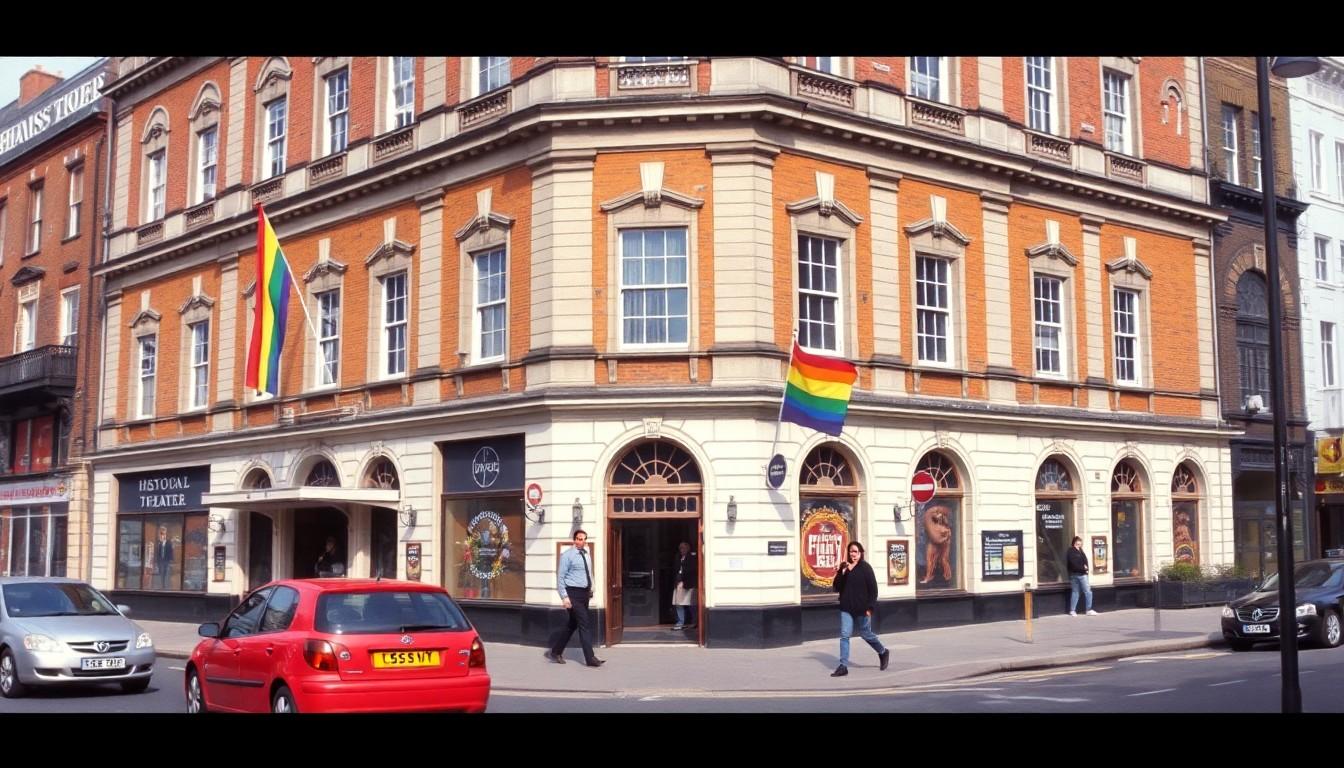
Audiences are discovering a vivid new documentary about Derek Jarman’s Edward II, assembled from long-hidden behind-the-scenes footage and archive material. Premiering at the Venice Film Festival, Queer Edward II offers a funny, moving glimpse of a bold film set, a restless queer scene and the political battles that still give Jarman’s work its charge.
Essential Takeaways
- A rediscovered time capsule: Seamus McGarvey’s footage sat unseen for more than three decades before Theo Rollason shaped it into a finished documentary.
- Jarman remains the centre of gravity: The film captures his wit, warmth and instinct for turning art into direct political resistance.
- The production was far from glamorous: Budget wrangles, stroppy extras and frantic phone calls reveal the messy reality behind the period drama.
- Its history still feels urgent: The documentary revisits Clause 28, queer activism and the dangers of treating discrimination as yesterday’s problem.
- A strong Venice debut: The film screened in the Venice Open section, where critics have highlighted its humour, feeling and archival richness.
A forgotten film-set diary finally finds its audience
The most striking thing about Queer Edward II is how alive its old footage feels. Cameras catch actors, crew members and activists moving through the production with the slightly manic energy of people trying to make something ambitious with too little money and too few hours.
According to The Hollywood Reporter, the material was shot by Seamus McGarvey, who would later become one of British cinema’s most respected cinematographers. It was originally intended as a making-of film, but remained untouched for roughly 30 years before director Theo Rollason and his collaborators returned to it.
That delay gives the documentary an unusual texture. It isn't a polished promotional record or a carefully managed celebrity portrait. Instead, it's a cupboard full of loose threads: production problems, political arguments, jokes, costumes and fleeting glimpses of Jarman at work. Rollason patiently knots them together.
Derek Jarman's Edward II was never just a period drama
Jarman’s 1991 adaptation of Christopher Marlowe’s play brought a medieval story into a very modern political landscape. The film’s royal court, same-sex desire and brutal power struggles were framed through the language of contemporary queer life, making history feel less like a museum piece and more like an argument happening now.
The documentary shows how naturally that approach fitted Jarman. He could be playful and theatrical, but the provocation had purpose. Lavish costumes and Elizabethan verse sit alongside direct references to contemporary discrimination, creating a film that looks beautiful while refusing to behave politely.
The Venice Film Festival listing places Queer Edward II in its Venice Open out-of-competition strand. That setting feels apt: this is less a conventional biography than an invitation to revisit a particular artistic community, one where filmmaking, friendship and activism overlapped almost constantly.
The behind-the-scenes chaos is part of the charm
There are plenty of glamorous images here, including Tilda Swinton in Sandy Powell’s costumes, but the documentary is just as interested in the unromantic business of keeping a low-budget shoot moving. Staff field complaints, negotiate payments and try to prevent small disputes from becoming full-scale disasters.
The original production reportedly cost about £900,000, a significant sum for Jarman at the time but hardly an extravagant one by film-industry standards. The result was a set where ingenuity mattered as much as money. One moment can feel like a workplace comedy, then a sharper note arrives and reminds us how precarious the whole enterprise was.
That contrast is one of the film’s pleasures. Queer Edward II doesn't pretend that rebellious cinema emerges from pure inspiration. Often it comes from tired people making calls in cramped offices, finding a workaround and hoping the next problem waits until lunch.
Activism, tabloids and the politics of a different era
The documentary’s most uncomfortable material involves queer activists from OutRage! and a confrontation involving pop star Cliff Richard. What may initially look like cheeky early-1990s mischief soon becomes more complicated, particularly once the tabloids become involved and the production faces the possibility of legal trouble.
Modern audiences may find the attempted outing difficult to watch, and rightly so. The film doesn't allow nostalgia to smooth away that discomfort. Instead, the episode reveals a period when public exposure was treated by some activists as a weapon, while the press could turn private identity into a commercial spectacle overnight.
Rollason also places the shoot alongside the campaign against Clause 28, the legislation that restricted the supposed promotion of homosexuality in schools. The Guardian and other festival coverage have emphasised the documentary’s balance of humour and poignancy, and that combination matters here. The past is not presented as a simple parade of heroes and villains; it is lively, compromised and recognisably human.
Why this 1990s documentary feels surprisingly current
Jarman’s politics were inseparable from his cinema. The documentary makes that connection clear, showing protests and creative decisions as part of the same instinct: challenge authority, make the private visible and refuse the comfort of silence.
The story also offers a useful reminder that queer cultural history isn't only found in finished films. It's in the people who gathered around them, the arguments held in studios, the risks taken by campaigners and the practical labour of keeping a production alive. That broader view gives Queer Edward II more weight than a standard behind-the-scenes featurette.
For younger viewers, the period details may be especially arresting: the clothes, haircuts and analogue production offices are wonderfully dated, while the pressure created by state-backed homophobia feels uncomfortably familiar. As the Venice programme and film databases indicate, the documentary arrives not merely as an archival curiosity but as a work with clear contemporary relevance.
Queer Edward II sounds like the kind of film that sends viewers back to Jarman’s original, then on to the debates and movements that shaped it. That's a pretty good afterlife for footage left in a cupboard.
It's a lively reminder that art can preserve a moment while still arguing with the present.
Source Reference Map
Story idea inspired by: [1]
Sources by paragraph:
- Paragraph 1: [2], [5]
- Paragraph 2: [3], [4]
- Paragraph 3: [6], [7]
- Paragraph 4: [2], [3]
- Paragraph 5: [4], [5]
- Paragraph 6: [6], [7]
- Paragraph 7: [2], [4]
- Paragraph 8: [3], [5]
- Paragraph 9: [2], [6]
- Paragraph 10: [4], [7]
- Paragraph 11: [2], [5]
- Paragraph 12: [3], [6]
- Paragraph 13: [4], [7]
- Paragraph 14: [2], [3]
- Paragraph 15: [5], [6]
- Paragraph 16: [4], [7]
- Paragraph 17: [2], [5]
- Paragraph 18: [3], [6]