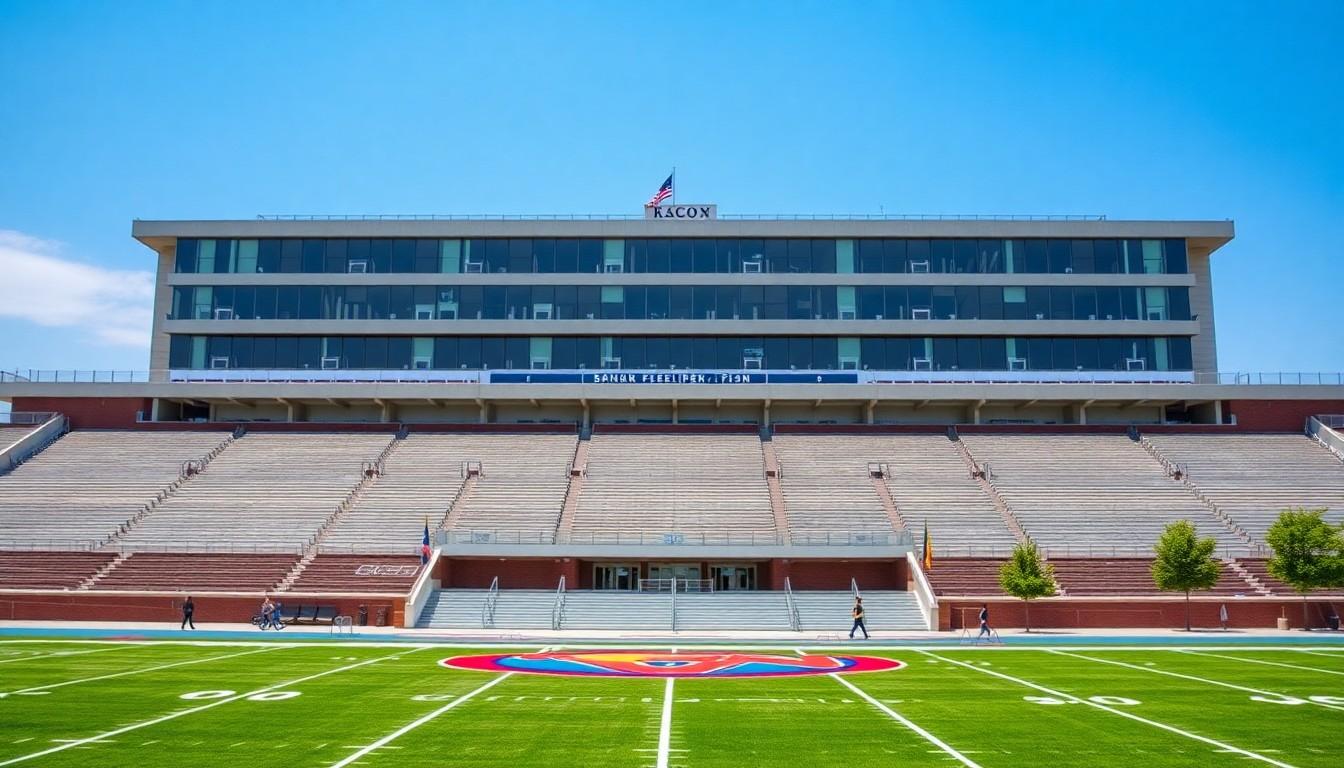
One fan's mission to visit every top-level college football stadium has become something much bigger than a travel challenge. Across packed tailgates, famous traditions and occasionally uncomfortable settings, Andrew Bauhs is showing why visible LGBTQ support can make sports feel more welcoming.
Essential Takeaways
- A huge stadium mission: Andrew Bauhs set out to visit all 130 Division I-A college football grounds in America.
- Visibility matters: Rainbow flags, Pride stickers and open conversations have helped LGBTQ fans feel less alone.
- Warm welcomes stand out: Stops in places such as Lawrence, Kansas, offered memorable displays of community spirit.
- Safety isn't guaranteed: At more socially conservative campuses, Bauhs and his husband sometimes moderated how openly they behaved.
- Tradition creates connection: Bands, mascots, tailgates and rituals can unite fans, even when the wider culture feels divided.
This college football stadium tour became a Pride statement
At first glance, visiting every major college football stadium sounds like a wonderfully obsessive travel project: long drives, early kick-offs, unfamiliar towns and enough team merchandise to fill a wardrobe. For Bauhs, though, the journey gradually became a public declaration that LGBTQ fans belong in those spaces too.
The rainbow details are deliberately simple. A flag on a website, a Pride sticker on a phone or a colourful banner in a classroom can seem small, but they can be quietly reassuring to anyone wondering whether they're welcome. As sports podcasts and college football coverage continue to follow the stadium experience, that message has found a wider audience. Sources including Sports Illustrated and Stadium Journey regularly highlight the depth of the gameday ritual, from arrival to final whistle. [2], [6]
Bauhs' husband, Olin, has helped document the trips, turning the project into a shared record rather than a solo checklist. The photographs capture the obvious spectacle, but they also preserve the softer moments: conversations with strangers, unexpected invitations and the relief of spotting someone else who understands.
Why LGBTQ visibility matters in college sports
Bauhs has described visibility as especially important because it lets people know they're seen. That doesn't require a grand speech. Sometimes it's simply recognising another fan's Pride symbol in a crowded tailgate and starting a conversation.
One such encounter at Auburn showed how quickly that can happen. A fellow supporter noticed the couple's stickers and admitted he was glad not to feel like the only out person there. It's the sort of exchange that rarely makes a scoreboard, yet it may be the most meaningful part of the day.
College football media often focuses on fixtures, predictions and betting, as seen in the wider Kansas sports podcast landscape, but fan identity is part of the experience too. [4], [5] The sport's huge scale can be intimidating; a visible sign of solidarity makes it feel a little more human.
The friendliest stadiums can surprise you
Lawrence, Kansas, left a particularly strong impression. Bauhs expected an open-minded town, but said the number of Pride flags and the warmth from tailgaters went beyond what he'd imagined. For a visitor travelling from stadium to stadium, that kind of welcome can linger long after the game ends.
The appeal wasn't just the city. The atmosphere around David Booth Kansas Memorial Stadium offered the familiar ingredients of a great Saturday: people gathering early, swapping stories and treating visiting fans as part of the occasion. Coverage of Kansas football and its surrounding fan culture frequently returns to that communal energy. [4], [5]
Other favourites included Wisconsin, Texas A&M, Penn State, Nebraska, Washington and LSU, as well as California's Tightwad Hill, where supporters watch from a hillside overlooking the stadium. These stops reveal a useful truth about choosing the best college football gameday experience: the venue matters, but the people and traditions often matter more.
A welcoming crowd doesn't erase every challenge
The tour hasn't been carefree. At Liberty University, Bauhs and Olin felt the need to be cautious, keeping some distance while tailgating and using less revealing language about their relationship. That kind of self-editing is a sobering reminder that a sports trip can involve more than transport, tickets and weather.
At Ole Miss, the atmosphere at The Grove offered plenty to admire, but the presence of Confederate imagery created a sharper contrast. A space intended for celebration can still carry symbols that make some visitors feel unwelcome, and Bauhs was candid about that tension.
This is where the stadium journey becomes more than a travel diary. It shows how sport can provide a shared focus while still reflecting the disagreements and prejudices beyond the turnstiles. The opening kickoff may bring temporary unity, but inclusion also depends on what fans are prepared to challenge in the stands.
Tradition turns a match into a memory
For Bauhs, the most impressive venues weren't necessarily the newest or grandest. What stayed with him were distinctive rituals, including Virginia Tech's dramatic "Enter Sandman" entrance and Wisconsin's post-match Fifth Quarter band performance.
That observation lines up with the wider way college football is covered by specialist outlets and fan podcasts. A complete gameday experience is about sound, movement, ceremony and belonging, not merely the result. [2], [3], [6] The band starts playing, the crowd surges, and for a few hours everyone knows exactly why they've turned up.
The tour has also delivered spectacular football, including Texas A&M's extraordinary seven-overtime win over LSU. Yet the bigger victory is cultural. By arriving openly, sharing the journey and making room for other LGBTQ supporters, Bauhs is helping broaden the picture of who a college football fan can be.
He still had more stadiums to visit, including Army, where he was particularly keen to see an autumn afternoon in West Point. That anticipation is part of the charm: even after more than a hundred stops, the next ground can still feel like an invitation.
Visibility won't solve every problem in sport, but it can change the temperature of a day. For someone scanning a crowd and wondering whether they fit, a rainbow flag may be enough to say, "You're not alone."
It's a long road trip, but the message travels even further.
Source Reference Map
Story idea inspired by: [1]
Sources by paragraph:
- Paragraph 1: [2], [6]
- Paragraph 2: [4], [5]
- Paragraph 3: [2], [3]
- Paragraph 4: [4], [5]
- Paragraph 5: [2], [6]
- Paragraph 6: [3], [7]
- Paragraph 7: [4], [5]
- Paragraph 8: [2], [6]
- Paragraph 9: [3], [7]
- Paragraph 10: [2], [6]
- Paragraph 11: [4], [5]
- Paragraph 12: [2], [3]
- Paragraph 13: [6], [7]
- Paragraph 14: [2], [3]
- Paragraph 15: [4], [5]