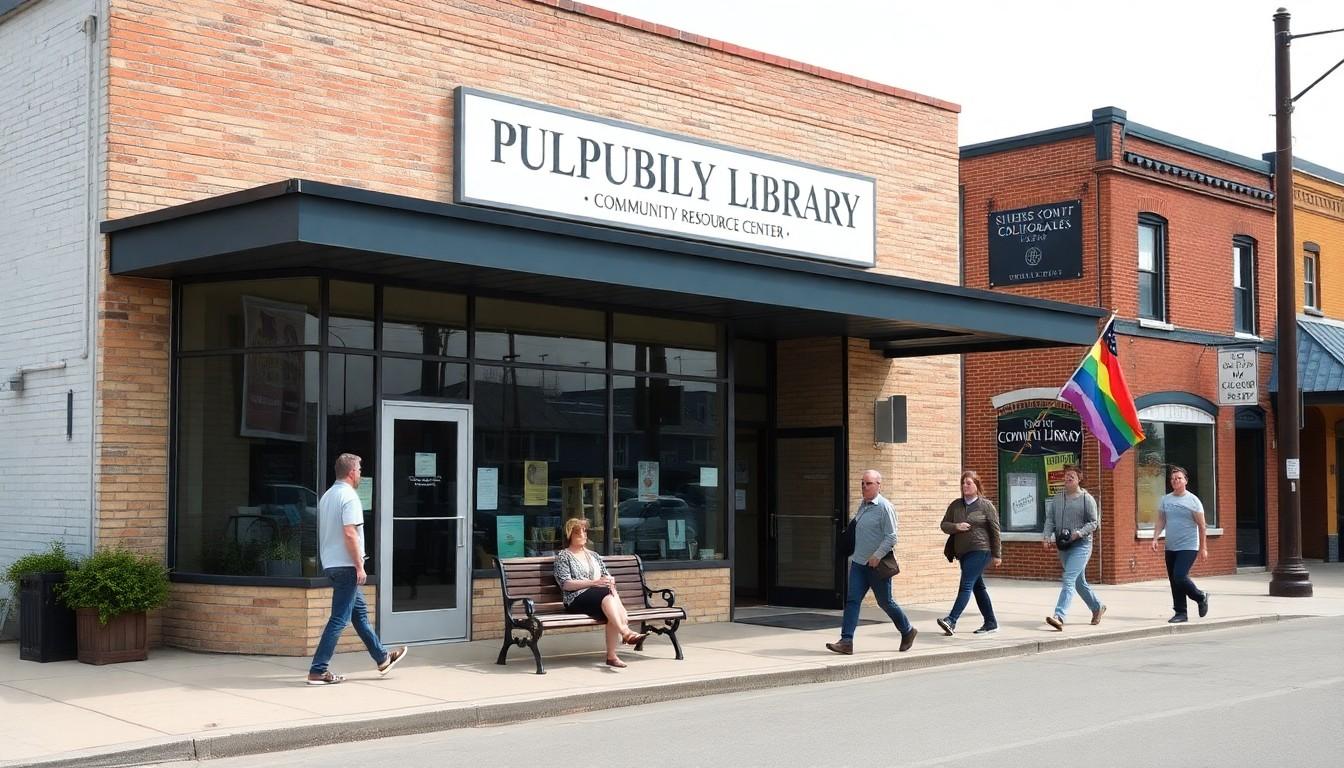
Alabama library users are watching a heated dispute over LGBTQ+ books in Huntsville and Madison County, where claims about relocated titles have collided with the library system's public response. The episode matters because shelving decisions can shape what families see, borrow and discuss, while wider book challenges continue to test the boundaries of public access.
Essential Takeaways
- A relocation claim sparked the dispute: Reports alleged that LGBTQ+ books had been moved within local library branches.
- The library disputed parts of the account: Coverage said officials challenged the suggestion of a broad, targeted removal.
- Shelving can change visibility: A book need not disappear to become harder for readers to find.
- Alabama libraries faced wider scrutiny: A separate children’s-book listing error drew attention after an author’s surname was mistaken for explicit content.
- The bigger issue is access: The argument reflects a national rise in challenges over books involving identity, sex and LGBTQ+ themes.
A shelving decision became a much bigger story
The controversy began with claims that Huntsville-Madison County Public Library staff had ordered a large-scale relocation of LGBTQ+ titles. According to AL.com’s Alabama Political Reporter, the alleged move quickly became part of a wider argument about whether libraries were quietly restricting access. That’s a serious concern for readers, even when books remain technically available. [2]
The dispute also exposed how quickly a familiar library task can become politically charged. Moving books between shelves may sound routine, but placement affects discovery, browsing and the sense of welcome a collection creates. For a teenager looking for reassurance, a book that’s easy to spot can matter enormously. [4]
Library officials pushed back on the accusation
The library system responded that the description of events was inaccurate, according to 1819 News. Its account challenged the idea that staff had carried out a sweeping relocation specifically aimed at LGBTQ+ books, adding an important layer to a story that had initially travelled through accusation and reaction. [3]
WAFF likewise reported that library representatives addressed claims about books being moved. The competing accounts show why this story is difficult to reduce to a simple headline: the central question isn’t only where books ended up, but why they were moved, who made the decision and how the public was informed. [4]
Why visibility matters even when books stay available
Libraries organise collections for practical reasons, including age guidance, space and browsing habits. But when a group of titles is moved together, readers may reasonably ask whether the change is administrative or ideological. That distinction is especially important in debates about LGBTQ+ books, where ordinary collection management can be interpreted through an already tense national climate. [2]
The argument also reflects a broader shift in public-library culture. Book challenges increasingly focus on themes involving gender, sexuality and identity, turning everyday catalogue decisions into flashpoints. Kirkus Reviews’ roundup of major book news captured the extent to which disputes over challenged and contested titles had become part of the publishing conversation. [6]
Alabama has seen other book-listing confusion
The Huntsville dispute arrived alongside another Alabama library controversy involving a children’s book that was mistakenly placed on an explicit-content list. WSFA reported that the error stemmed from confusion involving the author’s surname rather than the book’s actual content. [5]
That episode may sound almost absurd, but it illustrates the risks of rushed or poorly checked classification systems. Boing Boing also covered the incident, noting how a basic identification mistake could trigger a much more serious label. For families, librarians and authors, accuracy matters before a warning, restriction or public accusation reaches a wider audience. [7]
What readers should ask next
The most useful questions are straightforward. Which titles were moved, where were they placed, what policy applied and was the decision documented? Readers can also check a library catalogue, ask staff for the collection rationale and attend public meetings where policy decisions are discussed. [3]
Those steps don’t settle the cultural argument, but they can separate evidence from assumption. A quiet shelf change can affect real people, especially young readers searching for stories that reflect their lives, so transparency is more than good public relations. It’s part of the library’s job.
The dispute is unlikely to be the last of its kind. As communities debate content, age suitability and representation, libraries will need clear policies and calm explanations, while readers will keep looking for both access and trust. [6]
Libraries don’t just store books; they signal who gets to find themselves on the shelf.
Source Reference Map
Story idea inspired by: [1]
Sources by paragraph: