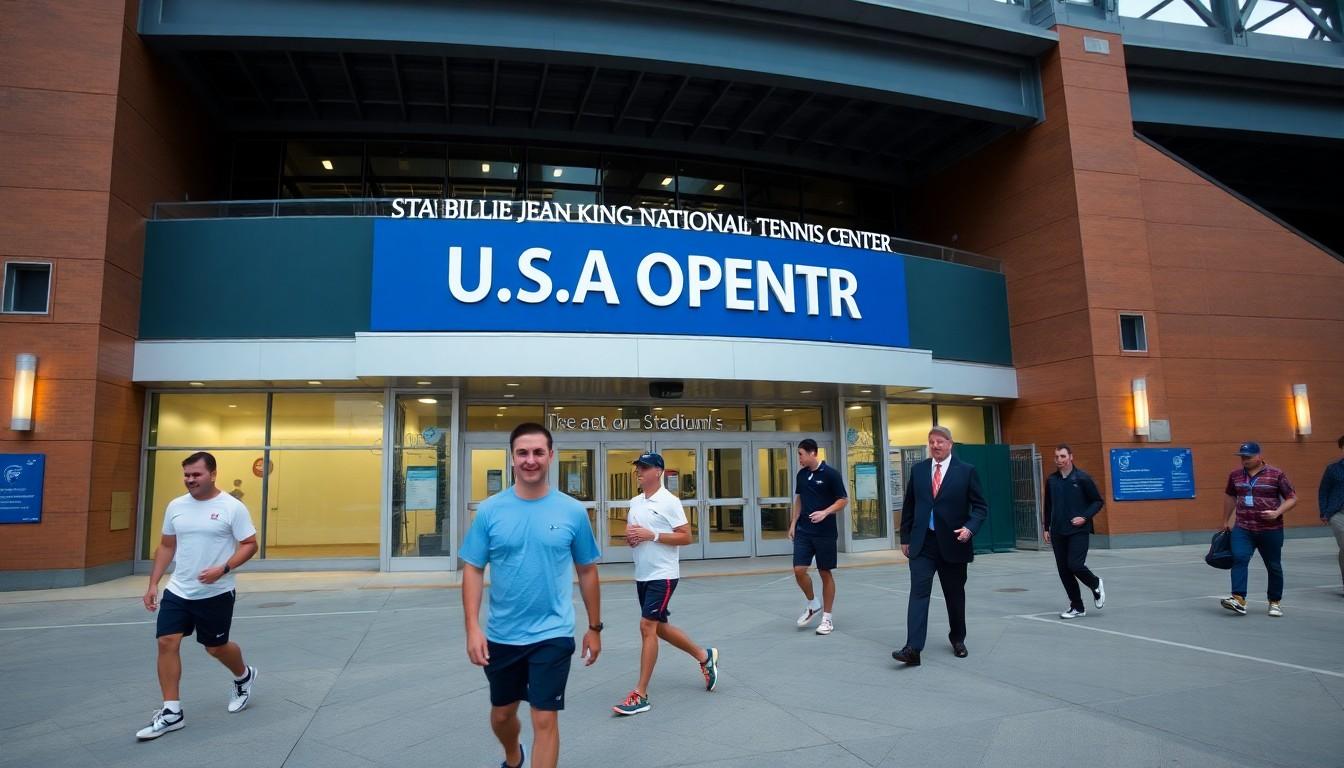
Fans arriving at the 2026 US Open in New York found rainbow details, queer performers and Pride energy woven through the day. Against a backdrop of political pressure and retreating corporate support, the tournament’s visible LGBTQ+ welcome felt more than decorative. It connected tennis history, community and representation in one of sport’s biggest settings.
Essential Takeaways
- Pride was visible on site: Rainbow colours, Open Pride branding, music and wristbands appeared around the tournament grounds.
- The venue carries history: The Billie Jean King National Tennis Center honours a pioneering player and LGBTQ+ rights advocate.
- Queer talent took centre stage: Performers, athletes and community groups were part of the day’s programme.
- Visibility had limits: The tournament’s physical celebration appeared stronger than its social media presence.
- Representation is growing: Men’s professional tennis now has two openly gay players competing on the lower levels of the tour.
Pride greeted fans from the moment they arrived
The first impression was unmistakably festive. Fans stepping off the 7 train encountered the New York City Queer Big Apple Corps Marching Band and Pride cheerleaders before they had even reached the tennis centre, setting a bright, communal tone for the day.
Inside, the soundtrack kept the mood going, with Madonna, Whitney Houston and other queer favourites echoing across the grounds. It was the sort of detail that might seem small on paper, but familiar music can quickly turn a large sporting venue into somewhere that feels welcoming. The US Open’s official coverage also highlighted the busy atmosphere around the site. According to the tournament’s daily grounds report, [2].
The celebration wasn’t confined to one banner or stage. Open Pride logos appeared on screens and in the daily guide, while some members of the ball crew wore rainbow wristbands during matches. For fans, those details made LGBTQ+ inclusion feel present rather than tucked away in a side event.
The Billie Jean King name makes the setting significant
This isn’t just any tennis venue. The Billie Jean King National Tennis Center is named after one of the sport’s defining figures, whose influence stretches from the creation of the WTA to decades of advocacy for LGBTQ+ equality.
That history gives Pride at the US Open an added layer. The tournament isn’t borrowing a message from elsewhere, it’s placing the celebration within a sporting institution shaped by a trailblazer who changed what tennis could look like. The US Open’s broader inclusion programme, described through its Be Open initiative, presents openness and belonging as part of the event’s identity. According to the tournament’s inclusion materials, [4].
The leadership picture matters, too. USTA president Brian Vahaly is openly gay, married and a father, adding contemporary representation to a venue already associated with King’s legacy. That combination of history and visibility helps explain why the day resonated with queer tennis supporters.
Queer sport and culture shared the spotlight
The programme brought together more than tennis players. Jordan Lucas, a prominent queer volleyball player, took part in the coin toss at Louis Armstrong Stadium after gaining wider attention following an incident involving a commentator. A private Out and Open brunch also gathered queer athletes, celebrities and tennis figures.
Community tennis had a place in the story as well. The Metropolitan Tennis Group appeared on court, linking the spectacle of the Grand Slam with the everyday clubs and players who keep LGBTQ+ sport moving. That community thread is important because Pride works best when it feels lived-in, not simply branded.
Elsewhere in tennis, representation is slowly becoming more visible. Joao Lucas Reis da Silva and Mika Brunold are currently competing on the lower levels of the men’s professional tour, making them the first two openly gay male professionals in the sport at the same time. It’s a modest step, but in a traditionally cautious environment, modest steps still matter.
A winning moment for Demi Schuurs
The day also delivered a neat on-court highlight. Demi Schuurs, one of the WTA’s most prominent longtime out lesbians, marked Pride with a first-round doubles victory alongside Ellen Perez, winning in straight sets.
That result gave the celebration a sporting heartbeat. Pride wasn’t only about music, signage and public welcomes, it was also about an LGBTQ+ player competing and winning in the tournament itself. For fans watching from the stands, that can feel more powerful than any promotional message.
The connection between competition and community has been visible across tennis events, too. The Metropolitan Tennis Group’s Liberty Open, for example, frames competition as a way to build connection as well as identify winners. Its event coverage describes that balance between performance and belonging, according to the group’s organisers, [3].
The social media silence was hard to miss
For all the colour around the grounds, the tournament’s digital presence appeared noticeably quieter. The US Open social media profile did not adopt its usual Pride-themed logo, while its Instagram account had shared only one Pride-related story at the time of reporting.
That contrast raises an awkward but useful question. Is Pride being supported as a public-facing part of the event, or is it being kept primarily within the physical grounds where the message is easier to control? In an era when fans scrutinise brands online, social channels are part of the experience, not an afterthought.
The distinction matters because inclusion is measured by consistency. The US Open has shown that it can make queer fans feel visible at the gates, in the stadium and across the grounds. The next test is whether that same confidence carries into its wider communications, partnerships and future tournaments.
Why this moment carries extra weight in 2026
Pride celebrations now sit in a more contested sporting landscape. Some companies and events have reduced or removed LGBTQ+ initiatives, making public support feel less automatic than it did a few years ago. Against that backdrop, the US Open’s decision to make Pride visible on site sent a clear signal.
It also showed how a major tournament can combine celebration with institutional memory. Rainbow colours are cheerful, but the day’s deeper message came from connecting current fans and athletes with Billie Jean King’s legacy and the communities that have long supported tennis.
For queer fans, that can turn a day at the tennis into something more personal. One spectator may notice the wristbands, another the music, another Schuurs’s win, but together those touches say the same thing: you’re part of this crowd.
At a time when visibility is being tested, the US Open’s Pride celebration made room for queer fans to feel seen.
Source Reference Map
Story idea inspired by: [1]
Sources by paragraph: