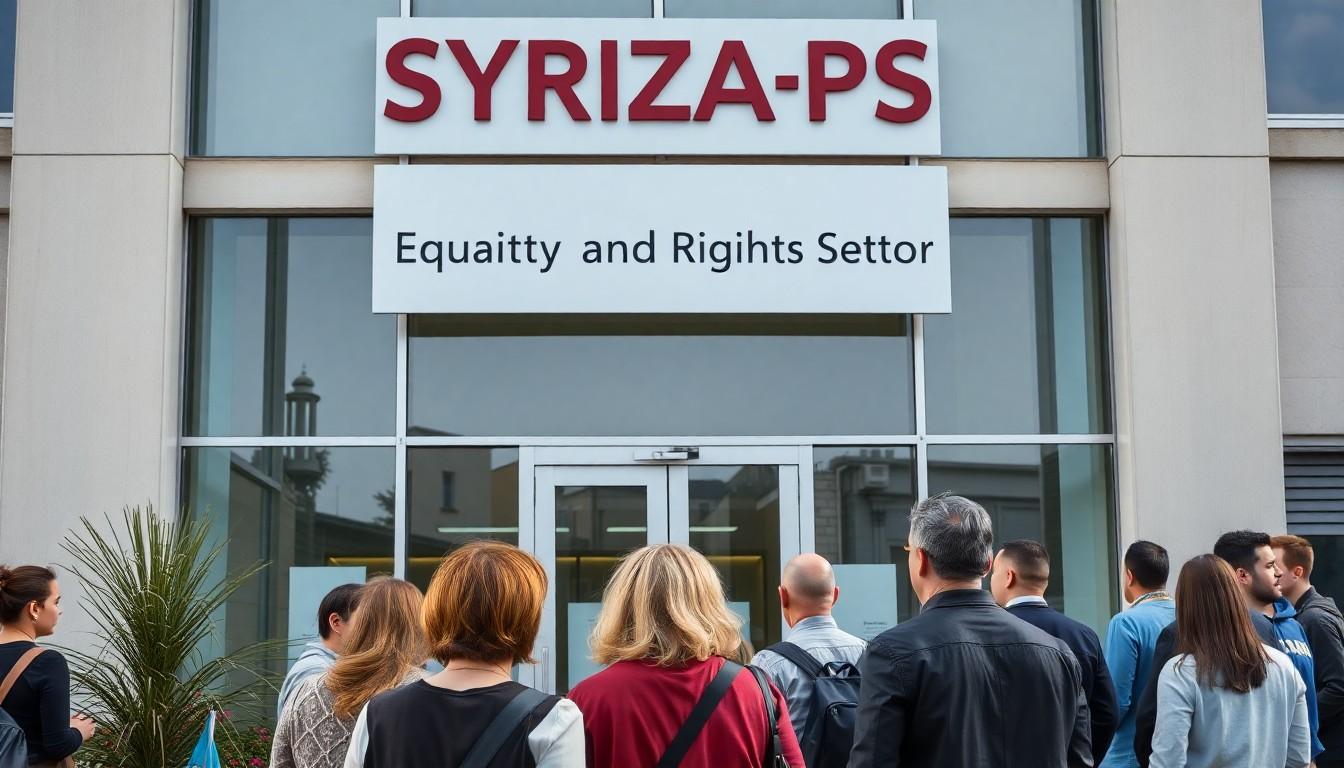
A political row in Greece has renewed debate about gender, dignity and equal rights, after a SYRIZA statement challenged claims that gender exists only in two categories. The wider issue matters beyond party politics: trans, intersex and non-binary people deserve accurate language, social recognition and protection from stigma in everyday life.
Essential Takeaways
- The political dispute: SYRIZA’s Equality and Rights department criticised government figures and television commentators over statements it described as homophobic and transphobic.
- More than two categories: Gender identity isn’t limited to a simple male-or-female binary, according to LGBTQ+ rights organisations and international bodies.
- Identity isn’t illness: Treating gender diversity as a psychiatric problem can reinforce prejudice and discourage people from seeking support.
- Equality is practical: Respectful language, correct names and inclusive services can make a meaningful difference to daily life.
- The wider context: Trans and non-binary rights remain part of a broader international debate about visibility, safety and equal treatment.
Greece’s gender debate has moved beyond party politics
The latest clash began with comments from government representatives and television commentators in Greece, prompting a sharp response from SYRIZA’s Equality and Rights department and its spokesperson, Elena Akrita. Their message was direct: no minister, government representative or media personality should decide which identities deserve recognition.
That argument has an emotional charge because the language used in public debate can quickly spill into real life. A dismissive remark on television may sound fleeting, but for someone already facing family pressure, workplace discrimination or social isolation, it can land with a much heavier thud.
The Human Rights Campaign explains that transgender and non-binary people have identities that may differ from the sex assigned to them at birth. The organisation also stresses that gender identity and sexual orientation are separate parts of who someone is.
What does non-binary mean?
Non-binary is an umbrella term for people who don't identify exclusively as men or women. Some people may identify somewhere between those categories, while others may experience their gender as changing, outside the binary, or not defined by gender at all.
That variety is precisely why neat political slogans often fail. The Human Rights Campaign's guidance notes that people use different words for their identities and may have different preferences around pronouns, names and forms of expression. There isn't a single non-binary experience, just as there isn't one way to be transgender.
The United Nations places the issue within wider LGBTIQ rights protections, including the principles of equality, dignity and freedom from discrimination. In other words, recognising gender diversity isn't about creating a fashionable label. It's about applying basic rights to people whose lives don't fit an old template.
Why psychiatric language causes harm
SYRIZA also condemned comments suggesting that anyone who questions their gender should see a psychiatrist. Its criticism focused on what it called the psychiatric treatment of people who don't identify with the gender assigned to them.
That distinction matters. Mental health support can be valuable when someone wants it, particularly if they’re dealing with anxiety, distress or discrimination. But presenting a person's identity itself as evidence of illness can deepen shame and make it harder to find appropriate care.
The US Department of Health and Human Services says LGBTQI people should be able to access healthcare without discrimination. The American Civil Liberties Union likewise describes protection from discrimination as a central part of LGBTQ rights. Those principles point towards support based on a person's needs, rather than assumptions about their identity.
Respect starts with small, everyday choices
For most people, allyship doesn't begin with a grand public statement. It starts with listening, using the name and pronouns someone requests, avoiding intrusive questions and correcting mistakes without turning the moment into a performance.
The Human Rights Campaign advises allies to learn from reliable sources, challenge discriminatory comments and support policies that protect trans and non-binary people. It also recommends allowing individuals to define themselves rather than demanding personal explanations.
At work, in schools and in public services, practical inclusion can be just as important. Forms with unnecessarily restrictive gender options, staff who refuse to update names, or services that treat every person as automatically cisgender can create repeated friction. Small changes may look administrative, but they can make daily life feel considerably safer and less exhausting.
The argument over visibility is far from over
The Greek statement's wider warning was that society shouldn't return to more conservative ideas about gender and rights. That concern echoes international debates, where trans and non-binary people are often discussed as symbols in political battles rather than as individuals with ordinary hopes, worries and routines.
The ACLU's LGBTQ rights work highlights ongoing disputes over discrimination, healthcare, education and public recognition. Meanwhile, United Nations guidance frames equality for LGBTIQ people as a human rights issue, not a matter of whether a particular group is politically convenient.
Public language won't settle every disagreement, but it sets the temperature. A society that makes room for more than two boxes isn't losing clarity; it's acknowledging the people who were already there.
The better question isn't whether everyone uses the same vocabulary. It's whether everyone can live with dignity and equal protection.
Source Reference Map
Story idea inspired by: [1]
Sources by paragraph:
- Paragraph 1: [2], [5]
- Paragraph 2: [3], [4]
- Paragraph 3: [2], [3]
- Paragraph 4: [5], [6]
- Paragraph 5: [2], [3]
- Paragraph 6: [4], [5]
- Paragraph 7: [6], [7]
- Paragraph 8: [6], [7]
- Paragraph 9: [2], [7]
- Paragraph 10: [2], [3]
- Paragraph 11: [2], [6]
- Paragraph 12: [5], [7]
- Paragraph 13: [7], [5]
- Paragraph 14: [2], [3]