Viewers are being invited back to Derek Jarman’s fiercely political world in Queer Edward II, a new documentary premiering at the 2026 Venice Film Festival. Theo Rollason’s film follows the making of Jarman’s 1991 Edward II while revealing why his art, activism and uncompromising queer vision still feel strikingly current.
Essential Takeaways
- A behind-the-scenes portrait: The documentary draws on footage filmed during Jarman’s production of Edward II.
- History with a pulse: Its 1991 setting echoes ongoing debates around queer rights, protest and artistic freedom.
- More than a film diary: The story expands into a portrait of Jarman’s politics, collaborators and personal integrity.
- A tender, vivid mood: Archival material brings the texture of a busy film set, from creative tension to practical chaos.
- Release still to come: The film premiered in Venice and is seeking US distribution.
Jarman’s Edward II gets a revealing new frame
The most affecting thing about Queer Edward II is how quickly a film set becomes a battleground of ideas. Derek Jarman is adapting Christopher Marlowe’s tragedy about a gay king, but around him, activists are challenging the legislation and public attitudes threatening queer lives. The atmosphere feels busy, tense and electrically alive.
Theo Rollason builds the documentary from footage shot during the making of Jarman’s 1991 film. Screen Daily describes it as an intimate link between the production itself and wider LGBTQ+ activism, a useful shorthand for a work that refuses to treat cinema as separate from the world around it.
Jarman’s Edward II was never a straightforward period drama. With modern clothing, pop-cultural flourishes and openly political casting, it turned an old royal tragedy into a pointed argument about desire, power and persecution. That collision of past and present remains central to the documentary’s appeal.
A film set full of friction, humour and risk
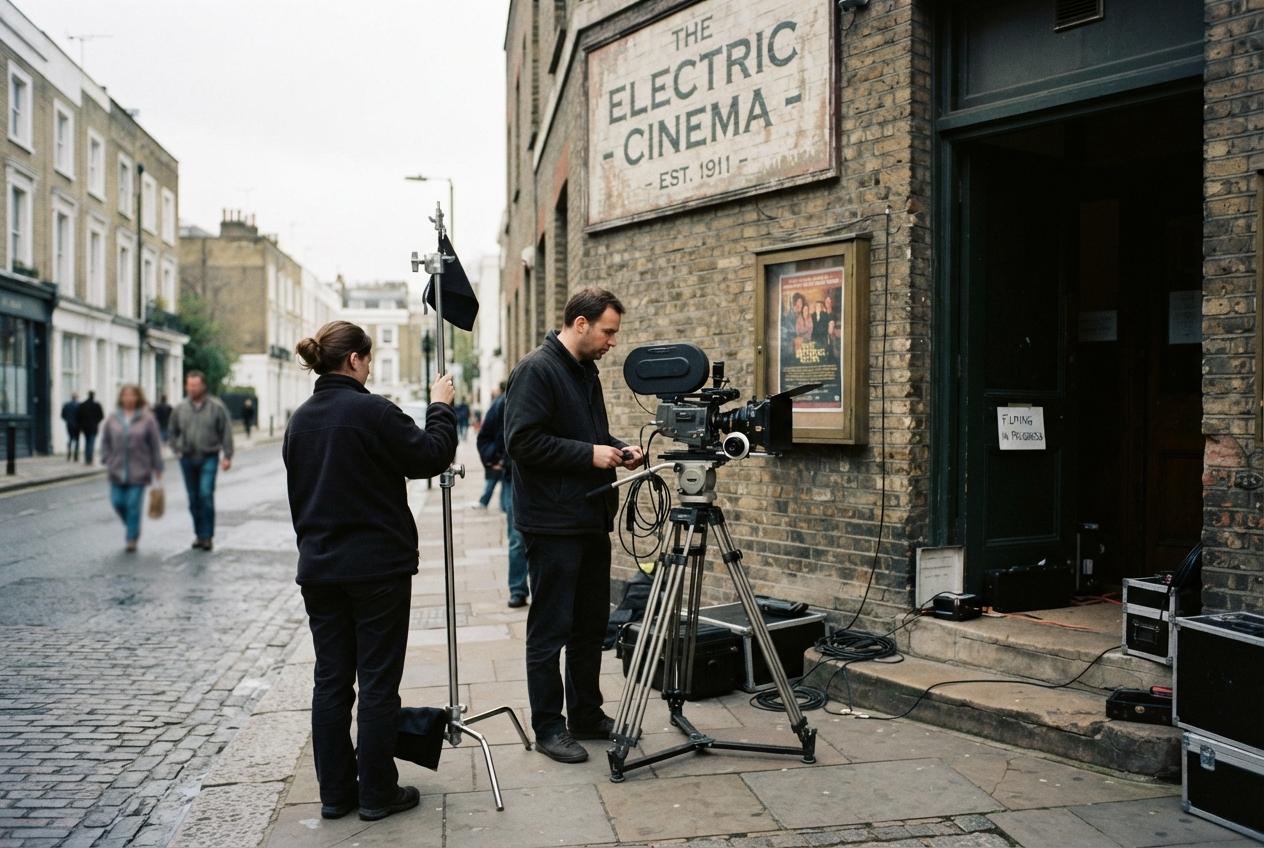
There’s plenty of practical drama here, too. Low-budget filmmaking means money worries, difficult logistics and the sort of last-minute problem-solving that can make even a grand historical production feel oddly domestic. The footage has the warm, slightly scruffy energy of people trying to keep a complicated machine moving.
That texture matters because it stops Jarman becoming a polished monument. Viewers see a working artist surrounded by collaborators, interruptions and competing demands. The Guardian’s description of the film as a funny and touching time capsule captures that balance: this is affectionate, but it isn’t embalmed.
The result occasionally feels closer to a backstage drama than a conventional archive piece. Cameras observe conversations, compromises and eruptions without flattening them into a simple story of genius at work. Jarman’s authority is clear, but so is the effort required to make his vision real.
Why the activism still feels uncomfortably familiar
The documentary’s political force comes from its restraint. Rather than forcing a direct comparison with the present day, it allows old footage of protests, media coverage and legislative anxiety to speak for itself. The parallels arrive quietly, then land with a thud.
The campaign group OutRage! was protesting Clause 25 of the 1991 Criminal Justice Bill, which proposed criminal penalties for consensual sexual activity between men in public. That historical detail gives the archive its sharp edge, while Jarman’s willingness to stand beside activists shows that his politics weren’t decorative extras.
This is where the film becomes more than a portrait of a celebrated director. It asks what artistic integrity looks like when public pressure, commercial demands and community responsibility pull in different directions. Jarman doesn’t present the answer as a grand speech. He simply keeps showing up.
The human cost behind the legend
Jarman’s public image has long been tied to his films, activism and status as a key figure in British queer cinema. But the documentary’s most poignant material comes from the knowledge that he was living with HIV during the production and already understood time differently from those around him.
There’s a particular sadness in watching younger versions of familiar broadcasters and cultural figures while knowing that Jarman wouldn’t have the same long public life. The footage carries the ordinary excitement of a film shoot, but also the shadow of an ending that viewers can’t forget.
That tension recalls the emotional power of Jarman’s own later work, especially Blue, his stark account of illness, loss and love. According to Senses of Cinema’s long-running critical assessment of Jarman, his films remain inseparable from his political and personal voice. Queer Edward II seems to understand that completely.
A carefully made tribute, not a shrine
Rollason’s achievement lies in knowing when not to interfere. The documentary appears to let Jarman, his crew and the activists create the meaning, rather than crowding the screen with modern commentary. Every selection still carries an argument, but it’s made through editing and juxtaposition.
That approach fits Jarman’s wider legacy. The Guardian has previously explored how his work has been treated almost as a form of cultural sainthood, while accounts of his life and Dungeness home continue to underline the difference between the icon and the person. This film seems most alive when it remembers both.
The title’s use of “Queer” is significant, too. It isn’t merely a fashionable update, but a recognition of the language, politics and sexual confidence that Jarman brought into British cinema. His work could be mischievous, sensual, abrasive and deeply compassionate, sometimes within the same scene.
Queer Edward II premiered at Venice in 2026 and is currently seeking US distribution. For audiences discovering Jarman for the first time, it could be an inviting route into his cinema. For longtime admirers, it offers something rarer: the pleasure of seeing a familiar legend caught in the middle of making trouble.
It’s a lively, tender reminder that the most radical films often begin with someone refusing to look away.
Source Reference Map
Story idea inspired by: [1]
Sources by paragraph: