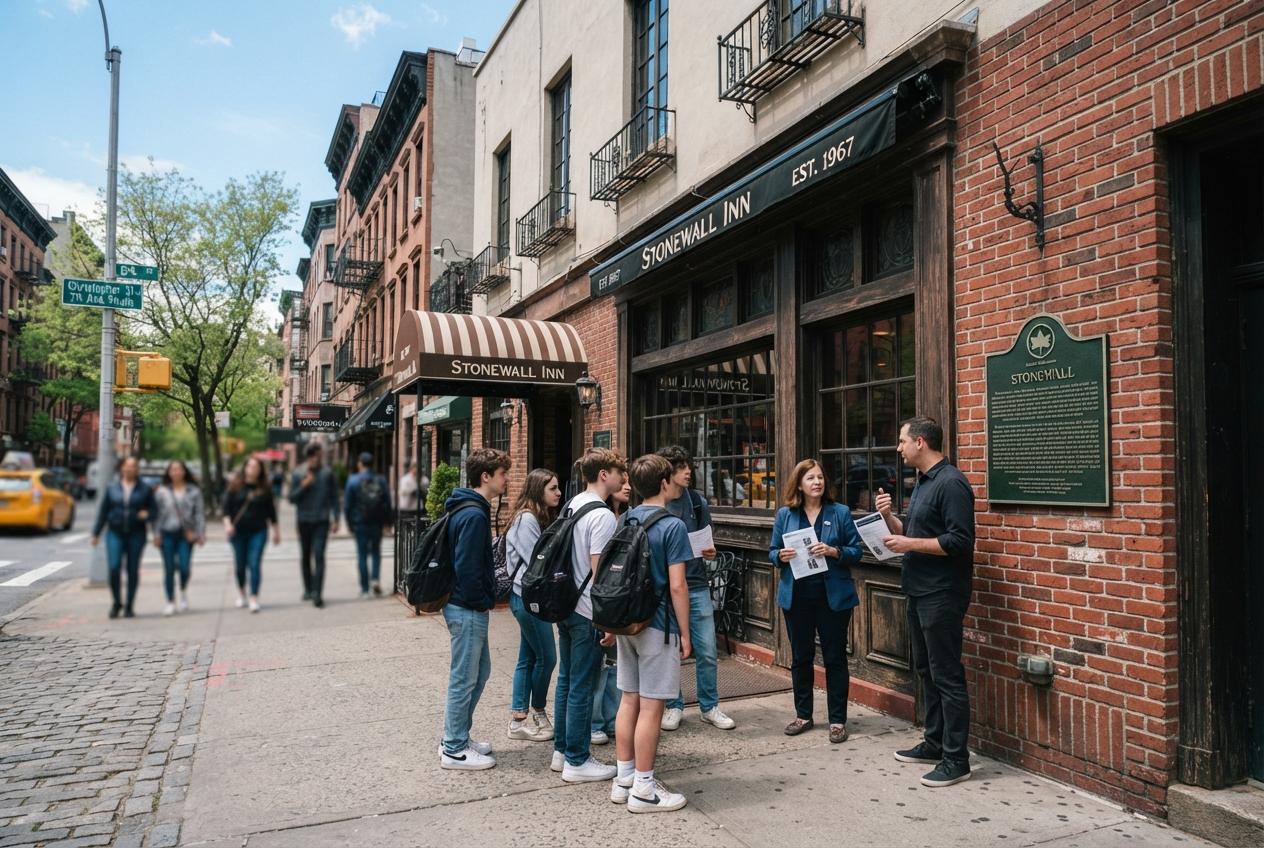
Teachers looking for free LGBTQ history resources can now explore ten short virtual videos from New York City’s LGBTQ Historic Sites Project. Created for high school students and educators ahead of America 250, the films connect real places with activism, public health, legislation and the long fight for equality.
Essential Takeaways
- Ten new films: The videos cover LGBTQ organising and social change from the Progressive Era to marriage equality.
- Built for classrooms: Materials are aimed at high school teachers and link naturally with civics, humanities and social studies.
- Free and online: Educators can use the resources virtually throughout September 2026 and beyond.
- A wider collection: More than 40 additional videos explore New York City’s LGBTQ history.
- Deadline to note: Registration remains open until 31 December 2026.
LGBTQ history gets a vivid classroom setting
A history lesson can feel very different when it begins outside a textbook. These new LGBTQ history videos take students to the streets, buildings and neighbourhoods where campaigns were organised, communities gathered and public debates shifted.
The NYC LGBTQ Historic Sites Project focuses on the idea that LGBTQ history is part of American history, rather than a separate footnote. Its wider work documents significant places and people across New York City, giving teachers a useful way to turn broad themes into tangible stories. The project’s background materials explain how historic locations can reveal the human detail behind political change. [3], [7]
Ten short videos cover a long fight for change
The new collection moves across several periods and subjects, including civil rights, transgender activism, public health and legislation. That range should make it easier for teachers to slot individual films into existing units, whether a class is discussing social movements, government policy or the changing meaning of citizenship.
Short videos can also be a practical choice for busy classrooms. A focused film offers a clear starting point for discussion, while the connected locations give students something concrete to investigate afterwards. The project’s earlier video work, including a tour of Greenwich Village sites linked with Stonewall and later activism, shows how place can add atmosphere and emotional weight to the lesson. [4], [6]
Why place-based learning makes these stories stick
There’s a quiet power in showing where history happened. A street corner, meeting place or public building can make a national debate feel less remote, particularly for students who may know the headline events but not the people and communities behind them.
The project’s digital guide and educator materials are designed to support that approach, helping teachers move from viewing to enquiry. Students might compare the goals of different campaigns, trace how laws changed, or ask why some sites were remembered while others were overlooked. That turns the videos into more than passive screen time. [2], [7]
A flexible resource for civics and social studies
Teachers don’t need to build an entire unit around the collection. One film could introduce a lesson on protest and organising, while another might open a conversation about public health, legal recognition or representation. The subjects also offer natural links between history and contemporary civic life without forcing every discussion into the same shape.
For the strongest results, educators could give students a simple viewing task: identify the problem activists faced, the strategy they used and the change they sought. Follow-up work might include a timeline, a map-based activity or a short reflection on how local action can influence national policy. The project’s educator tools provide a useful foundation for that kind of classroom planning. [2], [3]
What teachers should know before signing up
The programme is virtual, open to high school teachers and available on an ongoing basis during September 2026 and throughout the year. The listed registration deadline is 31 December 2026, so schools have time to explore the collection and decide where it fits into their teaching plans.
Educators can also look beyond the ten new films, with more than 40 additional videos available on New York City’s LGBTQ history. That broader library means teachers can build a sequence around a particular theme or let students choose a site for independent research. It’s a thoughtful way to mark America 250 while keeping the focus on stories that deserve to be seen, heard and discussed. [2], [6]
It’s a small-screen resource with a substantial historical footprint.
Source Reference Map
Story idea inspired by: [1]
Sources by paragraph: