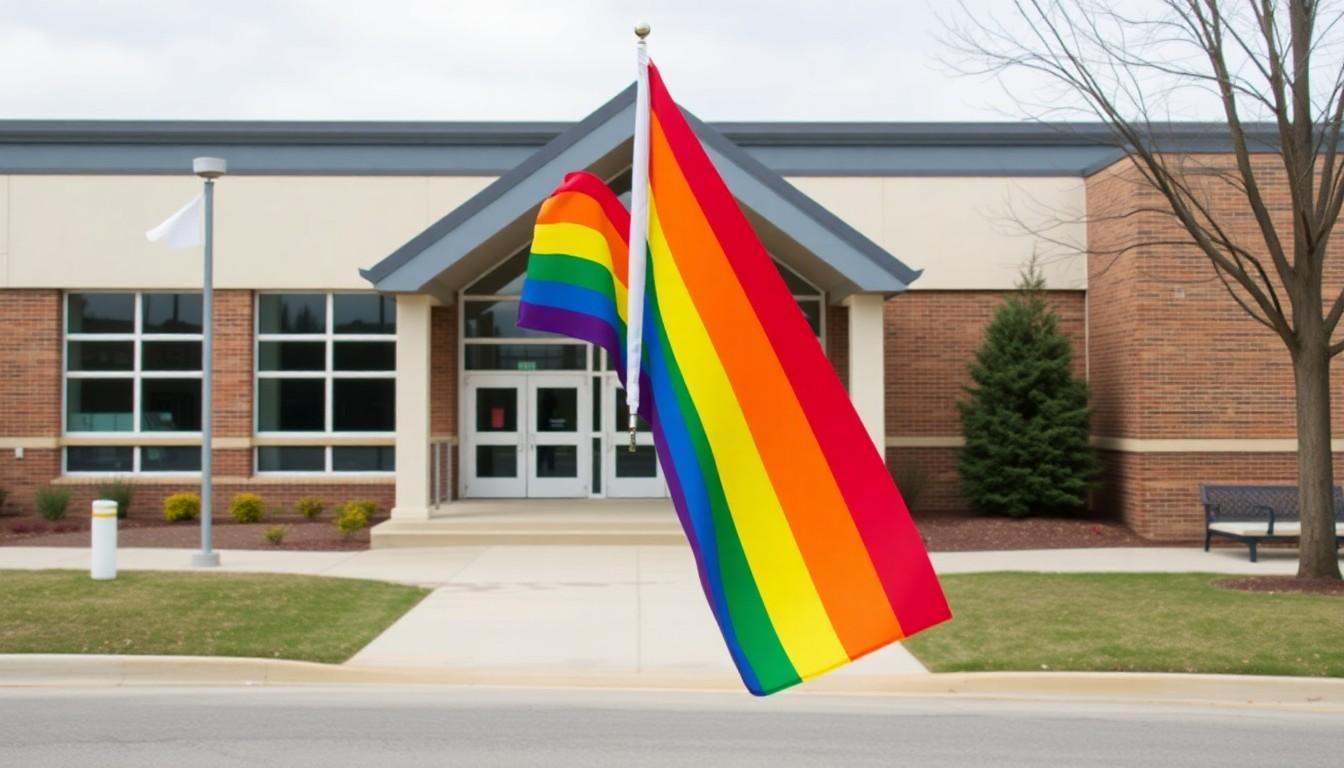
Supporters are racing to protect Michigan's statewide LGBTQ+ student safety programme, which could close in early 2027 without about $250,000 in replacement funding. The project trains school staff, supports districts and helps create safer classrooms at a time when many LGBTQ+ young people still don't feel welcome at school.
Essential Takeaways
- Urgent funding gap: About $250,000 would keep the programme running for another two years.
- Statewide reach: Since 2020, its workshops have reached 8,751 education and support professionals.
- Persistent safety concerns: LGBTQ+ pupils report higher levels of discrimination, bullying and anxiety at school.
- Practical support: Training covers teachers, school leaders, bus drivers, mental health providers and other staff.
- Why it matters: Affirming adults and safer school environments are linked with lower suicide risk among LGBTQ+ young people.
A vital safety net could disappear
For LGBTQ+ pupils, an ordinary school day can carry an exhausting amount of risk: a hostile corridor, a careless comment in class or the worry that asking for help will make things worse. Michigan's LGBTQ+ Students Project was created to make those moments less likely, but its own future is now uncertain.
The statewide initiative, run by the Michigan Organization on Adolescent Sexual Health with Roots of Change, needs roughly $250,000 to replace lost funding. Without it, coordinated staffing, training and one-to-one support for schools could be suspended in early 2027.
The figures behind the appeal are stark. Research highlighted by Michigan sources shows that LGBTQ+ young people face elevated mental health and safety risks, particularly when their schools lack affirming adults and clear protections. The Michigan Department of Health and Human Services continues to track suicide and injury data as part of the state's wider prevention work. (According to the Michigan Department of Health and Human Services.)
What the project actually does
This isn't a campaign asking pupils to educate their schools. Instead, it puts that responsibility where it belongs, with the adults and institutions running them.
The programme trains superintendents, teachers, school board members, bus drivers, counsellors, healthcare providers and paraprofessionals. It also helps districts develop practical policies for transgender and non-binary pupils, so support doesn't depend on one sympathetic member of staff.
Since 2020, the project has delivered 153 in-person and online workshops for 8,751 people. Participants have come from almost 600 traditional public school districts, public school academies and intermediate school districts, together representing about 90% of Michigan's pupils. (Project figures reported by Pride Source.)
That reach gives the scheme an unusually grounded role. A training session might sound bureaucratic on paper, but for a young person it can mean being addressed correctly, feeling safe on a school bus or knowing which adult will take a concern seriously.
The need remains painfully clear
Michigan students' experiences reflect a broader national pattern. Research covered by Michigan State University's journalism programme found that LGBTQ+ young people are more likely to experience suicidal thoughts, reinforcing the importance of support before a crisis develops. (Michigan State University journalism reporting.)
School climate data paints an equally uncomfortable picture. Nearly two-thirds of LGBTQ+ pupils surveyed in Michigan reported at least one form of anti-LGBTQ+ discrimination, while some said they were disciplined for public displays of affection when their non-LGBTQ+ peers were not treated the same way.
State guidance also points to higher rates of threats, weapon-related incidents, bullying and school avoidance among lesbian, gay and bisexual pupils. Those aren't abstract statistics. They describe young people weighing up whether a classroom, changing room or lunch hall feels safe enough to enter.
Michigan's suicide prevention messaging repeatedly stresses early support, connected communities and access to trusted adults. That makes school-based training more than a box-ticking exercise. It gives staff the confidence to respond before isolation becomes an emergency. (Michigan's suicide prevention and youth mental health guidance.)
Why the money has become harder to find
The project wasn't directly funded through Michigan's state budget, but the wider financial climate has still made its work more difficult. Federal cuts, political pressure and new restrictions affecting the nonprofit sector have made school districts and other partners more cautious about financially supporting LGBTQ+-focused services.
That hesitation creates a particularly awkward squeeze. Schools may still need help, but the organisations best placed to provide it have fewer reliable routes to funding. Meanwhile, wider education investment pressures are already leaving districts struggling to meet pupils' needs, especially in communities with fewer resources. (Education Trust Midwest analysis.)
The fundraising target would cover staff and facilitators, travel across Michigan, evaluation, resource development and continuing technical assistance. Donations are being sought from individuals, foundations, businesses and community organisations through the Michigan Organization on Adolescent Sexual Health.
Keeping support practical, visible and local
The strongest argument for the project is its practical reach. It doesn't simply tell schools to be more welcoming; it helps them translate that principle into policies, staff habits and everyday decisions.
Almost all workshop evaluations rated the sessions good or excellent, and the project has answered nearly 400 individual requests for technical assistance from schools in 42 counties. That kind of responsive support matters when a district is dealing with a difficult situation and needs an answer that works tomorrow morning, not just a statement of intent.
Jay Kaplan, a staff attorney with the ACLU of Michigan, told Pride Source that losing the programme would be a significant setback after 25 years of service to Michigan schools. The need, supporters say, hasn't faded with the funding crisis. If anything, the pressure on pupils and educators has intensified.
For families, the message is simple but important: safer schools are built through consistent adult action. Keeping that work alive could help thousands of young people arrive at school feeling less like they have to defend their right to belong.
It's a small funding appeal with a very large human consequence.
Source Reference Map
Story idea inspired by: [1]
Sources by paragraph:
- Paragraph 1: [2], [3]
- Paragraph 2: [2], [7]
- Paragraph 3: [3], [5]
- Paragraph 4: [2], [4]
- Paragraph 5: [2], [6]
- Paragraph 6: [2], [7]
- Paragraph 7: [2], [3]
- Paragraph 8: [3], [5]
- Paragraph 9: [4], [6]
- Paragraph 10: [2], [7]
- Paragraph 11: [2], [7]
- Paragraph 12: [2], [6]
- Paragraph 13: [2], [3]
- Paragraph 14: [2], [4]
- Paragraph 15: [2], [5]
- Paragraph 16: [2], [7]
- Paragraph 17: [2], [6]
- Paragraph 18: [2], [3]
- Paragraph 19: [2], [4]
- Paragraph 20: [2], [6]