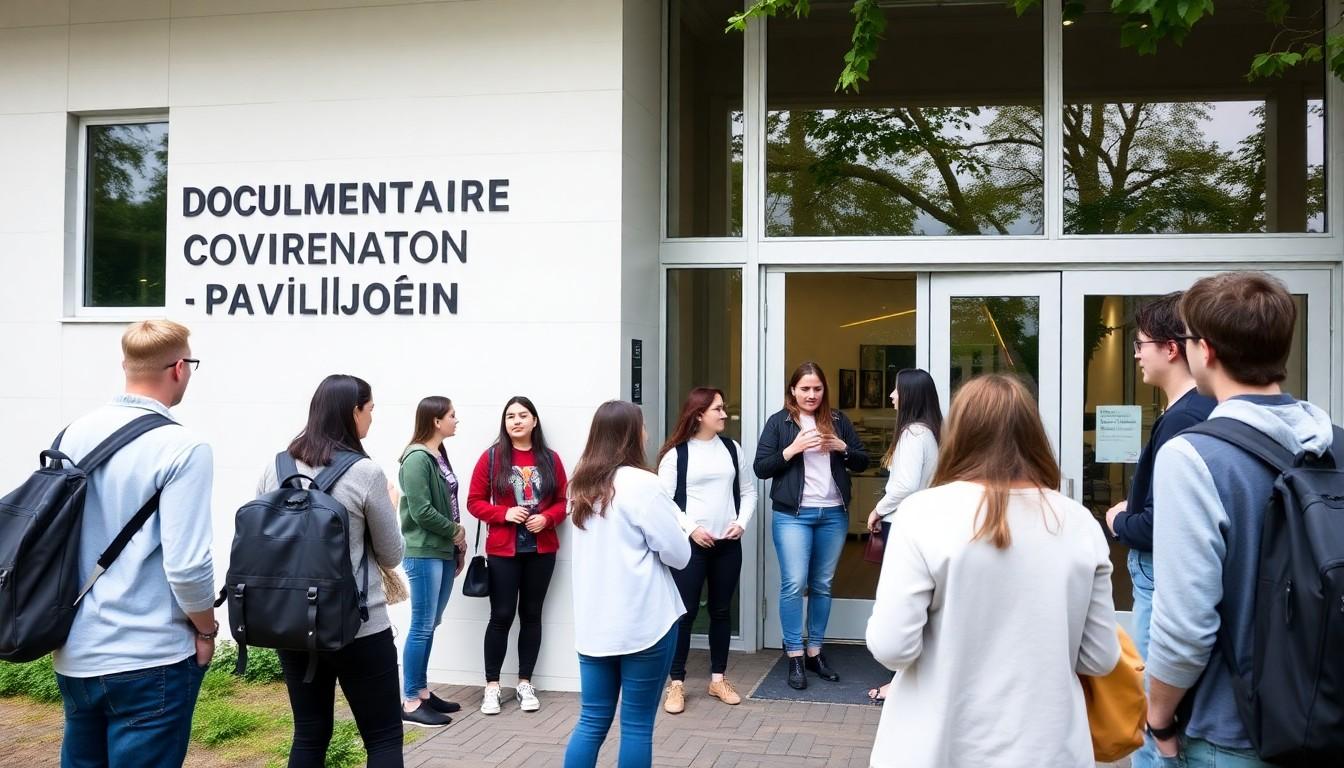
Students in Amsterdam are stepping into the Lesbian Simulator, an immersive virtual reality artwork that turns conversations about sexuality, identity and prejudice into something far more immediate. By choosing an avatar and navigating dates, Pride and coming out, visitors get a colourful, sometimes uncomfortable glimpse of lesbian life, while the creator is clear that no single experience can represent everyone.
Essential Takeaways
- A 40-minute VR artwork: Students can explore dating, Pride, coming out and hostile reactions through an interactive avatar.
- Built for empathy: The experience gives people unfamiliar with lesbian life a closer, more personal perspective.
- Joy sits alongside discomfort: Its colourful world includes humour, romance and community, as well as discrimination.
- Representation matters: Queer symbols, references and lesbian performers are woven into the experience.
- It isn't universal: Creator Iris van der Meule presents the simulator through her own perspective and acknowledges its limits.
Virtual reality puts the audience inside the story
The most striking thing about Lesbian Simulator is how quickly a playful experiment can become intimate. Participants design a futuristic character, choose details such as skin tone, hair and clothing, then guide her through situations that may feel ordinary to one person and daunting to another.
According to the project listings on LABOCINE and IDFA, the work uses interactive storytelling rather than simply asking viewers to watch from the sidelines. That distinction matters. A film can move you, but VR asks you to make choices, occupy space and hear the world respond.
The result is deliberately uneven in tone. There are dates, dancing and Pride celebrations, but there are also intrusive comments and rejection. That contrast gives the experience its emotional charge, because queer life isn't presented as either a tragedy or a glossy fantasy.
Why the project reaches beyond the lesbian community
Van der Meule created the work to challenge the comfortable assumption that acceptance is already settled. In the Amsterdam classroom setting, some students had encountered queer topics before, yet still found the virtual coming-out moment surprisingly awkward to say aloud.
That reaction reveals the project's central strength. It doesn't demand that participants claim an identity; instead, it lets them briefly experience the pressure surrounding one. For young people who are still working out how they feel, that can be an important distinction.
The wider immersive-art community has increasingly embraced stories about vulnerability, identity and belonging. Raindance Immersive's coverage places Lesbian Simulator within that broader movement, where interactive media is used not just for spectacle but to create empathy and open difficult conversations.
A colourful world with sharp edges
Visually, the simulator moves from a sparse, star-filled environment into something much stranger and brighter. The transformation suggests the disorientation of entering a world that wasn't designed with you in mind, while the playful details stop the experience from becoming relentlessly bleak.
There are also signs of community and cultural recognition throughout the work. The project includes queer references, lesbian symbols and performances from lesbian actors, details that help it feel rooted rather than generic. IDFA and LABOCINE both present the piece as a work concerned with representation as well as social awareness.
That balance is tricky. Too much emphasis on discrimination could make sexuality seem inseparable from suffering, while an overly cheerful version would feel dishonest. The simulator's most useful idea is that both realities can exist at once: there can be joy, flirtation, laughter and pride, alongside the exhausting need to explain yourself.
What the experience can and can't represent
Lesbian Simulator isn't intended as a universal guide to lesbian life. Van der Meule has described it as a work shaped by her own background and perspective, which is an important caveat when any artwork takes on a broad social subject.
That honesty strengthens rather than weakens the project. No 40-minute experience can capture every age, culture, race, gender expression or relationship to sexuality. Viewers should treat it as one doorway into the conversation, not the whole building.
Reviews and festival material from Film Factual, Raindance Immersive and IDFA also frame the work as an evolving creative project. Its limits may therefore be part of its future: there is room for other voices, different stories and perhaps another chapter that explores experiences currently missing.
The practical lesson is simple: make room for curiosity
For schools and cultural organisations, the simulator offers a useful starting point, but it works best with discussion around it. A short conversation before the headset goes on can set expectations, while time afterwards allows participants to unpack what felt funny, uncomfortable or unexpectedly familiar.
It also helps to remember that no one owes a group an explanation of their sexuality. The point isn't to turn queer students into spokespeople or to test whether someone is "open-minded" enough. It's to encourage empathy without making identity a classroom performance.
That may be why the project has travelled beyond a single exhibition setting and attracted attention from immersive-film and festival platforms. As Film Factual and Raindance Immersive suggest, VR can make social themes feel less abstract, but the technology is only the beginning. The real work starts when people take that feeling back into everyday life.
A headset can't rewrite a hostile comment, but it can make the person hearing it harder to ignore.
Explore the experience as one perspective, then keep the conversation wider.
Source Reference Map
Story idea inspired by: [1]
Sources by paragraph:
- Paragraph 1: [2], [3]
- Paragraph 2: [6], [7]
- Paragraph 3: [4], [5]
- Paragraph 4: [2], [6]
- Paragraph 5: [3], [7]
- Paragraph 6: [4], [6]
- Paragraph 7: [2], [7]
- Paragraph 8: [3], [4]
- Paragraph 9: [5], [6]
- Paragraph 10: [2], [7]
- Paragraph 11: [3], [4]
- Paragraph 12: [2], [6]
- Paragraph 13: [4], [7]
- Paragraph 14: [2], [3]
- Paragraph 15: [5], [6]