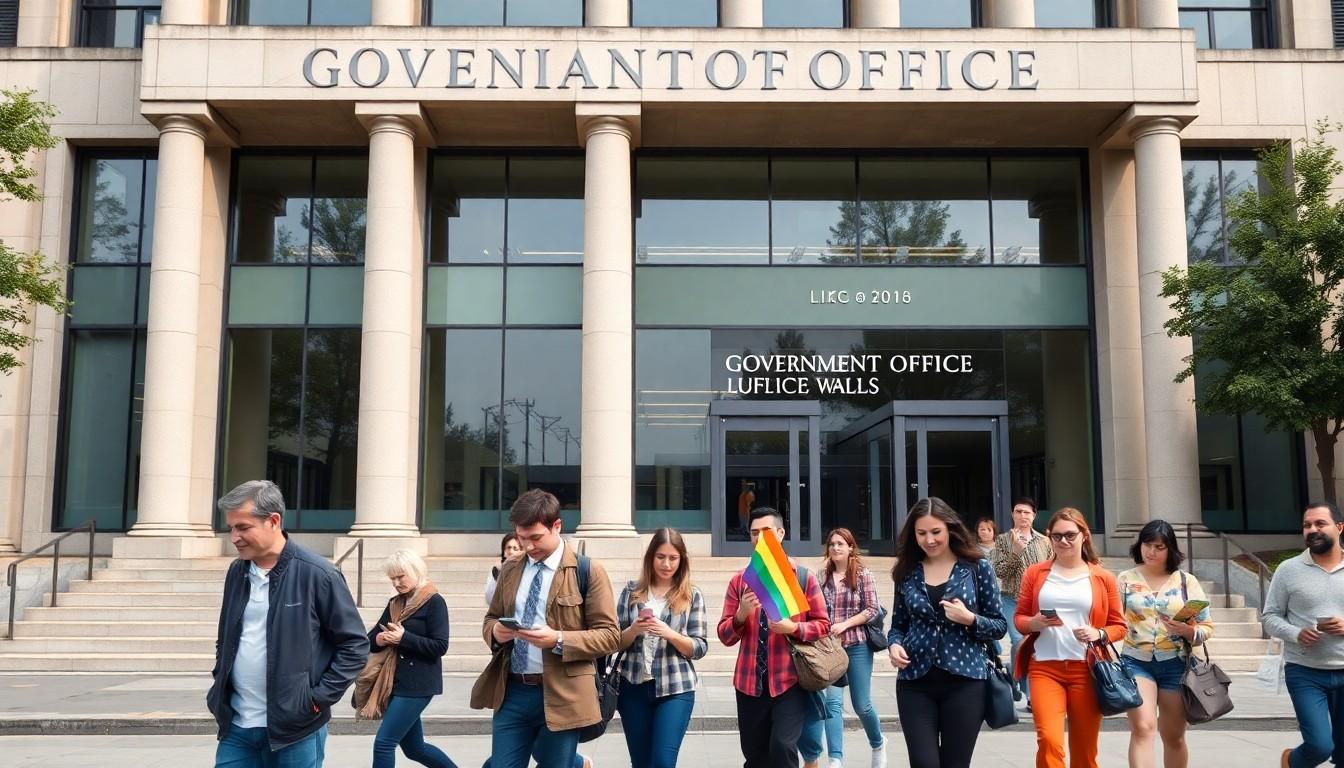
Shoppers aren't the only ones weighing evidence carefully: researchers, LGBTQ+ advocates and pro-democracy groups are scrutinising a new US Department of Health and Human Services study linking support for transgender people with attitudes towards political violence. Its findings matter because critics fear the research could help justify wider government monitoring of trans people and their allies.
Essential Takeaways
- The headline claim: The study links support for transgender people with measures of left-wing authoritarianism and approval of political violence.
- Experts remain sceptical: Critics say correlation doesn't prove causation and question the survey's sampling, wording and definitions.
- A new measurement is central: Researchers created a Clinical Gender Affirmation Scale to assess attitudes towards trans people.
- The political stakes are high: Advocates fear the findings could reinforce government rhetoric portraying trans rights supporters as security threats.
- The evidence is contested: Questions remain over peer review, ethics approval, funding and whether the scale has been independently validated.
A controversial study lands with a thud
The report's central argument is simple enough to repeat, but much harder to prove. It says people who support transgender inclusion also tend to record higher scores on measures associated with left-wing authoritarianism and support for coercive political action.
According to HHS, the research drew on survey responses from 1,208 adults and compared views on transgender rights with attitudes towards political violence, democracy and ideology. The department presented the findings as evidence that gender-related beliefs could intensify existing political extremism.
That conclusion has triggered a sharp response. Freedom for All Americans and other LGBTQ+ advocates argue that the report confuses support for equal treatment with approval of violence, creating a troubling association where the evidence may not justify one. The Pink Times likewise reported that researchers and campaigners have raised concerns about the design.
Why the methodology is under the microscope
At the centre of the research is a new tool called the Clinical Gender Affirmation Scale. It measures agreement with ideas such as respecting a person's chosen name and pronouns, and supporting transgender people in expressing their identity.
The researchers then compared those answers with responses to questions about political aggression, including views on attacks against political figures, damage to property and violence directed at government buildings. HHS described the results as a meaningful connection, but critics say the survey combines several complicated subjects without establishing how one causes the other.
As the HHS report itself acknowledges, the direction of the relationship remains unclear. Support for trans people might be associated with other political attitudes, or broader ideological commitments might influence both sets of answers. American Partisan highlighted the administration's interpretation of the findings, while critics elsewhere have argued that the report's language runs ahead of what the data can demonstrate.
Correlation isn't a shortcut to causation
That distinction may sound technical, but it's the whole story. A correlation can show that two answers appear together in a sample; it can't, by itself, explain why they appear together or predict how an entire population will behave.
Researchers quoted by The 19th questioned whether the study's sample could represent the wider American public. They also criticised the use of politically loaded statements and argued that the concept of left-wing authoritarianism was not defined with enough care.
Ethical questions have surfaced, too. Asking participants about political assassinations and whether particular acts of violence are justified is sensitive research, particularly when the subjects include a sitting president and highly polarised public events. Critics want to know whether the study received institutional review approval and whether it underwent independent peer review.
Critics see a wider political project
The row isn't happening in a vacuum. LGBTQ+ advocates say the report fits a broader campaign by the Trump administration to frame gender-affirming healthcare and transgender activism as threats to public safety.
Freedom for All Americans described the study as part of an effort to stigmatise both trans people and those who support them. Queer Dispatch similarly reported fears that the findings could be used to move public debate from healthcare policy into surveillance, policing and domestic-terrorism rhetoric.
The administration's supporters, meanwhile, point to the study as evidence that political violence should be examined across the ideological spectrum. HHS and allied commentators have promoted the research as a warning about radicalisation on the left.
That framing is precisely what alarms opponents. The concern isn't simply that one report may be flawed, but that a disputed academic claim could become a policy building block. Once a label such as extremist or anti-democratic enters official language, it can travel surprisingly quickly.
What happens next?
The report's authors say more research is planned, including an experimental study testing whether exposure to gender-affirming ideas changes political attitudes. That proposal makes the unresolved methodological questions even more important, because future work could either strengthen the argument or expose its weaknesses.
The HHS publication also points readers towards preregistered research materials, a step intended to improve transparency. However, critics have noted differences between the material shared online and the final report, and they want clearer information about the survey, its authors and its oversight.
For now, the sensible response is caution rather than certainty. A study can be official and still require close scrutiny, especially when it touches a marginalised community and carries obvious political consequences. As The Pink Times reported, the backlash is focused not on avoiding research into extremism, but on ensuring that the questions, evidence and conclusions are genuinely sound.
The debate has left many advocates with a deeply human worry: that ordinary support for a vulnerable minority could be recast as suspicious behaviour. That isn't a small change in vocabulary; it could affect how people understand their rights and their responsibilities in public life.
It's a reminder to read the evidence, not just the headline.
Source Reference Map
Story idea inspired by: [1]
Sources by paragraph:
- Paragraph 1: [2], [4]
- Paragraph 2: [2], [6]
- Paragraph 3: [3], [7]
- Paragraph 4: [6], [2]
- Paragraph 5: [7], [5]
- Paragraph 6: [3], [4]
- Paragraph 7: [2], [6]
- Paragraph 8: [7], [5]
- Paragraph 9: [3], [4]
- Paragraph 10: [2], [6]
- Paragraph 11: [4], [7]
- Paragraph 12: [3], [5]
- Paragraph 13: [2], [6]
- Paragraph 14: [7], [4]
- Paragraph 15: [3], [6]
- Paragraph 16: [2], [7]
- Paragraph 17: [4], [5]
- Paragraph 18: [3], [7]
- Paragraph 19: [2], [6]
- Paragraph 20: [4], [7]