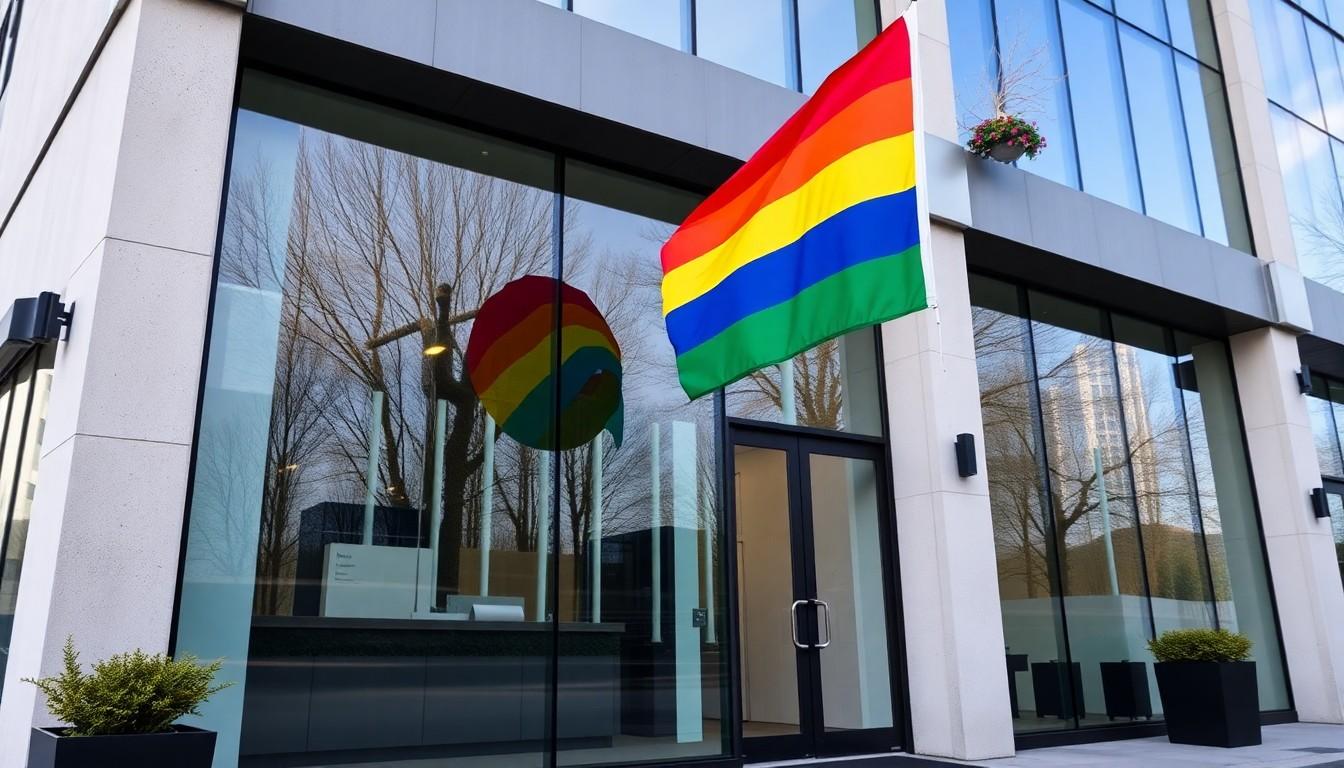
Queer users are looking beyond Grindr as privacy concerns reshape gay dating apps. New platforms promise stronger encryption, fewer adverts and community-led design, but the bigger lesson is practical: your messages, location and identity can still travel further than expected.
Essential Takeaways
- Meetmarket's pitch: The Berlin-built app promises end-to-end encryption, no advertising and user-controlled identity tools.
- Privacy has a history: Grindr has faced scrutiny over the handling and sharing of sensitive user information.
- Smaller apps are emerging: Goose and Hank Social are among newer community-focused alternatives.
- Encryption isn't everything: Strong messaging security doesn't automatically prevent harmful profiles, illegal content or poor moderation.
- Protect yourself now: Use a password manager, an ad blocker and an encrypted messaging service for especially sensitive chats.
Why gay dating apps are facing a privacy reckoning
The strongest selling point in today's gay dating app market isn't a clever matching system. It's the promise that your private life will stay private.
That matters because location, photos, messages and profile details can reveal far more than a casual swipe suggests. Privacy complaints and legal cases involving Grindr have kept the issue in public view, while users increasingly ask who can access their information and how long it's retained.
According to TechCrunch, Grindr faced a European privacy complaint over the sharing of user data in 2018. Ars Technica later reported that users sought compensation after allegations that sensitive information, including HIV status, had been shared with vendors. For many people, that isn't abstract tech policy. It's a question of safety, dignity and control.
Meetmarket wants to build a different kind of dating app
Meetmarket is one of several smaller contenders trying to challenge the dominant model. Its founder, Calum Bowden, describes a platform built around end-to-end encryption, open-source development and an absence of advertising.
The company says its approach is designed to give users greater control over their information, rather than treating intimate behaviour as a stream of commercial data. Its privacy policy sets out how the service intends to handle personal information, although any future user should still read the detail carefully before signing up.
That last point is worth underlining. A privacy promise can sound reassuring, but the real test comes through implementation, independent scrutiny and what happens when the business grows. A friendly interface is nice; knowing where your data goes is better.
The new wave of community-first platforms
Meetmarket isn't operating in a vacuum. Goose has promoted a more human-led approach to profiles and discovery, while Hank Social is aimed at men interested in kink and fetish communities, with discretion placed front and centre.
These projects reflect a wider frustration with enormous platforms that can feel impersonal, heavily commercialised and difficult to challenge. The appeal is easy to understand: people want digital spaces shaped by the communities using them, not just by advertising systems and engagement targets.
Meetmarket's own description presents the service as a community-oriented alternative, rather than simply another catalogue of nearby profiles. Its about page also positions the app as a response to familiar frustrations with existing dating technology. Still, smaller doesn't automatically mean safer, so prospective users should look for clear policies, active moderation and straightforward ways to delete an account.
What end-to-end encryption really protects
End-to-end encryption means a message is scrambled on the sender's device and only deciphered on the recipient's device. In principle, the service provider can't casually read the conversation sitting between them.
That makes encrypted messaging useful for intimate photos, health information and discussions that could put someone at risk if exposed. But it doesn't hide everything. An app may still collect metadata, such as when you log in, where you are, which profiles you view and how often you interact.
There's also a practical tension between privacy and moderation. Dating platforms need to deal with abuse, scams and illegal material, yet stronger encryption can make it harder to inspect messages. So when an app advertises secure chats, ask a second question: how does it handle reports, public images and threats?
A safer approach starts before you download
First, keep your profile deliberately lean. Avoid displaying your exact workplace, home area or daily routine, and be cautious about photographs showing street signs, house numbers or distinctive landmarks. Your phone's location trail can reveal a great deal even when your profile looks vague.
For sensitive conversations, consider moving to a reputable encrypted service rather than sharing everything inside a dating app. Use a unique password, switch on multi-factor authentication where available and keep the app updated. A privacy-focused browser, an ad blocker and a trusted virtual private network can also reduce routine tracking, though none is a magic invisibility cloak.
The Electronic Frontier Foundation's digital-security guidance is a useful starting point for plain-English advice. Time has also reported how location data from Grindr was used to identify a Catholic priest, a stark reminder that apparently harmless data can become revealing when collected over time.
The future may depend on trust, not features
New queer dating apps have a difficult balancing act ahead. They need enough users to feel lively, enough revenue to survive and enough moderation to keep people safe, without quietly recreating the surveillance-heavy model they're challenging.
Open-source code and transparent policies can help, because outside researchers have more opportunity to examine what a platform is doing. But trust still has to be earned repeatedly. Businesses change hands, investors arrive and privacy terms can evolve, sometimes while users barely notice.
For now, the most useful mindset is neither panic nor blind optimism. Dating apps remain vital for connection, especially for people in isolated or hostile places, but users deserve better tools and clearer choices. As Bowden's broader warning suggests, don't share anything you couldn't cope with being taken out of context.
Choose platforms that explain their practices clearly, and treat privacy as part of dating safety rather than an optional extra.
Source Reference Map
Story idea inspired by: [1]
Sources by paragraph:
- Paragraph 1: [2], [3]
- Paragraph 2: [4], [5]
- Paragraph 3: [6], [7]
- Paragraph 4: [2], [3]
- Paragraph 5: [2], [4]
- Paragraph 6: [3], [5]
- Paragraph 7: [2], [3]
- Paragraph 8: [4], [5]
- Paragraph 9: [2], [3]
- Paragraph 10: [5], [6]
- Paragraph 11: [2], [3]
- Paragraph 12: [4], [7]
- Paragraph 13: [5], [7]
- Paragraph 14: [2], [3]