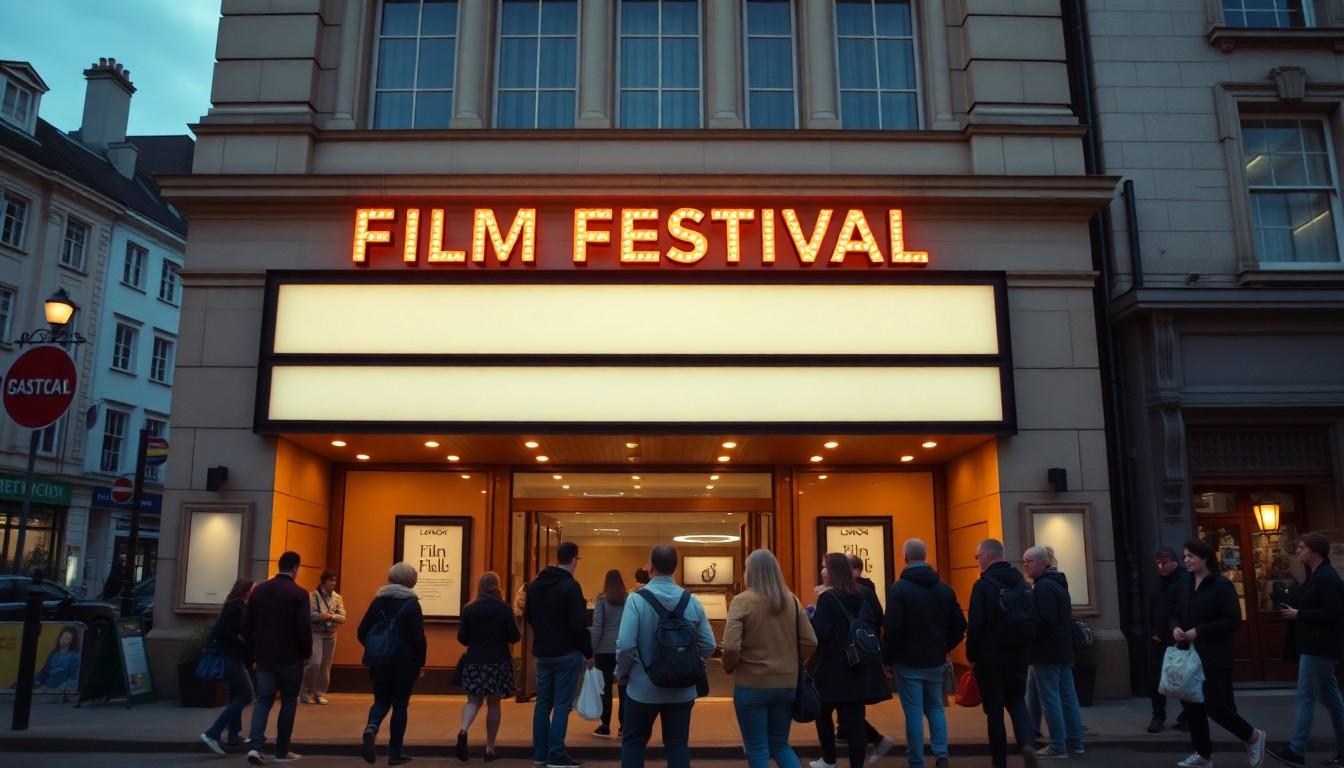
Film fans are heading to London this October for a striking LGBTQ+ programme, spanning intimate dramas, period romances, queer history and bold new comedies. With the 70th BFI London Film Festival running from 7 to 18 October, these are the standout films worth finding before tickets disappear.
Essential Takeaways
- A major programme: The festival presents 251 films from 88 countries, with a strong LGBTQ+ selection.
- Big names abound: Andrew Scott, Ian McKellen, Rami Malek, Sandra Huller and Penelope Cruz feature across the programme.
- History meets the present: Several films explore AIDS, repression, inherited shame and the fight for queer visibility.
- There is plenty of variety: Expect everything from wartime romance and archival documentary to trans coming-of-age stories and high-camp fantasy.
- Book early: The most anticipated titles are likely to attract audiences well beyond the LGBTQ+ film community.
London Film Festival 2026 has queer cinema firmly in view
The strongest impression from this year's programme is its range. One film may take viewers into a Welsh fishing village, while another heads to 17th-century rural Europe or a New York theatre during the AIDS crisis. That variety gives the LGBTQ+ selection a lively, international feel rather than making it seem like a single themed strand.
The BFI's full festival announcement confirms a 251-title programme drawn from 88 countries, with Simon Stone's Elsinore opening the festival and Jesse Eisenberg's The Debut closing it. The wider event also includes conversations with figures such as Cynthia Erivo and Andrew Scott, adding a little extra sparkle around the screenings. [2]
For viewers choosing what to see first, the smart approach is to mix the high-profile premieres with one or two less familiar discoveries. The quieter films may be the ones that stay with you on the journey home.
These star-led films look impossible to ignore
Andrew Scott is at the centre of Elsinore, Simon Stone's drama about Scottish actor Ian Charleson. The story follows Charleson as he prepares to play Hamlet while living with AIDS, with Olivia Colman appearing as his doctor. It promises a poignant collision between performance, illness and the pressure of being watched.
The Man I Love takes another route through the AIDS crisis. Ira Sachs' musical fantasy stars Rami Malek as a New York theatre performer confronting a future cut short, alongside Tom Sturridge, Rebecca Hall and Ebon Moss-Bachrach. The festival is also pairing the film with a discussion reflecting on the epidemic's legacy, which should give the screening added emotional weight. [3]
Then there is Frank and Percy, a gentler-looking late-life romance starring Ian McKellen and Roger Allam. Their characters meet while walking their dogs, and an ordinary friendship gradually becomes something more tender. It sounds like the sort of film that could leave audiences smiling into the autumn evening.
From wartime Belgium to a Welsh mystery
Lukas Dhont's Coward moves into the trenches of the First World War, where Pierre, a young Belgian soldier, meets the flamboyant Francis. Their shared love of theatre offers a brief escape from violence, while an attraction develops in a place where survival is never guaranteed.
The film's personal connection to Belgian war landscapes adds another layer to its emotional setting. Dhont's previous films, including Girl and Close, have shown a gift for capturing fragile intimacy, so this new historical romance is likely to draw both festival regulars and viewers looking for something beautifully made. [4]
Black Church Bay is considerably darker. Set in a Welsh fishing community, it follows a teacher and his openly gay sixth-form student after a weekend together ends with the student disappearing. As the search gathers pace, private secrets begin pressing against the village's polished surface.
That premise makes Black Church Bay one to approach with care. It's a tense mystery, but it also raises uncomfortable questions about power, secrecy and the stories communities tell about themselves.
Period stories bring gender and queer history into focus
Rose stars Sandra Huller as a female soldier in 17th-century Europe who adopts a male identity to claim a farm and survive within a rigid Protestant settlement. Her marriage to a local farmer's daughter adds another carefully staged performance of gender, status and belonging.
The black-and-white presentation should give the film a stark, almost wintry texture. It also sits neatly within a broader festival interest in stories where identity isn't simply declared but negotiated under pressure. [2]
Queer Edward II looks backwards in a more direct way. Built from archival material connected to Derek Jarman's Edward II, the documentary places the making of his radical film alongside the hostile political climate facing LGBTQ+ people in 1980s Britain.
That combination of art, protest and lived experience feels especially relevant now. Jarman's work has never been easy to separate from the world around it, and this documentary appears designed to underline exactly that connection. [5]
Fresh voices add humour, tenderness and surprise
Club Kid brings a sharper comic edge. Jordan Firstman writes, directs and stars as a faded underground party promoter who suddenly has to care for a son he didn't know existed. Cara Delevingne and Diego Calva join the cast, while the film's reported $17 million sale to A24 suggests the industry sees real potential in its unruly energy.
Sweet Milk Lake is quieter but just as intriguing. Harvey Zielinski plays a young trans man mistaken for his cisgender twin by his estranged, dying father. Rather than correcting him, he allows the misunderstanding to continue, tasting the closeness and male bonding he never had.
That setup could easily become melodramatic, but its power lies in the awkwardness. Family love doesn't always arrive in a clean, honest package, and sometimes people cling to imperfect moments because they need them.
The programme also includes La Bola Negra, an ambitious Spanish drama spanning 1932, 1937 and 2017. The film explores inherited shame, repression and the responsibility of one generation to remember those who fought before them. Elsewhere, films such as Easter, Masc, Fruit Gathering and The Blood Countess promise still more tonal variety, from trans burlesque and autistic queer identity to gothic camp. [4]
How to choose what to see first
Start with the film that matches your mood. Elsinore and The Man I Love look emotionally intense, while Frank and Percy may suit viewers after something warm and romantic. Club Kid offers a broader comic release, and Coward appears to be the obvious choice for anyone drawn to sweeping historical drama.
It's also worth checking the festival schedule rather than relying solely on cast lists. A smaller title such as In A Whisper, which follows a queer woman returning to Tunisia for a funeral, or Elephants in the Fog, set within Nepal's kinnar community, could offer the most distinctive experience of the festival.
Finally, book strategically. Major premieres, filmmaker appearances and events linked to current conversations around LGBTQ+ history can fill quickly. The BFI's broader LGBTQIA+ programming shows how much appetite there is for queer cinema across the calendar, not just during one festival window. [6]
London's autumn cinema season is shaping up to be thoughtful, glamorous and gloriously varied.
Source Reference Map
Story idea inspired by: [1]
Sources by paragraph: