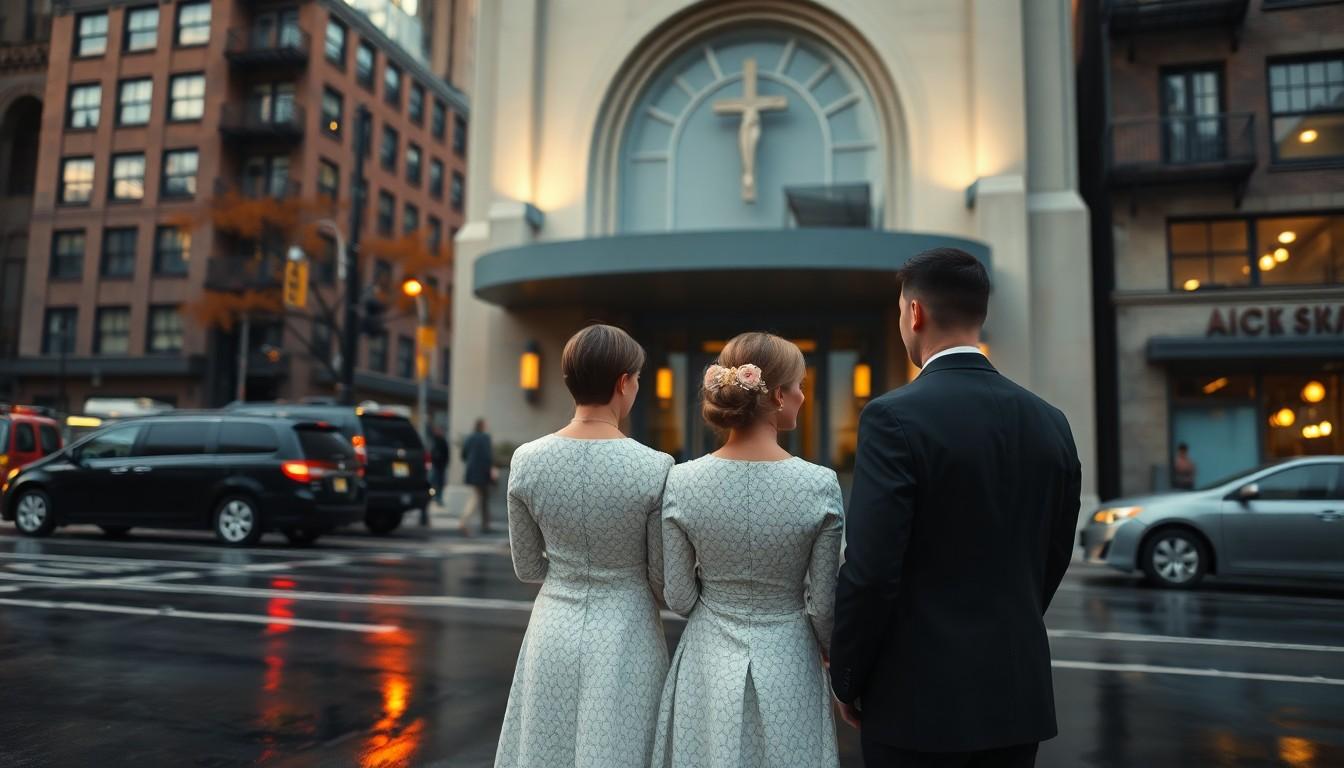
Long before marriage equality, Yayoi Kusama staged a daring public same-sex wedding in Lower Manhattan, turning polka dots, performance art and protest into a vivid challenge to 1960s homophobia. The ceremony, held in 1968, now offers a striking glimpse of how queer visibility was being created beyond formal politics.
Essential Takeaways
- A bold 1968 ceremony: Kusama officiated a public same-sex wedding in New York, a year before Stonewall.
- Art became the ritual: The ceremony used a phone book instead of a Bible and featured a specially designed shared wedding dress.
- Visibility was the point: Kusama argued that society's response to homosexuality, rather than homosexuality itself, was abnormal.
- Queer collaboration: Her wider work included gay performers, public happenings and a Manhattan social club.
- A complicated legacy: Kusama became internationally celebrated, although parts of her artistic history and public record remain contested.
The wedding that arrived before Stonewall
In November 1968, Lower Manhattan was hardly a welcoming place for openly gay couples. Homosexuality was still criminalised in many parts of American life, homosexuality had only recently begun to move away from its medicalised classification, and queer people risked losing jobs, family contact and social standing.
Against that backdrop, Yayoi Kusama staged what may have been New York's first public same-sex marriage ceremony. Smithsonian magazine reported that she presided over the event as the self-styled "High Priestess of Polka Dots", giving the occasion the theatrical charge of both a wedding and an art happening.
The setting was her Church of Self-Obliteration, and the props were deliberately irreverent. Rather than a Bible, Kusama used a phone book, while the two grooms wore a two-person "orgy" wedding gown she had created for the performance. It sounds exuberant, strange and a little surreal, but that was precisely the point.
Kusama made visibility part of the ceremony
Kusama's message was more serious than the spectacle suggested. During the ceremony, she said the purpose of the marriage was to bring into public view what had previously been hidden, framing queer visibility as a form of liberation rather than a request for permission.
That language matters. In an era when same-sex relationships were routinely described as deviant, the ceremony reversed the accusation, directing attention towards the shame and repression imposed by society. The Buffalo Digital Collections record is among the surviving archival traces that help place this work within Kusama's early New York activities.
One of the best-known photographs shows the grooms naked and covered in painted polka dots, surrounded by bulbous, dotted forms. It's an image that can feel confrontational now, but in the late 1960s it also captured the collision between erotic freedom, performance art and protest.
Her queer collaborations went far beyond one wedding
The ceremony wasn't an isolated gesture. Kusama formed the Kusama Dancing Team, a group of young gay performers who appeared in her happenings, where bodies became moving canvases for her signature spots.
She also established the Kusama "Omophile Kompany", or KOK, a Manhattan social club whose name drew on "homophile", a term used by some gay activists before "gay" became more widely adopted. According to reporting on Kusama's New York period, the space encouraged sexual and artistic experimentation, sometimes with the media and public invited to watch.
Her performers appeared in demonstrations connected to sexual freedom, including actions outside the New York Stock Exchange and the Museum of Modern Art. This was protest with a distinctly Kusama finish: bare skin, repetitive dots, theatrical bodies and an atmosphere that made it difficult for passers-by to look away.
Why the work still feels unexpectedly modern
Today, Kusama is most closely associated with immersive Infinity Mirror Rooms, polka-dotted pumpkins and blockbuster exhibitions that attract queues and selfie hunters. Her early New York work can seem like a different career, but the connection is stronger than it first appears.
The same visual language of repetition, immersion and bodily disorientation was already present. The difference was that, in the 1960s, Kusama's materials included living performers and public confrontation. Her dots weren't simply decorative. They could erase individual boundaries, create collective identity or make a private act impossible to ignore.
Art publications including Wallpaper have charted how her practice moved between painting, sculpture, performance and installation. Seen in that wider context, the wedding becomes less of an odd footnote and more of an early example of Kusama using art to build temporary communities around people living at the margins.
Remembering the artist means holding two truths
Kusama's career was shaped by sexism, mental illness and long periods of neglect in a male-dominated art world. After returning to Japan in 1977, she lived at a psychiatric hospital while continuing to work from a nearby studio, eventually becoming one of the world's most recognisable female artists.
The Los Angeles Times and Le Monde both reflected on the scale of her later reputation following her death at 97. Yet fame can flatten a life into its most marketable images: the bright pumpkin, the mirrored room, the instantly recognisable dot.
Her early queer work resists that neat packaging. It shows an artist using performance to challenge sexual shame, while also reminding us that cultural legacies can be complicated. Kusama's contribution to marginalised communities deserves attention, but so do criticisms of racist elements in some of her comments and artwork. The fuller story is messier, and therefore more useful.
A forgotten ceremony with a lasting charge
The 1968 wedding didn't create marriage equality on its own, and it wasn't a substitute for the organising, protests and legal battles that followed. But it helped make a radical idea visible: same-sex love could be public, celebratory and artistically impossible to dismiss.
That may be why the story still catches the imagination. Before the polished language of modern wedding campaigns and rainbow branding, Kusama offered a phone book, a shared dress and a room full of dots. It was peculiar, provocative and unmistakably public.
The ceremony remains a reminder that queer history is often preserved in photographs, performances and unruly acts of imagination, not only in court rulings or official archives.
It's a small, vivid chapter in both New York's LGBTQ+ history and Yayoi Kusama's extraordinary artistic life.
Source Reference Map
Story idea inspired by: [1]
Sources by paragraph:
- Paragraph 1: [2], [3]
- Paragraph 2: [2], [6]
- Paragraph 3: [3], [6]
- Paragraph 4: [2], [3]
- Paragraph 5: [6], [7]
- Paragraph 6: [5], [6]
- Paragraph 7: [5], [6]
- Paragraph 8: [4], [7]
- Paragraph 9: [4], [5]
- Paragraph 10: [2], [4]
- Paragraph 11: [5], [7]
- Paragraph 12: [3], [6]
- Paragraph 13: [2], [4]
- Paragraph 14: [3], [5]