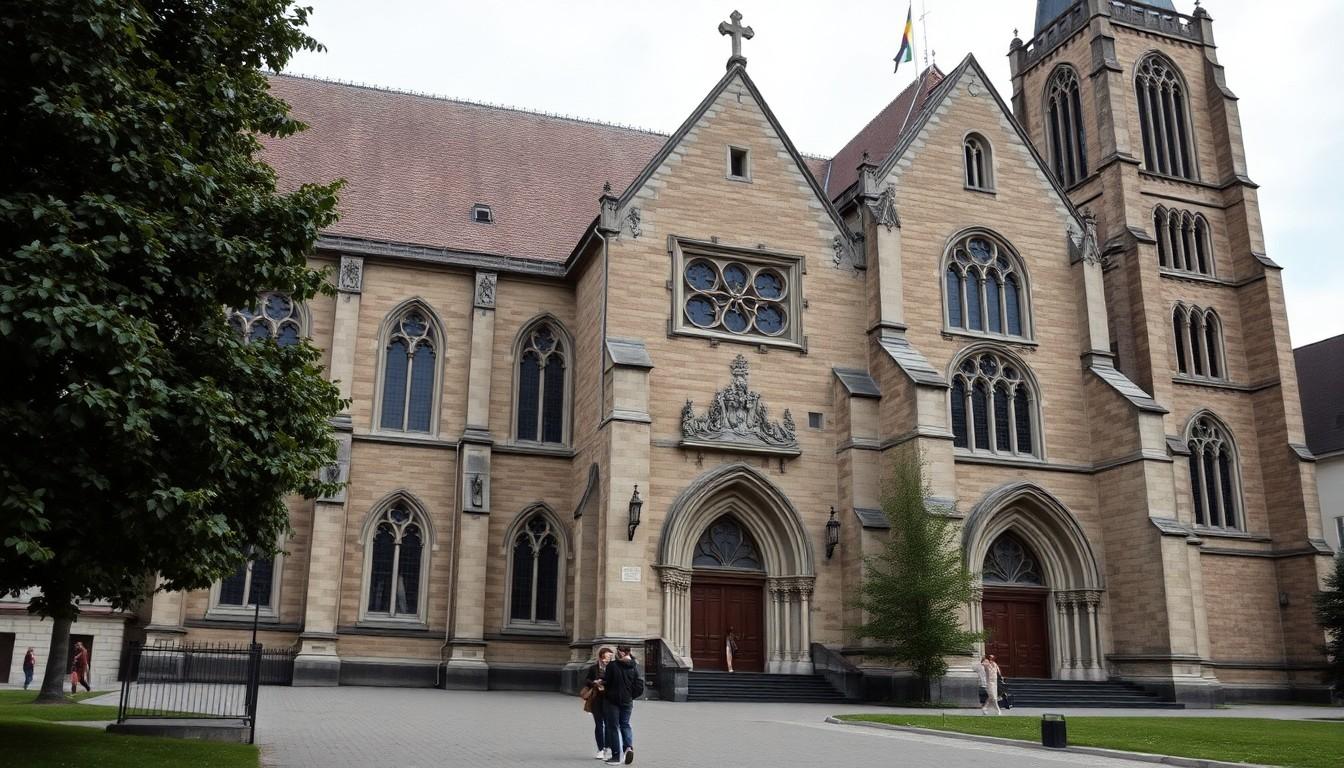
Queer Catholic groups in Germany have criticised Passau Bishop Stefan Oster after a sermon linking Pride celebrations, Christian anthropology and democracy. Their response says human dignity must include LGBTQ+ people, while also accusing the bishop of overlooking hostility surrounding Christopher Street Day events.
Essential Takeaways
- The dispute began with a sermon: Bishop Stefan Oster discussed human dignity, marriage, family and changing social attitudes.
- Pride became the flashpoint: He questioned whether some identities and lifestyles visible at Christopher Street Day fit a divinely given understanding of dignity.
- Queer Catholics pushed back: The Catholic LGBT+ Committee said dignity can't depend on sexuality, gender identity, family structure or belief.
- The attack was also raised: The group criticised Oster for not addressing violence and hostility connected with Christopher Street Day.
- The wider issue is pastoral: The argument reflects a continuing Catholic debate about inclusion, doctrine and public witness.
A sermon about dignity that quickly became a dispute
The argument isn't really about one phrase. It's about who gets to define dignity, and whether religious language can discuss morality without making LGBTQ+ people feel placed outside the moral community.
According to katholisch.de, Oster used his Assumption Day homily to reflect on the Christian roots of human dignity. He also referred to Germany's constitutional protection of marriage and family, presenting it through a traditional Catholic understanding of marriage between a man and a woman raising children.
That framing might sound familiar inside parts of the Church. But the bishop's comments about Christopher Street Day brought the issue into sharper focus, particularly when he questioned whether what is displayed at Pride events reflects a God-given understanding of humanity.
Why Christopher Street Day became the flashpoint
Christopher Street Day is Germany's name for Pride celebrations, combining protest, remembrance and public visibility. For many LGBTQ+ Christians, that visibility isn't a rejection of faith. It's part of living honestly and openly, often after years of fear or concealment.
The Catholic LGBT+ Committee said queer Christians pray, worship and understand their lives through their relationship with God. In its response, reported by the Humanistische Union, the group argued that sexual orientation and gender identity can be important parts of a person's life without cancelling their dignity.
That distinction matters. Oster appeared to be warning against a society detached from biblical ideas about humanity, while his critics heard a suggestion that queer visibility itself signals distance from God. The gap between those readings is where the sermon became pastorally combustible.
The committee says dignity can't come with conditions
The committee's central objection was straightforward: dignity isn't awarded according to orientation, identity, family arrangement or religious commitment. Infovaticana reported that the group accused Oster of serious theological and pastoral shortcomings, arguing that his language failed to respect queer people as full members of the Church and society.
The response also challenged the idea that defending traditional Christian anthropology automatically settles the question. A theological account of the human person still has to meet people where they actually live, including LGBTQ+ Catholics who are praying, raising families and serving their parishes.
For readers outside the Church, this may look like an argument over doctrine. Inside it, the stakes are more intimate. Words from a bishop can shape whether someone feels recognised at the altar, tolerated at the edges or genuinely welcomed.
Critics wanted Oster to address hostility, too
The committee's complaint extended beyond the sermon itself. It said Oster failed to address an attack connected with Christopher Street Day, a silence the group considered especially troubling amid rising hostility towards LGBTQ+ people.
German Catholic media, including Kirche und Leben, reported that the response linked the bishop's remarks to broader concerns about public safety and pastoral responsibility. The criticism was not simply that Oster defended a traditional view of marriage, but that he did so while saying too little about the people facing abuse or violence.
That creates an uncomfortable test for church leaders. They can defend religious teaching, but they also have to show what that teaching demands in practice. For many queer Catholics, that should include clear opposition to threats, harassment and attacks, whatever the debate over doctrine.
The argument reflects a wider Catholic crossroads
Oster's sermon sits within a larger European debate over LGBTQ+ inclusion, church teaching and the meaning of Christian anthropology. As society changes, bishops are increasingly expected to explain not only what the Church believes, but how those beliefs affect people whose lives don't fit older assumptions.
The Catholic LGBT+ Committee's response shows why that conversation won't stay inside theology departments. It reaches Pride marches, constitutional law, parish life and the everyday question of whether faith can feel liberating rather than limiting.
There may be no quick resolution. But the episode suggests that discussions about human dignity work best when queer people aren't treated as an abstract test case. They are already part of the Church's worshipping life, and they're asking to be heard as neighbours, believers and citizens.
It's a small but important distinction: debating doctrine is one thing, while recognising someone's dignity must never be optional.
Source Reference Map
Story idea inspired by: [1]
Sources by paragraph:
- Paragraph 1: [3], [4]
- Paragraph 2: [5], [6]
- Paragraph 3: [2], [7]
- Paragraph 4: [3], [4]
- Paragraph 5: [5], [6]
- Paragraph 6: [2], [4]
- Paragraph 7: [3], [5]
- Paragraph 8: [4], [7]
- Paragraph 9: [5], [6]
- Paragraph 10: [2], [3]
- Paragraph 11: [4], [7]
- Paragraph 12: [2], [5]
- Paragraph 13: [3], [6]
- Paragraph 14: [4], [5]