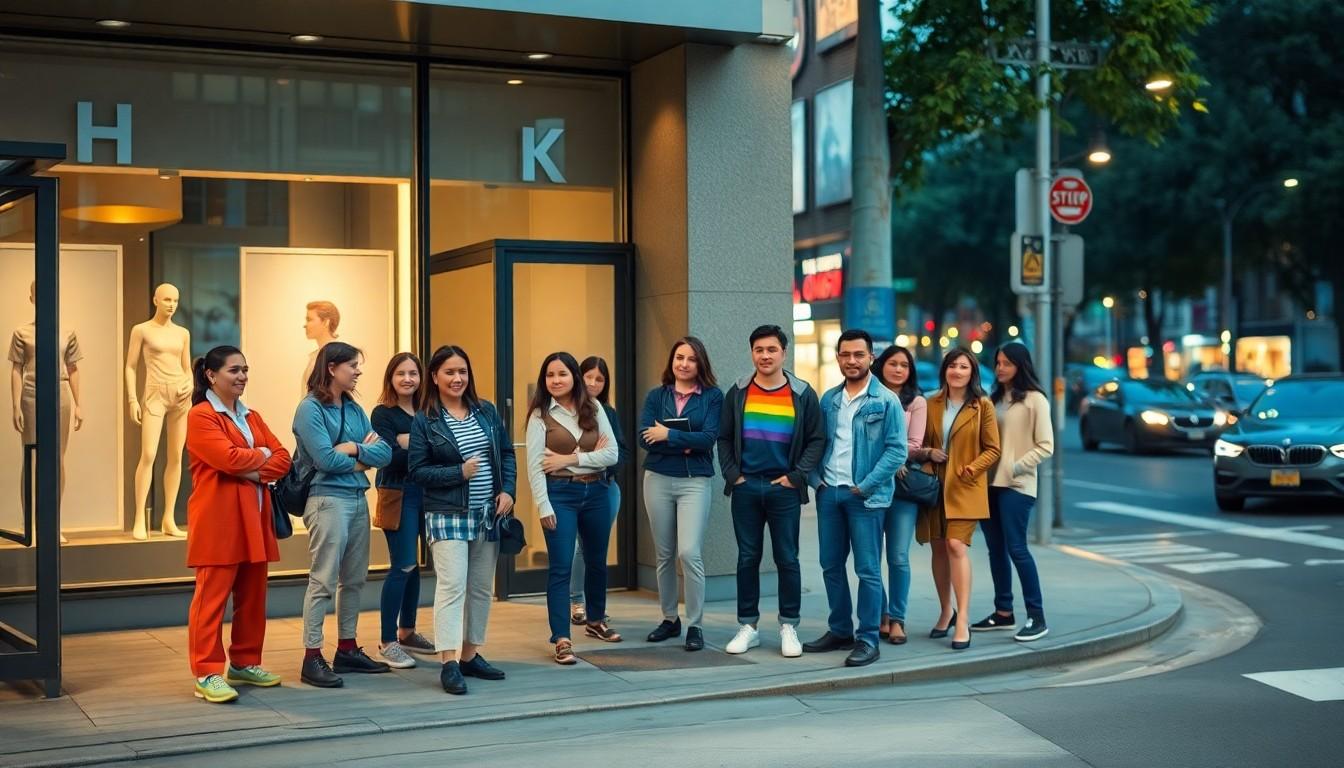
Shoppers are seeing Vivian Jenna Wilson in Desigual's bold Autumn 2026 campaign, where the transgender model challenges social rules, technology and political complacency. With the US midterms approaching, her message matters beyond fashion: queer self-expression, community and voting are all part of the picture.
Essential Takeaways
- A defiant fashion moment: Wilson fronts Desigual's Born to Disobey campaign with an unapologetically queer message.
- A playful robot showdown: The campaign uses a robot co-star to poke fun at AI and technology's growing influence.
- Politics sits at the centre: Wilson connects visibility with the need for LGBTQ+ people to vote and organise.
- Community comes first: She encourages queer people to find support networks while keeping personal safety in mind.
- Fashion has personal meaning: For Wilson, clothing helped build confidence and shape her identity.
Vivian Wilson turns a fashion campaign into a statement
The striking image at the heart of Desigual's new campaign isn't just about clothes. Vivian Wilson appears alongside a robot, giving the glossy fashion set a mischievous edge while challenging the idea that technology should dictate how people live, look or behave.
According to Out, the campaign is titled Born to Disobey, a phrase that neatly captures its rebellious mood. It feels deliberately playful rather than polished into corporate blandness, which is perhaps why the imagery has attracted so much attention.
Why the Desigual campaign arrives at a charged moment
Wilson's appearance comes as LGBTQ+ rights remain deeply contested in the United States. She has used the campaign to urge queer people to stay politically engaged, particularly with the midterm elections approaching.
Her wider point is that fashion alone can't dismantle discriminatory systems. As she told Out, meaningful change depends on protests, activists, political movements and people building pressure together. That's a sharper message than the usual campaign slogan, and it gives the project some welcome weight.
The robot co-star adds a mischievous twist
The campaign's robot isn't simply decorative. Coverage from LBB Online and Galore describes the character as part of Wilson's playful challenge to AI and an increasingly automated culture, turning a familiar fashion trope into something more knowingly confrontational.
There is a nice bit of visual humour here. Wilson isn't presented as solemnly delivering a lecture; she's having fun with the idea of a machine trying to share the spotlight. That wink matters, because rebellion is often more memorable when it comes with a raised eyebrow.
Wilson's message is bigger than clothing
Wilson has spoken about the importance of queer people creating community and support networks, particularly while trans healthcare and anti-discrimination protections remain politically vulnerable. Her advice is practical rather than abstract: find people who understand you, stay connected and make safety a priority.
She has also described fashion as a route into self-confidence. Clothing can be a surprisingly powerful form of self-discovery, especially for people who feel they've missed out on conventional teenage milestones. In that sense, the campaign's message isn't only about disobedience. It's about giving yourself permission to arrive as you are.
What this means for queer visibility in fashion
Desigual's campaign reflects a broader shift in fashion advertising, where identity and politics increasingly sit alongside product imagery. That can sometimes feel superficial, but Wilson's involvement gives this particular campaign a more personal centre.
Reports from The Daily Beast and MSNBC TV frame the project as another highly visible step in Wilson's public life, while her comments make clear that visibility isn't enough by itself. The more useful question is what people do with that attention, whether that's voting, organising or simply helping someone feel less alone.
Fashion may not fix a broken system, but it can open a door. Sometimes a vivid image, a sharp message and a little theatrical robot nonsense are enough to start the conversation.
It's a bold reminder that self-expression can be stylish, political and deeply personal at once.
Source Reference Map
Story idea inspired by: [1]
Sources by paragraph: