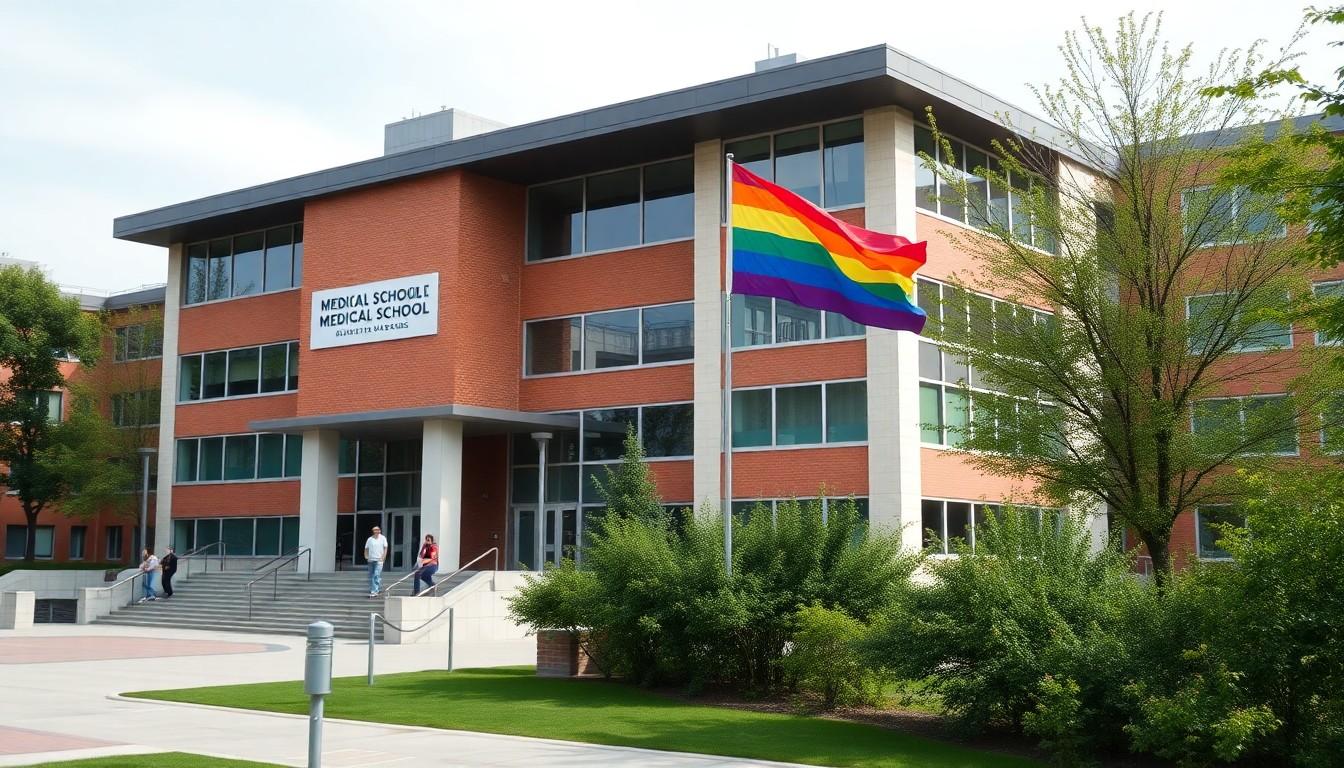
Medical schools across the United States sharply reduced their public LGBTQ+ messaging and DEI signposting in 2025, according to new research. The shift followed federal anti-DEI executive orders and could affect how welcome LGBTQ+ students and staff feel, even when teaching and clinical care continue behind the scenes.
Essential Takeaways
- LGBTQ+ posts fell: Average posts per school dropped from 3.10 in 2024 to 0.88 in 2025.
- DEI offices disappeared online: Schools publicly listing a DEI office fell from 94% to 46%.
- Diversity statements became less common: Website statements dropped from 94% to 50%.
- Politics mattered: Schools in Republican-voting states posted less LGBTQ+ content in both periods.
- The impact remains unclear: Researchers say the consequences for campus climate need further study.
A quiet retreat from public LGBTQ+ support
The most striking change wasn't a new policy or a dramatic announcement. It was the sudden quieting of public-facing communication: fewer rainbow-themed posts, fewer references to LGBTQ+ communities and far less visible signposting around diversity work.
Researchers reviewed the X and Instagram accounts of the 50 leading US medical schools, comparing activity from February to June in 2024 and 2025. According to the Frontiers study, average LGBTQ+-related posts fell by more than two-thirds in a year.
That matters because social media often acts as a school's shop window. A supportive message may take seconds to publish, but it can reassure a nervous applicant, help a student find community or tell staff that their identity hasn't been forgotten.
DEI offices and statements also vanished from websites
The retreat extended beyond social media. In 2024, 94% of the schools reviewed listed a DEI office on their websites. By 2025, that figure had fallen to 46%, while the share publishing a diversity statement dropped from 94% to 50%.
Those changes don't necessarily prove that every underlying programme disappeared. A school may have moved content, renamed an office or folded responsibilities into another department. Still, for anyone trying to find help, a missing webpage can feel like a locked door.
The timing is significant. The study compared the periods before and after anti-DEI executive orders issued in January 2025, while federal agencies also stepped up scrutiny of diversity-related practices at medical schools. The Education Department and Department of Health and Human Services announced investigations involving several institutions, adding pressure to an already charged environment.
Why the political map shows through
The researchers found a clear political pattern. Medical schools in states that voted for the Republican presidential candidate in 2024 had fewer LGBTQ+-related posts in both years of the review.
That doesn't mean every institution followed the same script, and the study doesn't claim voting patterns alone caused the decline. But it does suggest that local political conditions may shape how boldly universities communicate about identity, inclusion and belonging.
The wider education sector has seen similar tensions. Axios reported cuts and changes to DEI activity after federal directives, while individual universities have sometimes maintained internal changes even after particular guidance was challenged. In practice, the result can be a patchwork: one campus keeps its language and resources, another quietly removes them, and students are left to work out what remains.
What students and applicants should look for
For prospective medical students, the lesson isn't to judge a school by one missing banner. Instead, look for practical evidence: an active LGBTQ+ student group, named advisers, clear anti-harassment procedures, gender-inclusive health services and recent campus events.
It's also worth checking pages beyond the main admissions site. Student affairs, counselling, institutional policy and curriculum pages may reveal support that isn't prominently branded as DEI. A quick conversation with current students can be more revealing than a polished statement, especially on whether support is easy to access when something goes wrong.
Applicants should also ask direct, calm questions during interviews or open days. Who handles reports of discrimination? Is there an LGBTQ+ health curriculum? Are pronouns respected in clinical placements? The answers, and how comfortably they're given, can tell you plenty.
Visibility is not the whole story, but it still counts
The study's authors are careful about the limits of their findings. They measured public posts and website content, not every classroom practice, staff experience or student outcome. A quieter feed cannot tell us whether a school has become less supportive in every meaningful sense.
Even so, visibility has a real social function. When institutions stop naming a community, people may reasonably wonder whether its concerns still have institutional backing. As one university's experience reported by the Cavalier Daily suggests, changes made during a period of political pressure can outlast the guidance that prompted them.
The next question is whether medical schools restore, replace or simply rebrand their public commitments. For LGBTQ+ students and faculty, that distinction won't feel academic. It will be measured in whether support is visible, reachable and dependable.
A disappearing webpage can send a loud message, even when nobody says a word.
Source Reference Map
Story idea inspired by: [1]
Sources by paragraph: