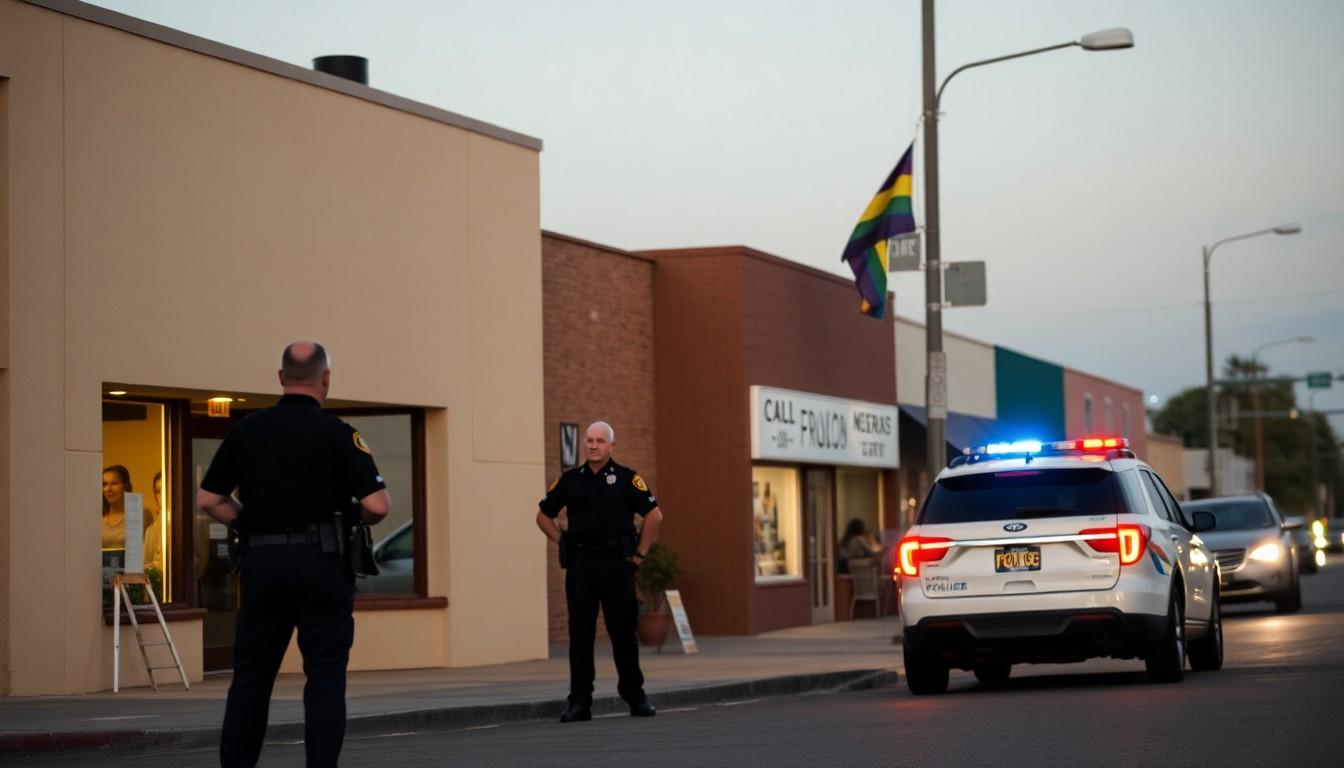
Tucson's LGBTQ+ community is mourning after two people were killed outside Venture-N, while investigators examine a note that allegedly listed other LGBTQ+-friendly businesses. The development has intensified concern across the city, prompting extra police patrols and renewed conversations about safety, solidarity and the vital role queer venues play.
Essential Takeaways
- Two people died: Vincent Anthony Siqueiros and Cameron Davis Capara were killed outside Venture-N on 31 August.
- A wider threat is being examined: Police say the suspect allegedly had a note naming several LGBTQ+-associated businesses.
- Extra patrols are in place: Authorities have increased police visibility around LGBTQIA+ venues while enquiries continue.
- Jennifer Lopez offered support: Her message focused on the victims, their loved ones and Tucson's LGBTQ+ community.
- The investigation continues: Police are examining the incident as a possible hate crime and say there is no indication of an ongoing threat.
A devastating attack takes an even darker turn
The most unsettling detail in the Tucson gay bar shooting isn't only what happened outside Venture-N. It's what investigators say they found afterwards: a note that allegedly named several LGBTQ+-associated businesses.
That discovery has shifted the mood from grief to deeper alarm. According to reports from the Associated Press and CNN, police are investigating whether the suspected gunman planned to target more than one LGBTQ+-friendly venue. For people who rely on these spaces for connection and belonging, the idea is especially chilling.
The deaths of Siqueiros, 42, and Cameron Davis Capara, 33, have left Tucson facing a familiar but painful question: how can places designed to feel safe remain welcoming when they may also be targeted? It's a grim contradiction, and one that many queer communities understand all too well.
What investigators say about the alleged list
Police say the suspect, identified as 44-year-old Ousman Ceesay, had addresses for multiple LGBTQ+-friendly venues. Tucson Mayor Regina Romero described the incident as a direct attack on the city's LGBTQ+ community and said investigators believed the suspect intended to cause further harm.
The Guardian and Washington Post reported that authorities opened a hate-crime investigation after the shooting. Ceesay also died at the scene from what investigators determined was a self-inflicted wound, adding another layer to an already difficult enquiry.
Officials have been careful to distinguish between confirmed evidence and the wider possibilities still under investigation. A list alone doesn't establish precisely what the suspect intended, but it does explain why police and community organisations are treating the matter with such urgency.
Tucson venues are receiving extra police attention
Tucson Police Chief Monica Prieto said officers had found no evidence of an ongoing threat. Even so, police have increased their presence around LGBTQIA+ establishments and are coordinating with local community groups.
That response is practical, but it also sends a powerful visual message. A patrol car outside a bar may reassure some visitors, while reminding others that a place they associate with laughter, music and familiar faces has become part of a security conversation.
Reporting from Investing.com and ABC17 News said authorities were providing additional support as the investigation continued. For venue owners, staff and regulars, the immediate priorities are likely to be straightforward: clear communication, visible support and sensible safety planning without allowing fear to dictate every decision.
Why queer venues matter beyond nightlife
LGBTQ+ bars aren't simply places to order a drink. They can be social lifelines, particularly for people who feel isolated elsewhere or are still finding their community. The atmosphere might be noisy and glittery, but the underlying purpose is often quiet and serious: belonging.
That's why a suspected plan involving several venues feels so personal. It threatens not just buildings, but the routines and relationships built inside them. A familiar doorway, a friendly bartender or a packed dance floor can represent safety in a way that isn't easy to measure.
The wider reporting from the Associated Press and the Guardian places the Tucson shooting within broader concerns about violence and hate crimes affecting LGBTQ+ communities in the United States. The human cost is immediate, but the emotional aftershock can last much longer, especially when people start scanning exits or reconsidering places they once visited without hesitation.
Jennifer Lopez sends a message of solidarity
Jennifer Lopez joined the public response with a message expressing heartbreak and support for Tucson's LGBTQIA+ community. She wrote that the community was seen and loved, directing attention towards those grieving rather than the alleged attacker.
It was a brief statement, but brevity can carry its own force after a tragedy. In a moment dominated by frightening investigative details, Lopez's words offered recognition and solidarity, particularly to people wondering whether their community is being heard.
For now, Tucson's venues and residents are left balancing caution with the need to keep living. Police say there is no known continuing threat, but reassurance won't erase the unease overnight. As one community member's likely instinct might put it, the goal is not to surrender these spaces, but to protect the freedom they represent.
It's a small but important distinction: safety should help queer spaces stay open, not make them feel closed off.
Source Reference Map
Story idea inspired by: [1]
Sources by paragraph:
- Paragraph 1: [2], [4]
- Paragraph 2: [5], [7]
- Paragraph 3: [2], [6]
- Paragraph 4: [4], [5]
- Paragraph 5: [6], [7]
- Paragraph 6: [2], [4]
- Paragraph 7: [5], [7]
- Paragraph 8: [2], [4]
- Paragraph 9: [5], [6]
- Paragraph 10: [2], [7]
- Paragraph 11: [4], [5]
- Paragraph 12: [2], [6]
- Paragraph 13: [4], [7]
- Paragraph 14: [5], [6]
- Paragraph 15: [2], [4]
- Paragraph 16: [5], [7]
- Paragraph 17: [2], [6]
- Paragraph 18: [4], [5]
- Paragraph 19: [2], [7]