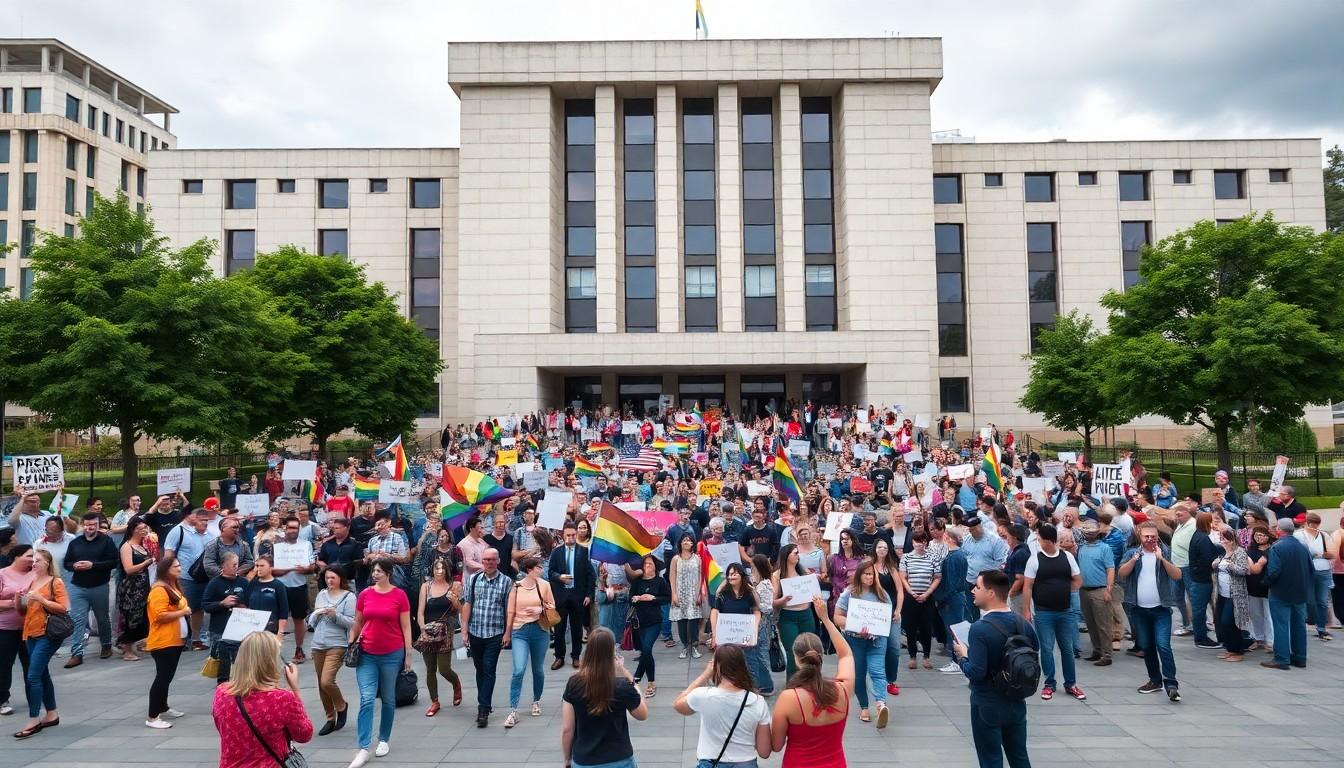
Visitors to Tbilisi's nightlife streets may still find busy bars, laughter and quiet acts of solidarity, but Georgia's LGBTQ+ community is facing a sharper political and legal crackdown. The contrast matters: spaces that once offered a fragile sense of freedom remain open, even as public visibility, Pride events and equal rights become increasingly difficult to defend.
Essential Takeaways
- Tbilisi Pride under pressure: Violent attacks have repeatedly disrupted public LGBTQ+ events in the Georgian capital.
- Rights restricted by law: Georgia's parliament approved legislation limiting LGBTQ+ visibility, assembly and related freedoms.
- Nightlife remains a refuge: Queer-friendly bars and streets still provide community, connection and breathing space.
- The church carries unusual influence: Georgian Orthodoxy is closely tied to national identity, giving anti-LGBTQ+ rhetoric added weight.
- Small acts still matter: Keeping a venue open or showing up can become a quiet form of resistance.
Tbilisi's nightlife still tells a different story
On a lively street in central Tbilisi, the scene can look almost defiantly ordinary. People gather outside bars, smoke, flirt and laugh, while music spills into the night. For queer Georgians, that everyday atmosphere has long offered something precious: a place to be visible without having to explain themselves.
The capital's LGBTQ+ scene has never been entirely safe, but it created pockets of freedom within a more conservative society. Tbilisi Pride's history, documented by Wikipedia, reflects that tension between an increasingly organised community and persistent hostility from anti-LGBTQ+ groups.
Today, the most striking detail isn't that these spaces have vanished. They haven't. It's that their continued existence feels less like a settled right and more like something people are quietly defending.
A Pride movement repeatedly forced into retreat
The pressure became especially visible in July 2021, when attackers raided Tbilisi Pride's office before the planned March of Dignity. The office was damaged, its rainbow flag was torn down and the public event was cancelled amid violent protests.
Two years later, anti-LGBTQ+ groups attacked a private Tbilisi Pride gathering, forcing the organisation to end its festival. Front Line Defenders reported that the assault showed how quickly hostile rhetoric could become a direct threat to activists and participants.
By 2024, organisers decided against holding public Pride events because of the risk of further violence. That decision may have reduced immediate danger, but it also showed how intimidation can achieve its aim without needing every protester to be present.
Georgia's new law makes visibility harder
The crackdown moved beyond street protests and into legislation. In October 2024, Georgia ratified a law presented as protecting family values and minors, despite opposition from the country's president, according to Euronews.
The measures restrict LGBTQ+ representation and activity across areas including public gatherings, education, media and healthcare connected with gender transition. For campaigners, the concern isn't only the wording of individual provisions. It's the broader message that the state can decide which relationships, identities and forms of expression deserve public space.
El Pais reported that LGBTQ+ Georgians increasingly found themselves targeted as the country's political climate hardened. When legal restrictions arrive after years of intimidation, the result can be especially chilling: people may continue living their lives, but with less confidence that institutions will protect them.
Why the Georgian Orthodox Church matters
Religion has a particularly powerful role in Georgia because Orthodox Christianity is closely bound up with national identity. Research published in Religio explores how the church's social and political position helps shape ideas of belonging, tradition and cultural legitimacy.
That influence gives anti-LGBTQ+ statements from senior religious figures a reach that ordinary political messaging might not have. The language can frame queer people not simply as a minority seeking equal treatment, but as outsiders challenging the nation's moral character.
Yet Georgia is more complicated than its loudest slogans. RNN reported on the Georgian Patriarchate's rejection of claims about Russian influence, a reminder that religious institutions operate within a wider contest over sovereignty, identity and political direction. On the ground, belief, hospitality and social contact don't always fit neatly into ideological categories.
Quiet resistance can be remarkably powerful
Not every act of resistance looks like a march or a courtroom challenge. Sometimes it's a bar that keeps serving customers, a friend who turns up after dark or a community that refuses to disappear from the city.
Tbilisi Pride's repeated efforts to organise, despite attacks and legal pressure, are part of that wider persistence. Front Line Defenders' account makes clear that the risks are real, but the continued presence of LGBTQ+ people in public life also challenges the idea that repression can simply erase identity.
For travellers and allies, the practical lesson is to listen to local groups, avoid treating queer spaces as tourist attractions and support independent Georgian media and rights organisations where possible. Visibility should be welcomed, but safety comes first. Sometimes the bravest thing a community can do is keep making room for one another.
The future of Tbilisi's LGBTQ+ scene will depend on more than nightlife. It will be shaped by court challenges, civil society, journalism and whether international pressure can encourage the government to protect rights rather than narrow them.
It's a fragile freedom, but it hasn't gone quietly.
Source Reference Map
Story idea inspired by: [1]
Sources by paragraph: