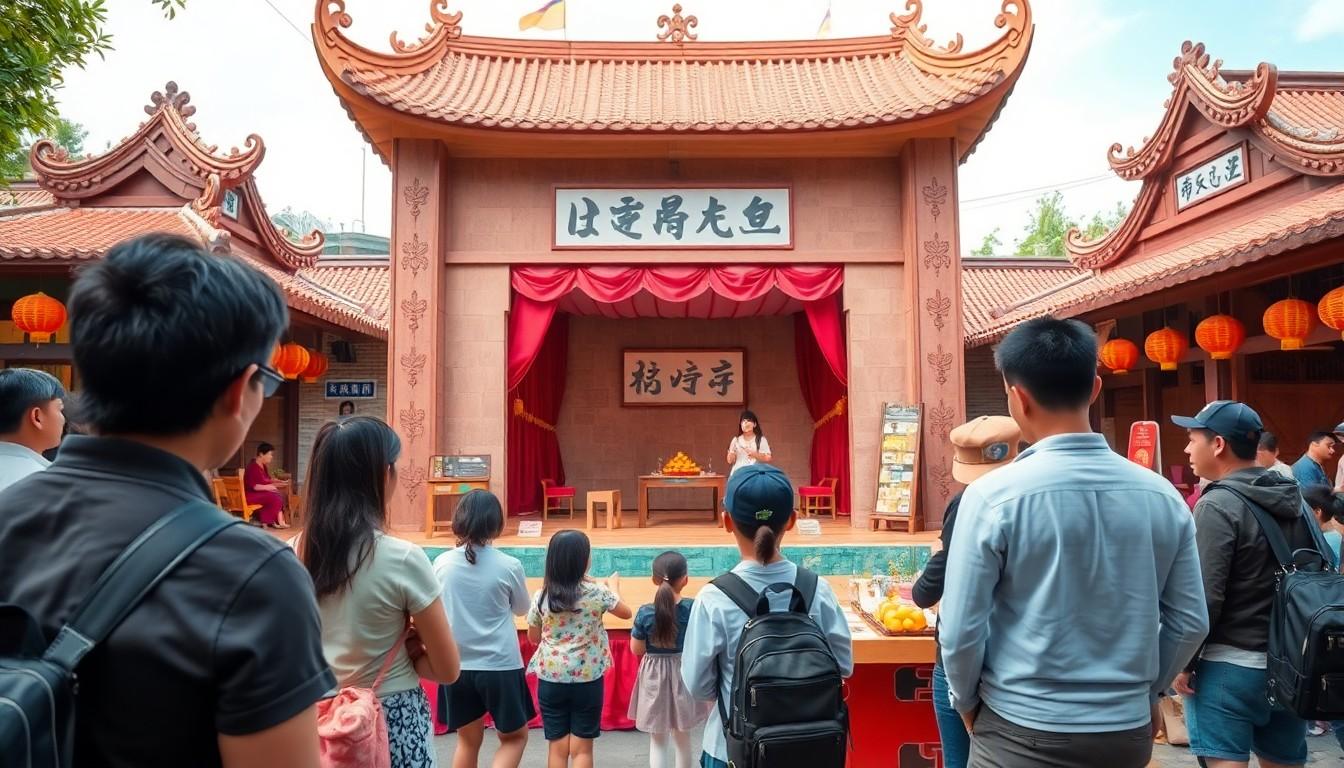
Visitors in Minxiong, Chiayi County, are being invited to see the traditional Dashiye Festival through a more inclusive lens, with a popular Rainbow Pudu event blending folklore, gender equality, family education and pet-friendly offerings. The colourful display matters because it makes an old ritual feel immediate, welcoming and surprisingly relatable to younger visitors.
Essential Takeaways
- A colourful local tradition: Rainbow Pudu adds contemporary themes to the Minxiong Dashiye Festival.
- A theatrical centrepiece: A paper-crafted drag queen stage is designed to entertain visiting spirits.
- Twelve themes this year: Displays cover gender inclusion, families, pets, everyday life and traditional ritual.
- A practical change in tone: Familiar objects such as wigs, high heels, cosmetics and pet supplies make the ceremony easier for younger people to connect with.
- Free public event: The Rainbow Pudu stall is scheduled from 4pm to 11pm on 4 August outside Jianchang Chinese Medicine Shop on Shengping Road.
An old festival gets a vivid new chapter
The most eye-catching feature is a paper stage created around drag performance. With its glittering theatrical feel, it gives the traditional offering table a touch of cabaret flair, while keeping the ritual's central idea intact: providing food and entertainment for wandering spirits.
According to local coverage, the display forms part of the wider Minxiong Dashiye Festival, whose headline ceremony involves the burning and symbolic ascent of the Dashiye figure. The result is an event that feels both solemn and playful, with smoke, colour and handmade craft sharing the same streetscape. [2], [5]
Why Rainbow Pudu is attracting attention
Rainbow Pudu first appeared as an experiment in using familiar folk customs to discuss inclusion. Its organisers, the Chiayi Diverse Gender Health Community Service Centre, known as Juluo House, worked with a local youth travel programme to bring ideas such as gender equality, parenting and pet-friendly living into the ceremony.
That approach has resonated because it doesn't ask visitors to choose between tradition and modern values. Instead, it suggests that rituals can grow with the communities that keep them alive. Previous coverage and public response helped establish the event as more than a novelty, with educators, residents and visitors taking an interest. [3], [4]
From gender-friendly buildings to rainbow gyms
This year's event expands to 12 themes, covering everything from traditional ritual flags and paper buildings to household objects, family life and companion animals. One striking change is the shift away from paper architecture divided into separate male and female spaces.
The new concept imagines a more flexible, shared environment, including a gender-friendly hot spring and a rainbow gym. Wigs, chest binders, high heels and make-up also appear among the offerings, giving the display a direct connection to the everyday experiences of transgender people and others whose lives don't fit neatly into traditional categories. [2], [6]
Everyday objects make the ritual feel closer
Pet supplies are another gentle but revealing addition. Food bowls, toys and other familiar items bring the lives of modern households into a ceremony that can otherwise seem distant to younger audiences. There's something instantly understandable about seeing the things people treasure represented on the offering table.
That sense of recognition is central to the organisers' educational aim. Rather than presenting folk religion as fixed or untouchable, the display uses objects people already know to open a conversation about why offerings are made and who gets included. Temple spaces and their interiors have long reflected changing social ideas, even when the most visible symbols remain traditional. [4], [7]
A small festival with a bigger message
The Rainbow Pudu event will be held from 4pm until 11pm on 4 August outside Jianchang Chinese Medicine Shop on Shengping Road in Minxiong. Visitors heading to the festival's main late-night ceremony can treat it as an easy stop beforehand, particularly if they're travelling with children or simply curious about how folk culture is being refreshed.
Its appeal lies in the balance. The paper craft remains handmade and recognisably rooted in local custom, but the details feel bright, witty and open-hearted. For many visitors, that may be the most memorable lesson of all: tradition doesn't have to stand still to remain meaningful. [3], [5]
It's a colourful reminder that culture stays alive by making room for everyone.
Source Reference Map
Story idea inspired by: [1]
Sources by paragraph: