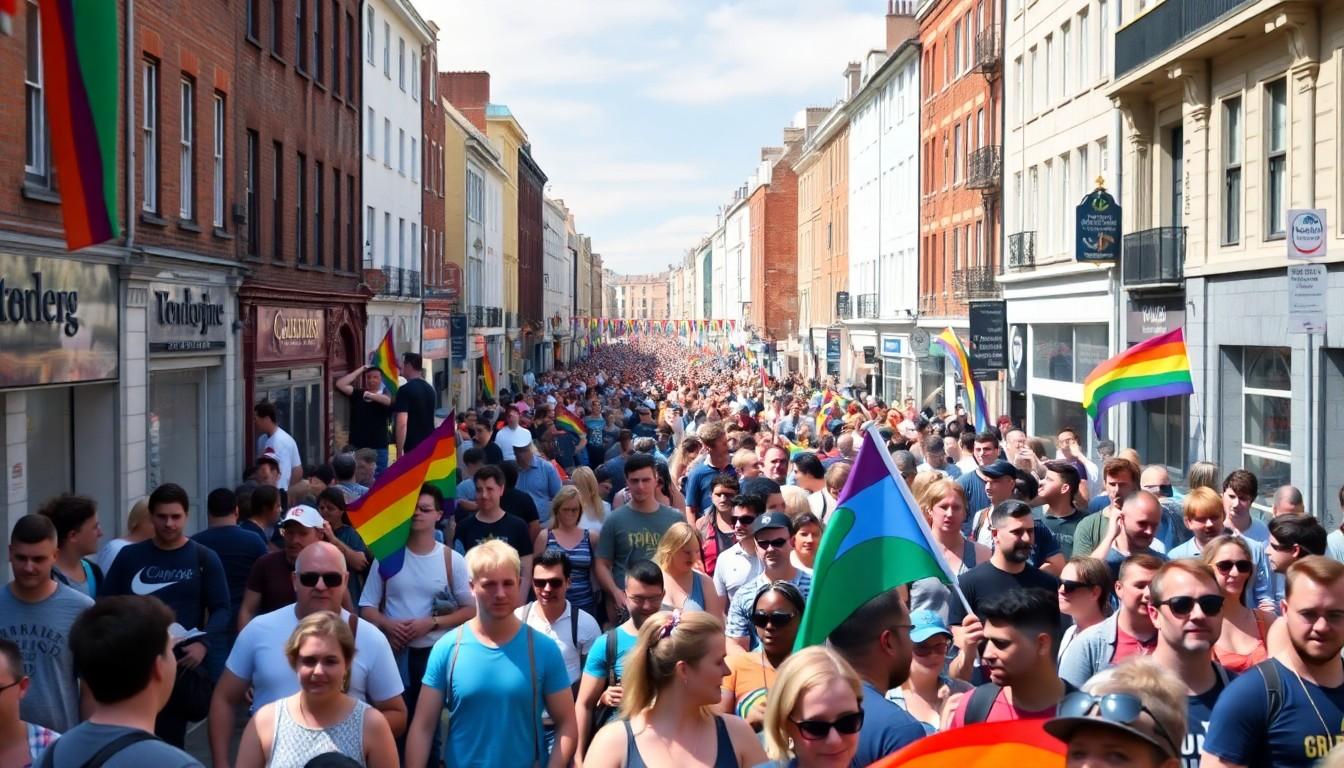
Shoppers, performers and long-time Pride visitors have noticed a gentler, more community-focused Manchester Village Pride this year. Reborn after the collapse of its predecessor, the event has returned to the Gay Village with a fresh identity, local backing and a renewed emphasis on inclusion, grassroots entertainment and the people who make Manchester’s LGBTQ+ scene distinctive.
Essential Takeaways
- A new chapter: Manchester Village Pride has replaced the former Manchester Pride event after its previous organiser entered voluntary liquidation.
- Local ownership: Gay Village venues, Manchester City Council and Equity joined forces through a Community Interest Company to revive the celebration.
- A calmer feel: Regulars described more space, easier movement and improved crowd management, despite strong attendance.
- Village-first entertainment: The programme puts local performers, drag artists and community venues alongside established names.
- The original purpose remains: Organisers say the event is centred on LGBTQ+ community, visibility, fundraising and belonging.
A familiar celebration with a new identity
There’s something immediately noticeable about a festival that feels busy without being overwhelming. At this year’s Manchester Village Pride, visitors described a calmer atmosphere, with room to move and a stronger sense that the Gay Village itself was the main attraction.
The change follows the end of the company behind Manchester Pride, which was judged no longer financially viable amid rising costs and weaker ticket sales. Rather than allow the event to disappear, venues across the Village worked with Manchester City Council and Equity to create a Community Interest Company and rebuild it around local involvement. Manchester Village Pride’s own information describes the organisation as community-led and focused on maintaining an event rooted in the city’s LGBTQ+ scene. [2], [5]
That shift matters because Pride is never just another summer music festival. It’s part celebration, part protest, part reunion, and, for many visitors, a rare chance to see the city’s queer community fill its own streets.
Why regulars say the vibe feels different
Several attendees told the Manchester Evening News that the event felt smaller or quieter, but not in a disappointing way. Instead, they saw the change as a return to the character of Canal Street, with more drag performances outside venues and less reliance on headline acts to define the weekend.
Musicians Saira Clegg and Adam Hall, performing as SairaSax and AdBongo, said they had been able to move around more easily. Other visitors praised the relaxed parade route and the sense of kindness among crowds. That impression fits the organisers’ broader emphasis on keeping Pride connected to the Village rather than treating it as a purely commercial spectacle. [2], [4]
The result is a slightly less polished, more local-feeling celebration. There are still costumes, music, glitter and the usual joyful chaos, but the mood appears to have shifted from big-ticket entertainment towards shared ownership. For long-time attendees, that’s a meaningful distinction.
Big names are still on the bill, but local talent leads
This isn’t a stripped-back community fête with a microphone and a folding table. Manchester Village Pride continues to offer a substantial programme, with performers including Cleopatra, B*Witched, DJ Sammy, Cascada, Kate Nash and Gareth Gates.
The difference is in the balance. Previous editions leaned heavily on recognisable pop headliners, including Mel C, Jake Shears, the Sugababes and Nelly Furtado. This year’s event still offers familiar names, but its identity is more closely tied to the venues, drag artists and independent performers already working in Manchester. [4], [5]
That approach also makes practical sense. A local-first programme can give emerging acts a platform, keep more spending within the area and make the festival feel less interchangeable with a touring pop concert. It’s the kind of programming that gives visitors a reason to explore beyond one main stage.
What the new format means for visitors
Manchester Village Pride is designed around the Gay Village, so visitors should expect the surrounding venues and streets to play a central role. The official FAQs advise attendees to check event information before travelling, particularly for details on access, timings, tickets and arrangements that may change during the celebration. [5], [6]
If you’re planning a visit, comfortable shoes remain a sensible choice, even with a shorter or more contained parade. Arrive early for popular performances, keep an eye on venue capacity and agree a meeting point before the streets become colourful, noisy and gloriously confusing.
The calmer atmosphere shouldn’t be mistaken for a lack of popularity. Organisers said attendance was up on the previous year, with more than 30,000 people attending on one day and similar numbers expected across the rest of the event. Better crowd management may simply mean that a large gathering feels more comfortable from ground level. [4], [5]
A hopeful reset for Manchester Pride
The creation of Manchester Village Pride offers a useful reminder that major cultural events don’t always need to become bigger to remain important. Sometimes they need to become more recognisable to the people who built them, support them and return to them year after year.
The event’s future will depend on sustainable finances, strong local partnerships and continued engagement from the community. But the early response has been encouraging, with visitors describing the new direction as friendlier, more relaxed and closer to the original purpose of Pride. [2], [3]
For many attendees, that sense of ownership is the real headline. As one visitor put it in comments reported by the Manchester Evening News, the Village should be about local people and local causes. It’s a simple idea, but in a city with such a rich LGBTQ+ history, it carries plenty of weight.
It’s a new name, but the most important change may be who feels it belongs to.
Source Reference Map
Story idea inspired by: [1]
Sources by paragraph: