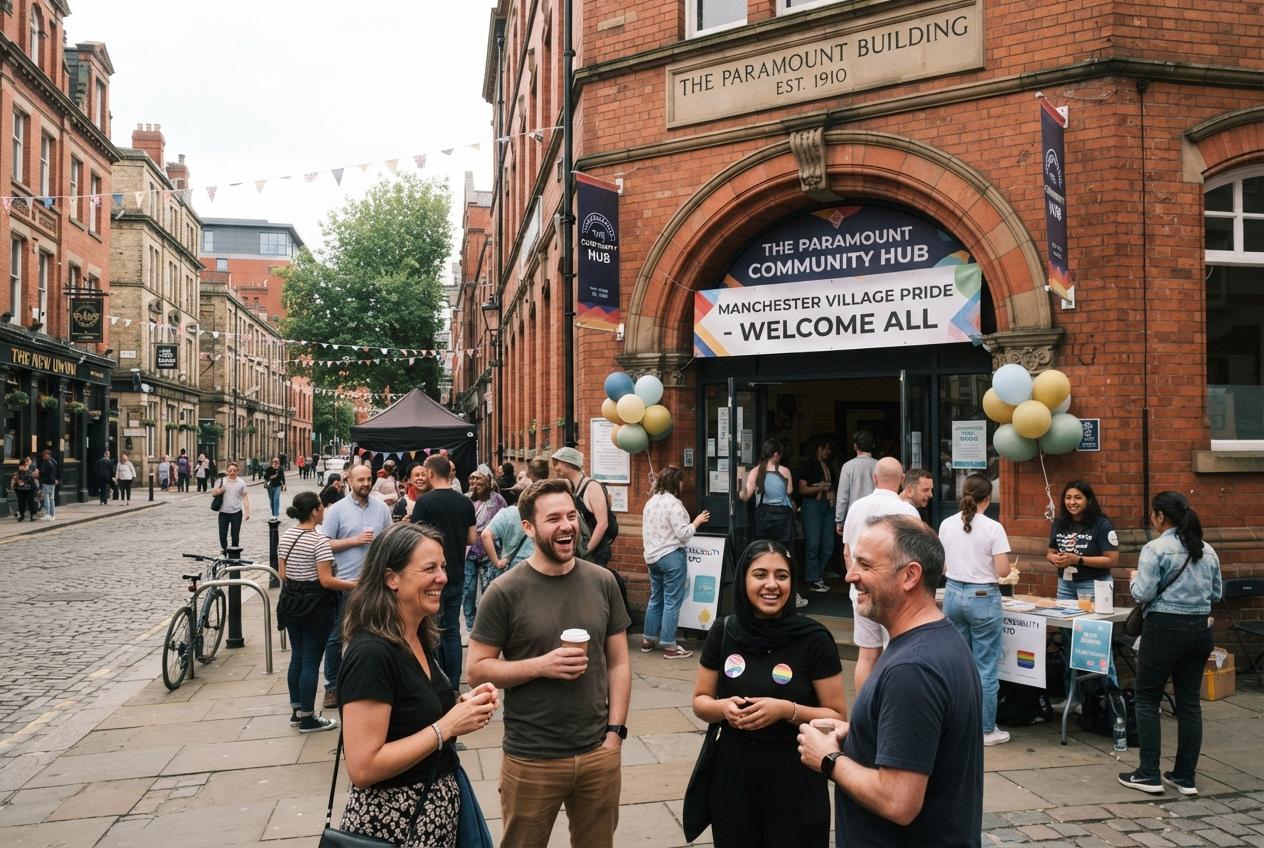
Visitors gathered in Manchester’s Gay Village for Manchester Village Pride 2026, finding warmth, solidarity and a sense of belonging despite rain, rising costs and uncertainty around the event’s future. After the previous organiser collapsed, local venues and partners stepped in to protect one of the UK’s best-known LGBTQ+ celebrations.
Essential Takeaways
- A community-led comeback: Gay Village venues helped create a new Community Interest Company to deliver the 2026 event.
- Pride remains vital: Attendees said visibility, safety and belonging matter while LGBTQ+ rights continue to face pressure.
- A long Manchester tradition: The celebration began in 1985 as a fundraiser for an HIV and AIDS ward.
- More than a party: The event supports local hospitality, charities, performers and the wider city economy.
- A welcoming first visit: Newcomers described the festival as encouraging for people still finding the confidence to come out.
Manchester Village Pride found its strength in the Village
Rain may have sent some visitors searching for shelter, but it didn't dampen the mood in Manchester's Gay Village. Between the music, colourful outfits and packed venues, the strongest atmosphere was less about spectacle and more about people finding one another.
Manchester Village Pride was created after the organisation behind the previous event entered voluntary liquidation. ITV News Granada reported that the collapse also left performers unpaid, highlighting the financial strain facing large public celebrations.
Rather than let the festival disappear, local bars and venues joined forces with Manchester City Council and Equity to establish a Community Interest Company. The move put the Village back at the centre of the event and gave the 2026 celebration a distinctly local feel.
Why Pride still feels necessary in 2026
For many attendees, Pride means freedom, but it also means visibility. Mark Doyle, speaking to the Manchester Evening News, said an anti-gay slur directed at him on the way into the event was a sharp reminder that public celebration and public hostility can still exist side by side.
That tension explains why the festival remains important, even after decades of progress. It offers a place where people can be open about themselves, while showing those who are nervous about coming out that a supportive community exists.
Manchester City Council has previously described Pride as an important part of the city's identity and civic life. That backing matters, particularly as other events across the country have struggled with funding, rising costs and reduced institutional support.
From protest to celebration, without losing the point
Manchester Pride began in 1985 as a fundraiser for Monsall Hospital's HIV and AIDS ward. Since then, it has grown from a modest community effort into a major fixture in the city's cultural calendar.
That history hasn't disappeared beneath the glitter. Older visitors remember Pride as a protest, while younger guests may experience it first as a festival, parade or lively weekend away. Both perspectives belong here, and together they explain why the event can feel joyful and serious at the same time.
Manchester's official tourism guidance presents Pride as a major attraction for visitors, with activity spread across the city centre and the Village. Hotels, restaurants, bars and shops all benefit, but the most valuable contribution is harder to measure: a visible reminder that LGBTQ+ people are part of the city's everyday life.
What the new community-led model means
The new organisation reportedly received around £120,000 from Gay Village venues, with rebuilding trust and strengthening the Village identified as key priorities. It's a practical response to a difficult situation, but it also carries an emotional message: local businesses weren't prepared to watch a cherished celebration fade away.
Equity has raised concerns about the wider treatment of performers and the handling of assets connected with Manchester Pride. That makes the new model worth watching, particularly around transparency, fair pay and how money raised through the event is distributed.
A community-led structure won't make rising production costs vanish. It could, however, create closer links between venues, performers, charities, the council and attendees. For a festival built on collective effort, that feels like a sensible direction.
A first Pride can be a powerful experience
Demi Worley, visiting from Nottingham for the first time, told the Manchester Evening News that events like this can help people who feel forced to hide their sexuality. That welcome is one of Pride's most important practical benefits, especially for younger people and anyone arriving without an established LGBTQ+ support network.
For newcomers, the details matter. Check the programme before travelling, plan a meeting point if you're with friends, carry a waterproof layer and allow time for crowded streets. Manchester's Pride weekend can be busy and noisy, so quiet breaks, accessible routes and a little patience can make the day much easier.
The celebration also offers a useful reminder for regulars. Pride isn't only about the biggest stage or the most elaborate costume; sometimes it's the simple relief of standing among people who understand you. As one attendee put it, being proud means being able to live openly and safely.
Manchester Village Pride shows that a festival can be both a joyful weekend and a vital piece of community infrastructure.
Source Reference Map
Story idea inspired by: [1]
Sources by paragraph:
- Paragraph 1: [2], [5]
- Paragraph 2: [3], [6]
- Paragraph 3: [4], [6]
- Paragraph 4: [5], [7]
- Paragraph 5: [4], [6]
- Paragraph 6: [3], [4]
- Paragraph 7: [4], [5]
- Paragraph 8: [5], [6]
- Paragraph 9: [3], [6]
- Paragraph 10: [4], [5]
- Paragraph 11: [2], [5]
- Paragraph 12: [2], [4]
- Paragraph 13: [2], [5]
- Paragraph 14: [5], [7]
- Paragraph 15: [2], [4]
- Paragraph 16: [3], [6]
- Paragraph 17: [2], [5]
- Paragraph 18: [4], [5]