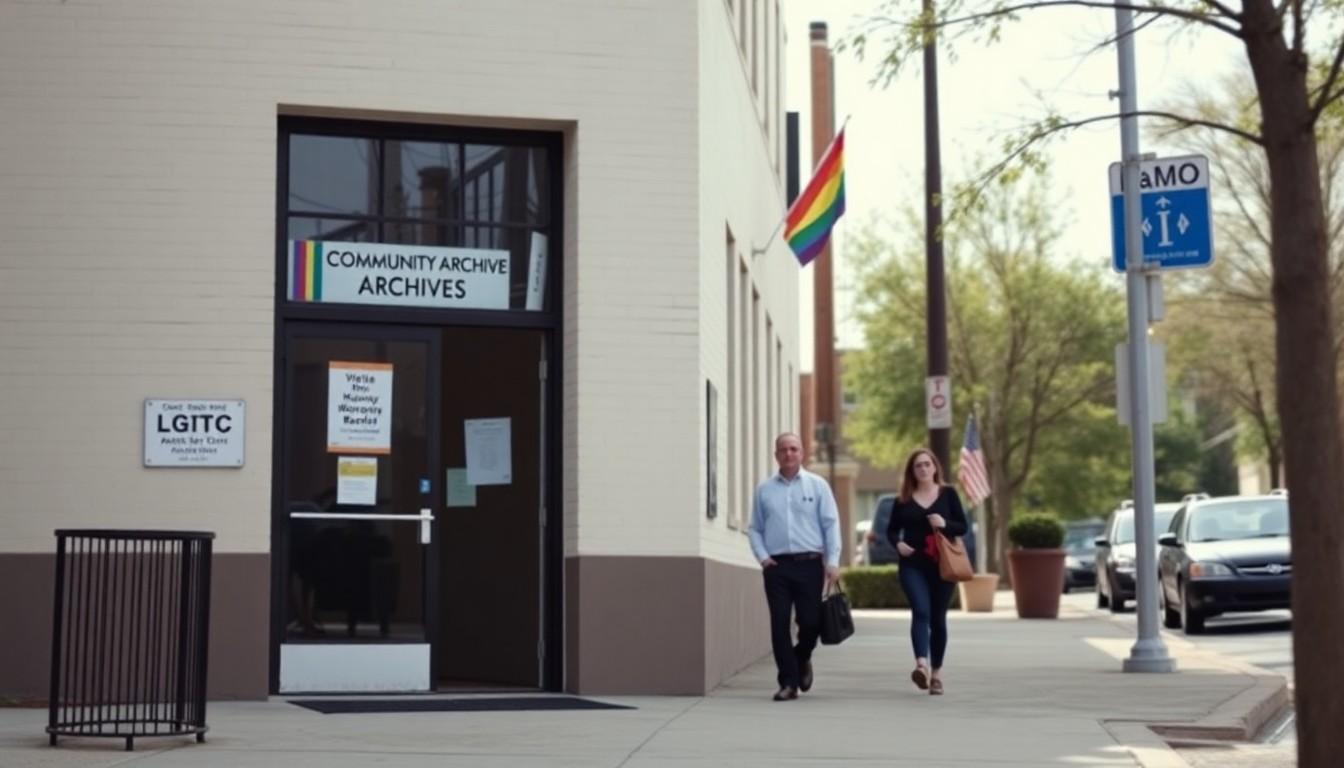
Archivists preserving Southern LGBTQ+ history are moving Invisible Histories from Birmingham to Charlotte, where a larger, more welcoming facility is due to open in November. The relocation follows funding pressures and attacks after a 2023 Alabama lecture, highlighting why accessible archives matter when communities fear their stories could be quietly erased.
Essential Takeaways
- A fresh start: Invisible Histories is relocating from Birmingham to Charlotte, North Carolina.
- Why it matters: The move follows rising political hostility, alongside steep archive-running costs and limited funding.
- A bigger space: The new facility should make collections easier to access, including for older visitors and people with mobility issues.
- History under pressure: The organisation preserves records connected to LGBTQ+ life, the AIDS crisis, Mardi Gras and marriage equality.
- The work continues: Its founders say political attacks have strengthened, rather than weakened, their resolve.
The archive that became a political target
History can look harmless until someone decides it might change the present. That was the uncomfortable lesson for Invisible Histories, a nonprofit collecting Southern LGBTQ+ records, after a public lecture in Alabama triggered criticism from conservative politicians and media outlets.
The organisation began gathering material in 2018, building a record of people, groups and campaigns that might otherwise disappear into private boxes, forgotten filing cabinets or family lofts. According to Alabama Reflector, interest in preserving vulnerable LGBTQ+ history grew sharply after Donald Trump's first election victory, as archivists recognised how quickly political climates can shift.
The backlash centred on a June 2023 talk by co-founder Maigen Sullivan at the Alabama Department of Archives and History. Her presentation covered figures including singer Gertrude "Ma" Rainey, actress Nell Carter and Lambda Inc., an early LGBTQ+ resource centre in the state.
Why preserving LGBTQ+ history is so expensive
An archive isn't simply a room full of dusty boxes. Materials need suitable storage, careful cataloguing, protection from moisture and temperature changes, and systems that allow researchers to find what they're looking for. It can be quiet work, but it isn't cheap work.
Sullivan told Alabama Reflector that humanities funding cuts were a major factor in the relocation. Running an archive requires specialist standards and reliable space, while Alabama's limited resources made long-term growth increasingly difficult.
Invisible Histories has also worked with universities, libraries and the Alabama Department of Archives and History to place collections where they can be preserved. The University of Alabama previously reported on a grant supporting the organisation's efforts to document Southern LGBTQ+ life, showing how partnerships can turn community donations into lasting public history.
The political row changed what could be shown publicly
The 2023 lecture wasn't Invisible Histories' first collaboration with Alabama's state archives. Joshua Burford, the organisation's other co-founder, had spoken there the previous year without provoking a political storm. This time, however, lawmakers questioned the department's governance and proposed measures that could have cut funding or changed how its board was appointed.
None of those proposals took effect, but the atmosphere changed. The department hasn't hosted another public programme focused on LGBTQ+ topics since the controversy, according to the Alabama Reflector report.
That matters because public history depends on more than preservation alone. A collection can be perfectly safe in storage, yet still be functionally invisible if visitors can't access it, teachers can't discuss it or researchers are discouraged from engaging with it. As Invisible Histories' own work makes clear, LGBTQ+ archives connect personal lives to major events, including the AIDS crisis, marriage equality campaigns and grassroots organising.
Charlotte offers space, access and a little breathing room
The organisation's previous base was loaned by AIDS Alabama and wasn't designed as a fully public-facing archive. It was located down a flight of stairs, making visits more difficult for older people and anyone with mobility issues. The Charlotte facility is intended to be more open, comfortable and practical, with room to preserve donations while welcoming visitors.
That shift from storing history to sharing it is important. People are more likely to donate photographs, leaflets, letters and personal records when they believe others will eventually be able to see and use them. A locked-away archive may protect objects, but an inviting one helps turn those objects into living community knowledge.
Invisible Histories' website describes its mission as preserving and researching Southern LGBTQ+ history. Its public-facing work sits within a wider network of projects, grants and institutional partnerships aimed at making overlooked stories discoverable rather than leaving them scattered across the region.
What supporters and donors should look for next
The move doesn't erase the challenge facing LGBTQ+ archives. Organisations still need stable funding, trained staff, accessible buildings and clear plans for handling sensitive personal material. They also need communities to keep donating, even when political pressure makes visibility feel risky.
For potential donors, useful items may include event programmes, campaign materials, club photographs, newsletters, diaries, oral histories and correspondence. Before sending anything, it's sensible to contact an archive first, explain what you have and ask about storage, privacy and whether the material fits its collecting policy.
The outlook is defiant rather than defeated. Sullivan has said she isn't afraid of future attacks and sees earlier LGBTQ+ activists as a reason to keep going. There's something reassuring in that: preserving history isn't merely looking backwards. Sometimes it's a practical way of reminding people that communities have survived pressure before, and can do so again.
It's a new address, but the mission remains firmly rooted in making LGBTQ+ history impossible to erase.
Source Reference Map
Story idea inspired by: [1]
Sources by paragraph:
- Paragraph 1: [3], [4]
- Paragraph 2: [3], [5]
- Paragraph 3: [3], [4]
- Paragraph 4: [3], [7]
- Paragraph 5: [3], [4]
- Paragraph 6: [3], [5]
- Paragraph 7: [3], [4]
- Paragraph 8: [3], [4]
- Paragraph 9: [3], [5]
- Paragraph 10: [4], [5]
- Paragraph 11: [3], [4]
- Paragraph 12: [4], [6]
- Paragraph 13: [4], [7]
- Paragraph 14: [3], [4]
- Paragraph 15: [3], [5]
- Paragraph 16: [4], [6]