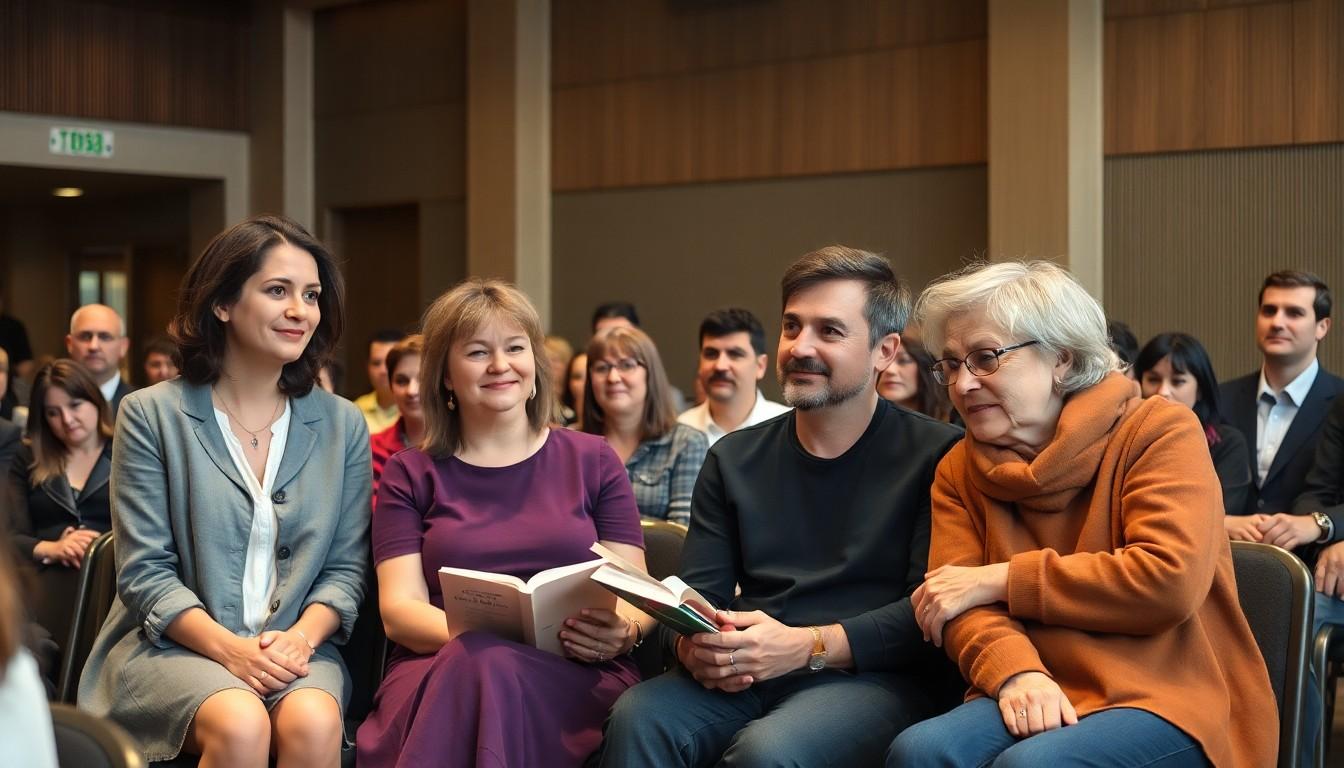
Readers are turning to Snow White Mihaylova’s novel Madrigal for its intimate portrait of a child raised by two women amid communism and Bulgaria’s transition. Drawing on philosophy, feminist theory and family psychology, the book asks what secrecy costs, how identity takes shape, and why protecting small spaces of freedom still matters.
Essential Takeaways
- A layered family story: Madrigal follows a child growing up between two women in a hidden household.
- History feels personal: Political upheaval is filtered through family life, fear and inherited trauma.
- Identity stays open: The novel avoids neatly labelling the women’s relationship, leaving room for interpretation.
- Freedom needs practice: Mihaylova argues that writing, education and culture can widen civic space.
- The wider context matters: Research on Bulgaria highlights the pressure of heteronormativity and unequal access to family rights.
A child’s world, shaped by silence
The most striking detail in Madrigal is also one of the smallest: a child remembers the televised execution of Nicolae Ceausescu and concludes that owning too many pairs of shoes must be a dangerous thing. It’s funny, bleak and oddly believable, capturing how children turn political terror into private rules for survival.
According to Capital, Mihaylova uses that perspective to explore a family raised during communism and the transition that followed. The novel’s emotional force comes from the way public history enters the home, settling into fears that can outlast the regime itself.
The family the novel refuses to label
At the centre of the story are two women raising a child together, while keeping the precise nature of their relationship partly unspoken. That ambiguity isn’t a gap in the storytelling. It reflects the many ways people organise their lives when naming themselves openly may bring risk.
Mihaylova has said that she grew up in what she understood as a queer environment in Sofia, and only later encountered the idea of a conventional, heterosexual family as the supposed norm. Research published on heteronormativity in Bulgaria helps explain why such families have often had to negotiate privacy, social judgement and official recognition at the same time.
The result is a story about belonging without a tidy label attached. Sometimes secrecy is imposed by fear. Sometimes, as the author suggests, withholding a definition can itself become a form of resistance.
Why old political fears still echo
Madrigal reaches beyond one household to examine the emotional inheritance of several generations. Its characters carry wounds linked to absence, displacement and the inability to speak plainly about what is happening around them.
That tension has a strong historical backdrop. Academic work on women, transnationalism and inequality under socialism shows how political systems can shape private relationships, mobility and family expectations, even when people appear to be living ordinary lives.
Mihaylova’s own biography adds another layer. After living in the Netherlands, where same-sex marriage is legal, she says she became more aware of how difficult it remains for LGBTQ+ people in Bulgaria to raise children and live with equal support from the state. The contrast is uncomfortable, but it gives the novel’s concerns a contemporary edge.
From philosophy to film and fiction
Mihaylova studied philosophy in Florence and first published The Theatre of Thought in 2011. She has now also moved into acting, appearing as Lillian in Ralitsa Petrova’s film Lust, which was warmly received at the Berlinale.
The connection between Lillian and a central character in Madrigal is revealing. Both have absent fathers and return to Bulgaria after living abroad, suggesting that home can be both a place of attachment and a source of unresolved questions.
Her work moves comfortably between philosophy, literature, performance and feminist thought. That mix gives the novel a distinctive texture: intellectually alert, but still grounded in ordinary details, awkward memories and the soft absurdity of family life.
Can small freedoms become something larger?
Mihaylova’s outlook is not especially nostalgic. She sees little meaningful progress for LGBTQ+ people in Bulgaria and describes a conservative backlash, alongside the continuing absence of full legal and social support for same-sex families.
The broader rights landscape remains uneven, as summaries of LGBTQ+ rights in Bulgaria show. Legal recognition, family security and everyday acceptance do not always move together, leaving people to build their own support networks where institutions fall short.
Still, the author’s response is practical rather than defeatist. She believes people should use every available space for freedom, whether through writing, education or culture, and expand it wherever possible. It’s an unfashionably patient idea, perhaps, but stories like Madrigal show why it matters: change often begins in the places where people learn to describe their lives honestly.
Madrigal turns private memory into a wider argument for visibility, complexity and shared civic responsibility.
Source Reference Map
Story idea inspired by: [1]
Sources by paragraph: