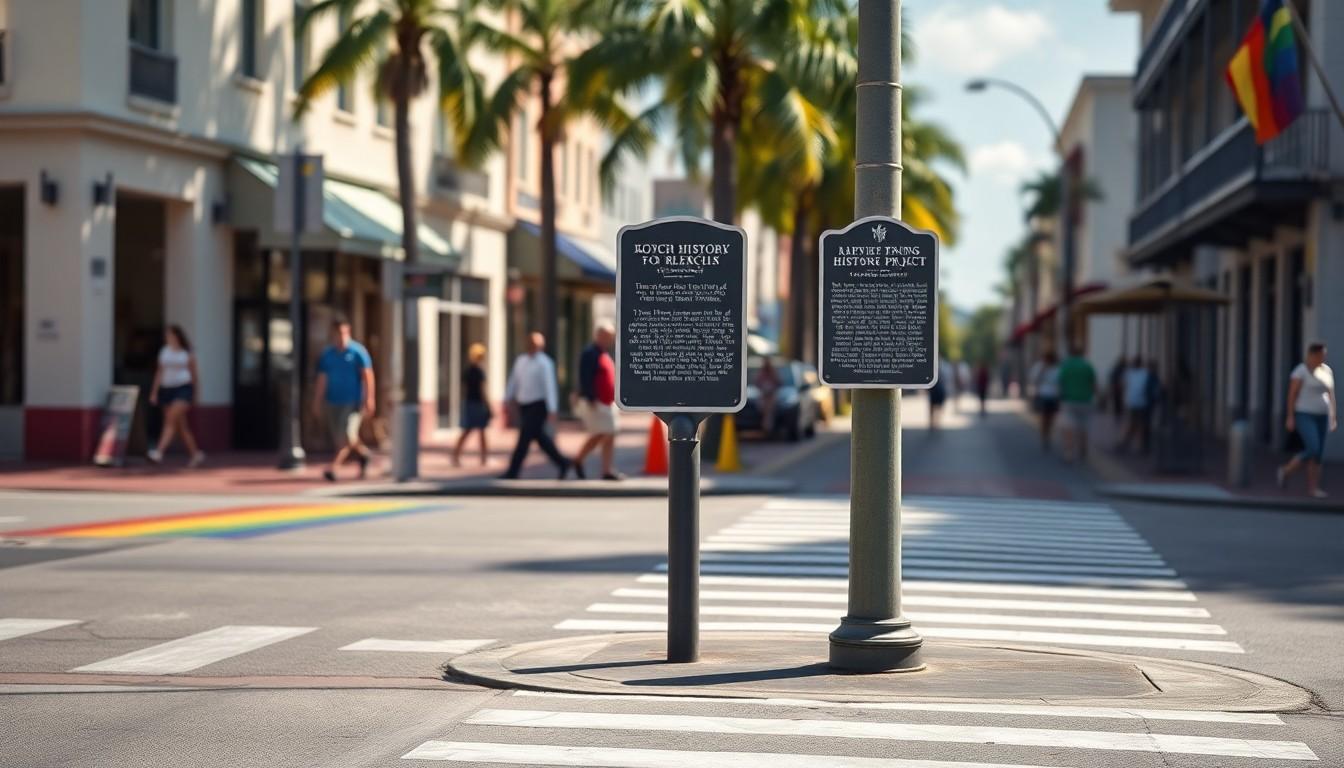
Visitors to Key West will soon be able to revisit the island’s rainbow crosswalks through augmented reality, while new historical placards share the LGBTQ+ community’s story. The project offers a colourful way to preserve local identity after the original crossings were removed, giving residents and travellers a fresh reason to look down, look back and keep the conversation moving.
Essential Takeaways
- A digital return: Visitors will scan a QR code to view the former rainbow crosswalks virtually through their phone camera.
- History in the street: Planned placards will explore Key West’s LGBTQ+ heritage and the significance of the crossings.
- Community-funded: Donations and silent-auction proceeds will support the memorial and its technology.
- A small burst of colour: Attendees will receive coloured chalk, turning remembrance into something tactile and participatory.
- Businesses can get involved: A limited number of placards will offer sponsorship opportunities and public recognition.
The rainbow crosswalks are coming back, just not in paint
The former rainbow crossings became much more than cheerful stripes across Duval Street. They represented Key West’s long-standing reputation as a welcoming destination, and their removal left a particularly stark gap in the streetscape.
That emotional weight matters because Key West’s LGBTQ+ history is woven into its tourism, nightlife and community life. Earlier coverage from LGBTQ Nation and PinkNews described the permanent crossings as a visible expression of pride, while CBS News and Mental Floss highlighted their place in the island’s public landscape.
Now, rather than simply repainting the road, local organisers are building a memorial with both physical and digital elements. It’s an inventive response, even if many visitors may still miss the satisfying sight of colour beneath their feet.
How the augmented-reality experience will work
The planned experience will connect a historical placard with a QR code. Visitors will use a smartphone camera to see a virtual version of the rainbow crosswalk positioned over the real street, creating a layered view of present-day Key West and the city it remembers.
That approach makes the memorial portable and interactive. It also means the story can reach people who might never attend a formal exhibition, provided they have a phone, a few spare minutes and a willingness to point it at the pavement.
There’s a practical side, too. According to coverage of the fundraiser plans, building and maintaining the augmented-reality platform will require ongoing investment, so donations aren’t merely paying for a one-off visual flourish. They’re helping keep the digital archive working for future visitors.
A history lesson designed for a stroll
The proposed placards will sit along Duval Street and cover wider aspects of Key West’s LGBTQ+ story, including the meaning of the former crossings. That location should make the memorial feel woven into everyday life rather than tucked away behind a museum door.
It’s a smart fit for the island. Key West is experienced on foot, often slowly, with people drifting between bars, shops, galleries and restaurants. A series of well-placed signs can turn that wandering rhythm into an informal history trail without demanding a timetable or ticket.
The idea also builds on the crossings’ earlier public role. Reports from LGBTQ Nation, CBS News and Mental Floss documented how the permanent rainbow installation made inclusion visible in a busy tourist setting. The new project keeps that visibility while adding context and personal stories.
Why the project feels bigger than a replacement
A painted crossing can be striking, but it can also be vulnerable to policy changes, maintenance decisions and the passing of time. A memorial supported by storytelling, sponsorship and digital content has more ways to survive, even if it looks less immediate at first.
The organisers’ decision to give visitors coloured chalk is telling. It’s a modest gesture, but a warm one: people aren’t just being asked to observe history, they’re being invited to add a little colour themselves. Your hands may get dusty, but that’s rather the point.
Similar permanent rainbow-crosswalk projects have been covered as public statements of belonging, not simply decorative upgrades. Key West’s new plan pushes that idea further by pairing a recognisable symbol with a record of the community behind it.
How visitors and local businesses can support it
The fundraiser is intended to help pay for the augmented-reality experience and the broader memorial project. A silent auction adds another route for support, while the proposed placards give businesses a more lasting way to associate themselves with Key West’s LGBTQ+ heritage.
Only a small number of sponsorships will initially be available. Participating businesses are expected to receive recognition on their sponsored sign and on the website hosting the augmented-reality experience, making the scheme both civic-minded and commercially visible.
For visitors, the simplest contribution may be turning up, donating, scanning the code when the experience launches and sharing the story respectfully. Community history works best when it’s encountered naturally, perhaps between a cold drink and a sunset walk, rather than treated as background decoration.
Key West’s rainbow crosswalks may have disappeared from the asphalt, but the island is refusing to let their meaning fade. Through placards, phones and a little hand-held chalk, the memory is finding a new route through the city.
Explore Key West’s memorial plans and help keep its colourful history visible.
Source Reference Map
Story idea inspired by: [1]
Sources by paragraph: